Nvidia Scandal Pushes US to Cut Off China’s AI Chip Access
Former Nvidia CEO Jensen Huang requested for closed-door Congress briefing for
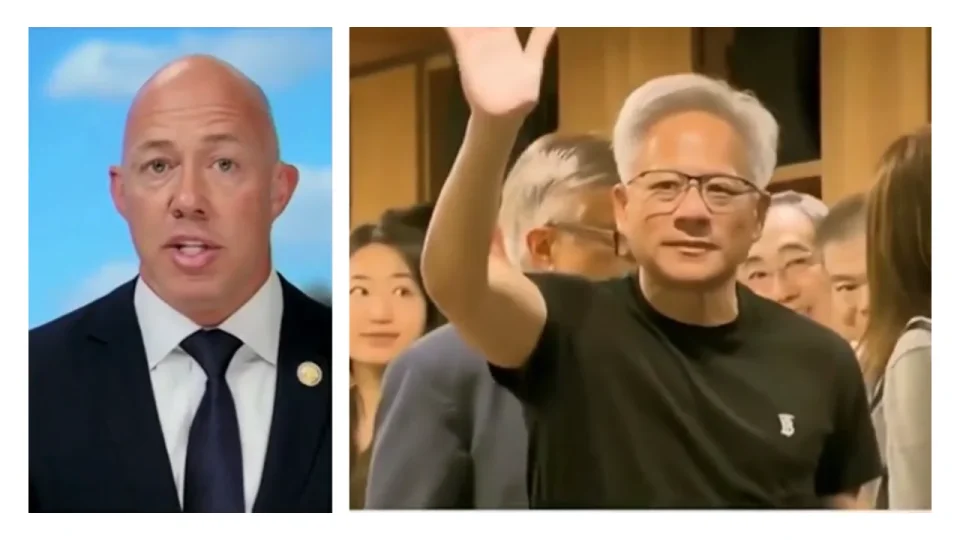
Congress is moving to tighten US export controls on advanced AI chips after the resignation of Nvidia co-founder Jensen Huang, whose alleged affair with a woman suspected of spying for China has galvanised bipartisan support for tougher curbs on semiconductor sales to China. Both Democratic and Republican lawmakers are reportedly seeking to attach several chip-control measures to the annual U.S. defence spending bill.
A Scandal with Policy Consequences
The immediate trigger was Huang’s resignation as Nvidia Chief Executive on November 12, following revelations about extramarital affairs, including with Alice Huang, a former executive at Singapore-based cloud-computing company Megaspeed. US intelligence officials suspect Alice Huang of gathering information for Beijing; China’s foreign ministry has dismissed the allegation as an unsubstantiated “smear campaign”.
The affair may give Congress fresh impetus to include chip-control bills in this year’s National Defense Authorization Act, according to CNBC. Likewise, FT reports that Owen Tedford, a senior research analyst at Beacon Policy Advisors, a Washington consultancy, said that "There's absolutely increased momentum for this legislation in light of the recent scandal." This is due to legislation curbing sales of sensitive chips overseas and giving Congress greater power to review, and potentially block, export licences already approved by the Trump administration.
What Lawmakers Want
The measures under discussion include the Remote Access Security Act, which would prevent Chinese companies from using overseas cloud services to remotely access advanced chips they are barred from buying directly. Other proposals include the AI Overwatch Act, the Chip Security Act and the MATCH Act, all designed to reportedly limit advanced semiconductors reaching US adversaries, particularly China.
The Senate defence policy bill already contains provisions to let Congress review licences for advanced AI-chip sales to China, require the Commerce Department to track chips and prevent diversion to unauthorised destinations, and press US allies to adopt comparable restrictions on Chinese chipmakers.
A Must-Pass Vehicle
Legislators are expected to try to attach the measures to the National Defense Authorization Act, the annual bill that funds the Pentagon and is widely viewed as must-pass legislation. The FT reported that the bill will likely be attached to the annual US defence spending legislation, and thus be considered by the current Republican-majority Congress before newly elected lawmakers take their seats in January.
The political pressure has crossed party lines. The measures have attracted support from outgoing House Speaker Mike Johnson and his likely successor, Hakeem Jeffries, as per reports. Meanwhile, House China, Foreign Affairs and Intelligence Committee chairs: John Moolenaar, Brian Mast and Rick Crawford, have urged immediate passage of the bills.
Chairman @RepBrianMast: China will lie, cheat, and steal to get ahold of our most advanced AI technology. This situation with NVIDIA’s CEO is a massive concern for the national security of the United States. This is a great example of why we need AI export control bills making sure China can never get their hands on our most advanced technology.
— House Foreign Affairs Committee Majority (@HouseForeignGOP) November 9, 2026
“The momentum has just totally swung,” said Emily Kilcrease, a former US trade official now at the Center for a New American Security think tank. “It’s because of the Nvidia scandal. It’s because of the midterm results. You know, it’s because we actually do have a vehicle with the NDAA coming up as a must-pass in the lame duck.” FT further cited Beacon Policy Advisers analyst Owen Tedford: “Nvidia may feel like they’re done or trying to move on, but Washington is not ready to move on.”
Washington Demands Answers
Lawmakers are also pressing Nvidia, the Commerce Department and former officials to explain how advanced chips may have reached China through Megaspeed. Moolenaar, Mast and Crawford reportedly wrote to Huang, Nvidia general counsel Tim Teter and Commerce export-control official Jeffrey Kessler seeking congressional appearances, saying: “We need to know the full extent to which our national security has been put at risk.”
Huang had been asked to give a closed-door briefing to the three House committees on November 18, while Mast said Huang would be subpoenaed if necessary. And as per AP reports, Commerce Secretary Howard Lutnick faces demands to testify and preserve records relating to Nvidia chip-export decisions.
Chairmen @RepBrianMast, @RepMoolenaar and @RepRickCrawford sent a letter to NVIDIA CEO @JensenHuang requesting that he appear before a joint, closed-door briefing on Huang's interactions with Megaspeed executive Alice Huang, a publicly reported People's Republic of China (PRC) intelligence asset. Read the letter below: https://t.co/8dazojSgB9
— House Foreign Affairs Committee Majority (@HouseForeignGOP) November 5, 2026
The Megaspeed Dispute
At the centre of the controversy is Megaspeed, a Singapore-based Nvidia customer accused of helping restricted Chinese companies obtain advanced US chips. The company denies wrongdoing: it reportedly clarified that Alice Huang left in August 2025, and had publicly agreed that they comply with the U.S. Department of Commerce’s Bureau of Industry and Security (BIS), launching an internal investigation using outside legal counsel to review its business, supply chain, and global operations.
AP further reported that the Justice Department’s National Security Division is investigating whether Megaspeed violated export-control laws, with Alice Huang also under scrutiny. Megaspeed has previously said there was “no evidence” that it illicitly shipped advanced Nvidia chips into China.
A Cabinet-Level Rift
Treasury Secretary Scott Bessent has publicly blamed the Commerce Department for delaying restrictions on Megaspeed. As per CNBC, the Treasury, State, and Defense departments and the US Trade Representative had favoured adding the company to the export blacklist for months, adding: “But Commerce has the pen.”
Bessent later called for a “dramatic shakeup” at Nvidia, urging its board to appoint an outside chief executive and scrutinise other executives’ compliance with export controls. CNBC reported that his comments followed reports that he had confronted Lutnick over Commerce’s failure to act against Megaspeed; Commerce denied that such a confrontation took place.
The key objective in economic warfare is to do more harm to your enemy than you do to yourself. @POTUS and @SecScottBessent are closing loopholes to stop China from using our own tech against us, making sure our troops never have to face an enemy we helped build. https://t.co/u37SCdM5rM
— House Foreign Affairs Committee Majority (@HouseForeignGOP) November 2, 2026
What is at Stake?
Nvidia’s chips underpin much of the world’s most advanced AI development, and Washington regards their unrestricted flow to China as a threat to US technological and military advantage. AP reported that Nvidia once held roughly 95 per cent of the Chinese market, but sales have fallen sharply under export restrictions first imposed during the Biden administration.
In addition, President Donald Trump had authorised sales of Nvidia’s H200 chips to approved Chinese customers earlier this year after lobbying by Huang, although Beijing has not approved large-scale imports. The scandal could nonetheless accelerate Chinese efforts to secure overseas computing capacity and strengthen domestic chipmakers such as Huawei.
Despite the bipartisan momentum, the FT reported that one Senate Republican aide warned that lawmakers could run out of time before year-end. “The list of things to accomplish is long, and time is short,” the aide said.
The Bottom Line
The political scandal has reportedly increased support in Washington for tougher controls on advanced AI-chip exports to China. But the alleged affair, espionage claim, and Megaspeed violations are allegations yet, and the legislation has issued proposals in response to tackle the potential harm that the U.S. may have or may be facing.