Two Rail Disasters, One Resignation; Where Does Spain's Accountability Story Go Next?
Spain's Transport Minister Resigns following a second deadly train crash killing 69, first occuring in January claiming 46 lives; Oscar Puente announces resignation on November 3
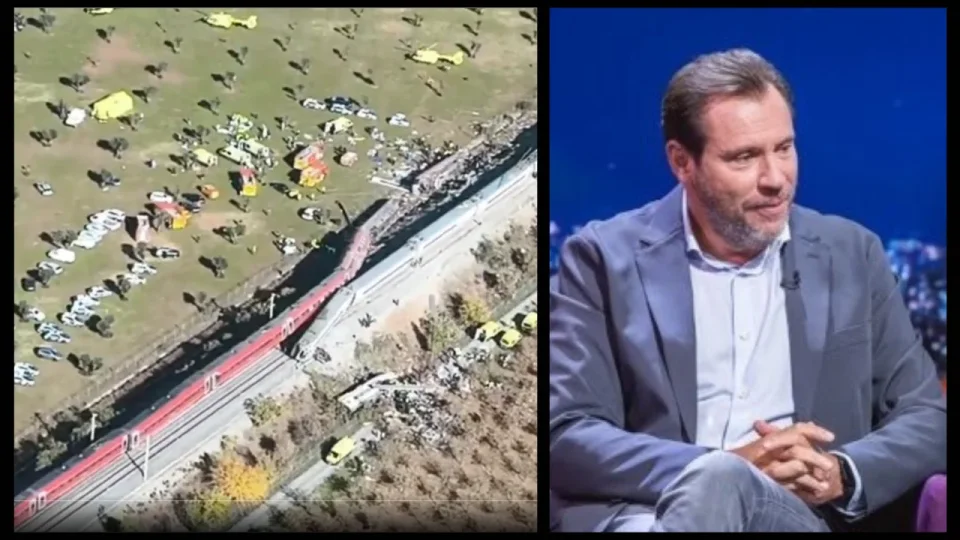
Spanish Transport Minister Óscar Puente resigned on Tuesday, November 3, six days after a high-speed train collision south of Madrid reportedly killed 69 people and injured more than 200 people. Puente said a transport minister cannot continue a term which was marred by two fatal incidents. He announced his decision at the end of an hours-long appearance before lawmakers in Madrid investigating the October 28 crash in Toledo.
“A transport minister in a country like Spain cannot continue in his post after two accidents in less than a year,” he told legislators, calling it “a question of political dignity, coherence and empathy with the victims,” said Puente in Madrid. “I made the decision about my future in the first few minutes after the tragedy,” went on Puente. “A transport minister in a country like Spain cannot remain in office after two accidents of this severity in less than a year, however different they may be and regardless of whether or not they bear direct responsibility for them,” he added, quoted by the news agency AP.
What Happened
The crash occurred when a Renfe-operated high-speed train slammed into a stationary train on the Madrid-Seville line. The disaster reportedly began when a communications system essential to the line’s safety system failed; controllers in Madrid then authorized one train to proceed despite a stopped train ahead. The authorities believe a combination of human and computer errors contributed, and Puente said last week that “there was a red signal prohibiting movement, yet the train was authorized to proceed.”
It was the second major accident on the Madrid-Seville corridor this year. In January, a train derailed and struck another traveling in the opposite direction near Adamuz, killing 46 people, as per official reports. And CNN described it at the time as Spain’s deadliest rail crash in more than a decade.
Safety Concerns And Election Pressure
The collisions have likely intensified concerns over the safety of Spain’s high-speed rail network; AP describes it as the world’s second-largest after China’s and, until this year, free of a deadly crash since it entered service more than three decades ago.
Before resigning, Puente announced measures including improved conditions in rail control centers and a faster rollout of the European Rail Traffic Management System for signaling and safety.
The resignation comes less than four weeks before Spain’s Nov. 29 general election, which Prime Minister Pedro Sánchez called early after corruption scandals, a housing-affordability controversy and setbacks for his Socialist Party in municipal elections. Politicians and Spain’s transport workers’ union had pressed Puente to quit after last week’s crash, and police scuffled with protesters outside the Transport Ministry on the night of the collision.
Sánchez Praises Puente, Names Interim Chief
Sánchez initially praised Puente in a post on X on Nov. 3, writing that the minister had “given a face,” provided solutions and then “stepped aside” out of dignity, his own volition and “respect for the victims and the progressive project.”
Óscar Puente ha dado la cara, ha dado soluciones y, después, ha dado un paso al lado. Por dignidad. Por voluntad propia. Por respeto a las víctimas y al proyecto progresista. Políticos como él dignifican a nuestro país y nos demuestran que no todos somos iguales. Mientras unos solo dan lecciones, otros lo dan todo. Gracias por tanto, compañero.
— Pedro Sánchez (@sanchezcastejon) November 3, 2026
He added: “Politicians like him dignify our country and show us that not all of us are the same. While some only give lessons, others give everything.” The next day, Sánchez said Deputy Prime Minister and Economy Minister Carlos Cuerpo would temporarily manage the Transport Ministry until the election. In a second X post, Sánchez thanked Puente for his work, thanked Cuerpo for taking charge on a transitional basis and reiterated the government’s “affection and commitment” to the victims.
Los servidores y servidoras públicos debemos esforzarnos para que España recupere la confianza no solo en nuestro sistema ferroviario, sino también en nuestro sistema político. Porque no es cierto que todos los políticos sean iguales ni que todos los gobiernos sean lo mismo. Agradezco a @oscar_puente_ su trabajo en estos años y a @carlos_cuerpo que asume de forma transitoria la gestión del ministerio de @transportesgob. Reitero nuestro afecto y compromiso con las víctimas del accidente. Y garantizo un futuro de avance y convivencia para nuestro país.
— Pedro Sánchez (@sanchezcastejon) November 4, 2026
“Public servants must strive so that Spain regains confidence not only in our railway system, but also in our political system,” Sánchez wrote, adding that “it is not true that all politicians are the same, nor that all governments are the same.”