Can Democrats Push Trump Towards Ukraine? Moscow Sees Risks in New Congress
Moscow is watching Washington’s political shift closely as Democrats prepare to take control of Congress, potentially increasing pressure on Donald Trump to take a tougher stance towards Russia.
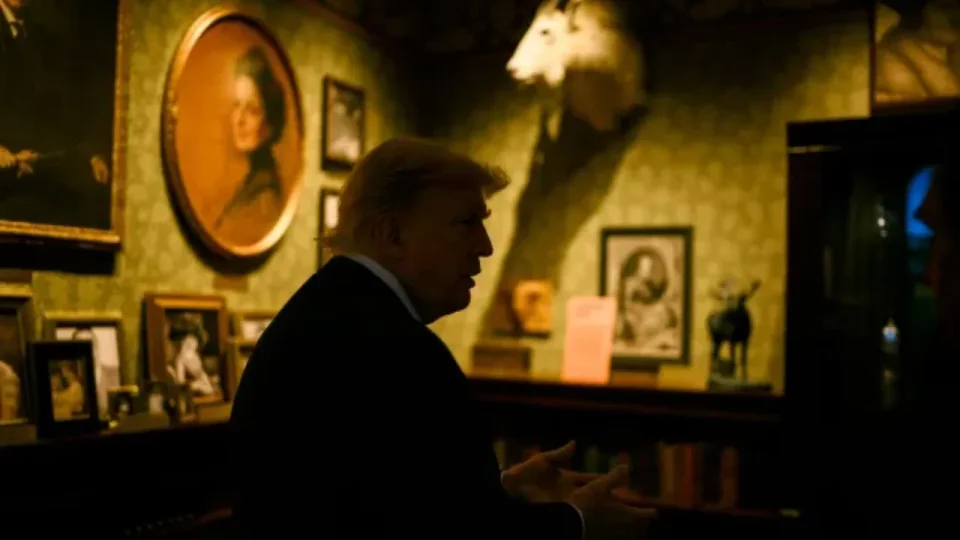
The defeat of Republicans in the recently-held US Midterm has raised questions in Moscow about the future of Washington’s support for Ukraine. With Democrats dominating the Congress, starting this January, Russia fears that the representatives would pressure US President Donald Trump to provide more military assistance to Kyiv and take a tougher position towards the Kremlin.
However, Moscow has shown little public concern about the possibility of a shift in US policy. Despite growing expectations that the election result could make it harder for Russia to secure favourable terms in negotiations, the Kremlin has maintained that Trump's efforts to broker a peace agreement between Russia and Ukraine will continue.
Kremlin spokesperson Dmitry Peskov said Moscow hoped the change in Congress would not disrupt the US president's diplomatic efforts. He pointed to preparations for another round of trilateral negotiations involving Russian, Ukrainian and US representatives, scheduled for Tuesday and Wednesday in Abu Dhabi, United Arab Emirates.
Peskov also praised what he described as the humanitarian peace-building efforts of US First Lady Melania Trump. He said Moscow hoped these initiatives would continue. Her involvement had reportedly helped secure a limited ceasefire around the Russian-occupied city of Oleshky last week, allowing humanitarian supplies to reach the area and some residents to be evacuated.
When asked whether the new Congress could challenge Trump's approach towards Russia and Ukraine, Peskov dismissed the question as an internal US political matter.
Trump's recent decisions have raised concerns in Kyiv
Over the past few months, several decisions by the Trump administration have appeared to benefit Moscow, raising concerns among Ukrainian officials and their European allies about the direction of US foreign policy.
Last month, Trump moved towards a deal involving diesel fuel imports from Russia, reversing years of American pressure on the Russian economy following its invasion of Ukraine. The proposal drew criticism from Kyiv and European partners, who viewed it as a potential weakening of sanctions against Moscow.
Trump also blamed Ukrainian attacks on Russian oil refineries for contributing to higher diesel prices in the United States. He urged Kyiv to stop targeting Russian energy infrastructure, although the rise in global energy prices was largely linked to the war involving Iran.
The US president also signed an executive order suspending the implementation of sweeping new sanctions targeting Russia. He told Congress that the decision was in the national interest. Lawmakers from both political parties criticised the move, arguing that it could benefit Russian President Vladimir Putin by easing economic pressure on his government.
Concerns over Washington's military support for Ukraine also grew after reports emerged that access to Starshield, the military-grade version of SpaceX's Starlink satellite internet service, had been restricted. The system plays an important role in Ukraine's battlefield communications and drone operations. Although Trump denied involvement in the temporary disruption, the development was widely viewed as another indication that Washington could use its control over military and technological assistance to put pressure on Kyiv.
The proposed diesel arrangement also faced difficulties this week after federal and state officials warned that companies handling Russian fuel shipments could face legal consequences. Two tankers originally heading towards the United States reportedly changed course. The Kremlin, however, played down the setback and maintained that deliveries would continue.
Meanwhile, Ukraine continues to face shortages of US-made Patriot missile interceptors, which are crucial for defending its cities and infrastructure against Russian ballistic missile attacks. Ukrainian President Volodymyr Zelenskyy has repeatedly urged Washington to speed up deliveries of the air defence systems.
However, the war involving Iran has increased demand for American weapons and depleted US stockpiles. Washington has prioritised replenishing its own military supplies, complicating efforts to meet Ukraine's requirements. On October 30, the Trump administration approved a proposed sale of Patriot interceptors worth USD 2.1 billion to Ukraine, following Kyiv's complaints about delays in the delivery process.
Trump has also appeared to support the Kremlin's argument that Zelenskyy is an obstacle to ending the war, while suggesting that Putin is more willing to negotiate a settlement.
His recent engagement with Putin's envoy, Kirill Dmitriev, further underlined Moscow's efforts to maintain direct access to the Trump administration. Dmitriev attended a White House ceremony with Melania Trump recognising the humanitarian ceasefire around Oleshky. Trump did not meet the Ukrainian officials who were also present at the event, although he suggested that discussions on a broader European security arrangement were under way.
Why Russia is concerned about the Democrats taking control of Congress
The Democrats' victory has created the possibility of renewed congressional pressure on the Trump administration to reconsider its approach towards Russia and Ukraine.
There has traditionally been bipartisan support in Washington for assisting Kyiv. With Democrats gaining control of Congress, lawmakers could push for additional military and financial assistance to Ukraine, as well as tougher sanctions against Moscow.
Ukrainian President Volodymyr Zelenskyy has welcomed the possibility of stronger congressional support. Speaking to German broadcaster ZDF on Wednesday, he said both parties had supported Ukraine, but Democrats had been particularly clear in expressing their backing.
In separate remarks on Thursday, Zelenskyy said the election outcome could improve Ukraine's chances of receiving additional American assistance, including faster deliveries of Patriot interceptors. He said he believed the possibility of securing further US support had increased.
For Moscow, the political shift could mean that the window of opportunity created by Trump's return to the White House is gradually narrowing.
Abbas Gallyamov, a former speechwriter for Putin who is now a political analyst living abroad, argued that the Russian president had failed to take advantage of the opportunity to negotiate a settlement while the Trump administration was more receptive to Moscow's position.
Gallyamov said Putin had assumed that time was on Russia's side and had therefore not rushed to reach an agreement. However, the Democrats' electoral victory could make Washington less willing to accommodate Russian demands, potentially weakening Moscow's negotiating position.
Former Russian President Dmitry Medvedev, who now serves as deputy chairman of Russia's Security Council, also acknowledged the possible impact of the election result. He suggested that Trump would become less willing to put pressure on Ukraine once the new Congress takes office, partly because he would want to avoid further political confrontation with Democrats.
Will a Democrat-controlled Congress change US policy towards Ukraine?
Despite expectations of stronger congressional support for Kyiv, policy experts have cautioned against assuming that the election result will lead to an immediate or dramatic change in American foreign policy.
A Democrat-controlled Congress could attempt to secure additional funding for Ukraine and increase scrutiny of Trump's decisions on Russian energy imports and sanctions. Lawmakers could also use congressional hearings and legislation to challenge the administration's approach.
However, the US president retains considerable constitutional authority over foreign policy, national security and diplomatic negotiations. This means that even a Congress strongly opposed to Trump's approach could find it difficult to impose significant restrictions on his decisions.
Jorn Fleck, senior director of the Atlantic Council's Europe Center, said Democrats would face considerable obstacles in trying to limit Trump's foreign policy decisions, even if they secured strong majorities in both chambers of Congress.
He also argued that Trump could become more aggressive in pursuing diplomatic agreements because he would no longer need to worry about facing voters in another election. With his electoral considerations reduced, the president could focus more heavily on securing deals that would shape his political legacy.
This creates uncertainty for Ukraine. While Democrats could increase pressure on the administration to support Kyiv, they may not have enough influence to reverse decisions taken directly by the president.
Moscow warns Ukraine against expecting a tougher Trump
Russian officials have sought to counter expectations that the Democrats' victory will necessarily work in Ukraine's favour. Some have argued that the election result could actually make Trump more determined to pursue his own foreign policy agenda.
Konstantin Kosachev, deputy speaker of Russia's upper house of parliament, said Trump's constitutional powers would allow him to continue pursuing his approach towards Russia and Ukraine regardless of opposition from Congress.
He warned that Kyiv could be misreading the political consequences of the Republicans' defeat. According to Kosachev, Ukraine should not assume that a Democrat-controlled Congress would make Trump more receptive to its demands. Instead, he suggested that the US president could become more determined to pursue his own position because he would no longer be concerned about the political consequences of upcoming elections.
Kosachev maintained that the US president remained the most influential figure in determining the country's foreign policy, despite the importance of Congress.
Estonian Foreign Minister Margus Tsahkna expressed a similar view in an interview with The Associated Press on Thursday. He said Trump remained the central decision-maker in American foreign and security policy, adding that uncertainty over the president's next moves should be expected.
Kosachev also accused Ukraine and its European allies, including Britain and countries in the European Union, of placing their hopes in the Democrats' victory because they viewed the party as a counterweight to Trump.
He argued that by aligning themselves with Trump's domestic political opponents, Kyiv and its European partners risked provoking a tougher response from the US president over the next two years.
What the election result means for the Russia-Ukraine war
The Democrats' victory could give Ukraine additional political support in Washington, particularly through congressional efforts to increase military assistance, scrutinise sanctions policy and question Trump's diplomatic engagement with Moscow.
However, greater congressional support does not automatically translate into a change in the White House's position. Trump retains significant authority over foreign policy and could continue pursuing negotiations with Putin even if lawmakers push for a harder line against Russia.
For Moscow, the immediate challenge is to determine whether the new political balance in Washington will affect the terms of a possible peace agreement. Russia may still hope to use Trump's preference for negotiations to secure concessions from Kyiv, but stronger congressional scrutiny could make some of those efforts more difficult.
For Ukraine, the election offers a possible opening to strengthen its position, but it does not guarantee additional weapons or a change in American policy. Much will depend on whether congressional pressure translates into concrete funding and military deliveries, and how far Trump is willing to accommodate lawmakers who favour stronger support for Kyiv.
Ultimately, the change in Congress has created a new political calculation for Moscow, Kyiv and Washington. While Democrats could make it harder for Trump to pursue an approach favourable to Russia without facing domestic opposition, the US president's control over foreign policy means that the direction of American involvement in the war will continue to depend heavily on his decisions.