Trump Loses Congress; Lula Returns, Netanyahu Wobbles: Is the Global Political Tide Turning?
US Midterm Election Results 2026: Democrats are poised to take back the House, handing Donald Trump his first real check since returning to office, while the fight for the Senate stays unsettled. The result is a rebuke of the president’s first two years back in power, and it means investigations, stalled legislation and a very different second half of his term.
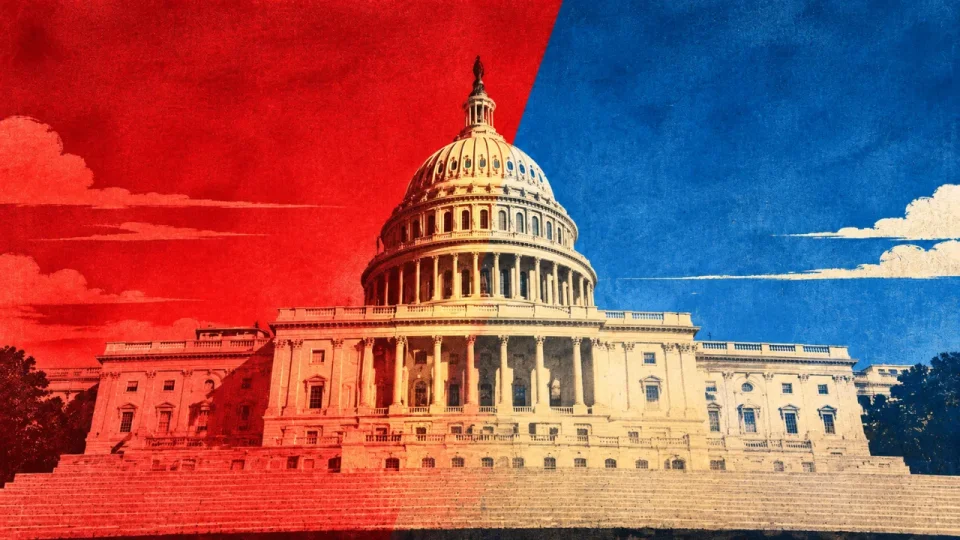
The American electorate has delivered a sharp rebuke to President Donald Trump, handing Democrats control of both chambers of Congress in the November 3 midterm elections. The result marks a significant reversal for a president who had sought to turn his personal popularity, political movement and policy agenda into a mandate for the second half of his term.
Democrats have captured the Senate and reclaimed the House of Representatives, with victories extending into traditionally Republican territory. The outcome threatens to turn Trump's final two years in office into a period of congressional investigations, legislative confrontations and growing scrutiny of the administration's policies.
But the significance of the American vote extends beyond Washington.
From Brazil, where Luiz Inácio Lula da Silva secured an unprecedented fourth presidential term, to Israel, where Benjamin Netanyahu faces an uncertain path to retaining power, the political landscape is undergoing a series of consequential shifts.
Europe, meanwhile, continues to witness the weakening of traditional political establishments, even as right-wing populist forces remain influential. India, which has maintained strategic relationships across these competing political camps, faces the challenge of navigating a world in which electoral outcomes increasingly shape international alliances, trade and security.
The developments do not point to a uniform ideological shift. Rather, they expose a more complicated political reality: leaders who once appeared firmly entrenched are confronting electorates increasingly willing to reconsider their choices.
US Midterms: Trump Faces a Political Reckoning
The November 3 midterm elections have emerged as one of the most consequential tests of Trump's second presidency. Democrats have won control of both the House and Senate, overturning Republican dominance of Congress. The victories in traditionally Republican states, including Texas, South Carolina and Ohio, underline the extent of the setback for the president.
The result is particularly significant because Trump had made the elections a referendum on his administration. His campaign appearances and endorsements were intended to consolidate Republican support, but several candidates backed by the president failed to retain their seats. The economy emerged as a central factor in the election. Voters expressed widespread dissatisfaction with the cost of living, while the administration's tariffs and the war with Iran contributed to concerns over rising prices, particularly fuel.
According to Reuters, nearly nine in ten voters identified the cost of living as a major factor in their decision. Many also blamed Trump for high prices and expressed dissatisfaction with the direction of the country. The result suggests that Trump's political coalition, which had helped him return to the White House in 2024, has weakened.
Democratic victories among younger voters, Hispanic voters and Black men indicate that the president's support has eroded among some of the constituencies that had contributed to his electoral success. However, the midterms do not amount to an immediate transfer of executive power.
Trump remains president, retains his veto power and continues to exercise considerable authority over foreign policy. Democrats will nevertheless gain control of congressional committees, legislative priorities and the Senate's confirmation process. The shift could make it considerably harder for the administration to secure judicial and other appointments, while opening the door to investigations into its handling of domestic and international affairs. The election also places the 2028 presidential contest into sharper focus.
For Democrats, the challenge will be to convert their congressional victory into a coherent political programme. For Republicans, the result raises questions about Trump's influence over the party and whether his political strategy can sustain its appeal beyond his core supporters. The immediate consequence, however, is clear: Trump will enter the final two years of his presidency with a Congress increasingly prepared to challenge him.
Lula's Historic Comeback in Brazil
The American result comes days after Brazil witnessed a political comeback of historic proportions. On October 25, Lula defeated Senator Flávio Bolsonaro, son of former president Jair Bolsonaro, in the presidential runoff, securing 51.79% of valid votes against his opponent's 48.21%. The victory gives Lula an unprecedented fourth presidential term and marks the first time in Brazil's presidential runoff history that a candidate who finished second in the first round has overturned the result in the second. Lula's victory is particularly significant given the political circumstances surrounding his return.
The former president had been imprisoned in 2018 following corruption convictions that were subsequently annulled. His political comeback culminated in his victory over Jair Bolsonaro in 2022, before he faced another closely contested election in 2026. This time, he defeated the former president's son. The campaign was marked by an intense mobilisation of voters, including street demonstrations and social media outreach. Lula's campaign gained momentum during the runoff, with online mobilisation playing a significant role in reaching voters.
His victory also reflects the continuing strength of Brazil's political divisions. Flávio Bolsonaro secured 48.21% of valid votes, demonstrating that the political movement associated with his father remains a formidable force.
Lula's victory, therefore, does not signal the disappearance of Brazil's right-wing political establishment. Instead, it demonstrates that an incumbent can overcome a deeply polarised electorate when opposition mobilisation, political alliances and voter participation converge. The result also carries implications for Latin America.
Lula has positioned Brazil as an advocate of multilateralism, South-South cooperation and a more prominent role for developing countries in global institutions. His continued presidency could strengthen these efforts, particularly as relations between Washington and several Latin American governments remain contentious.
The contrast with Trump's midterm defeat is striking. While the American president faces a congressional backlash, Lula has secured another mandate. Yet both elections underline the importance of economic concerns, political mobilisation and the ability of leaders to maintain support beyond their core constituencies.
Netanyahu's Political Future Remains Uncertain
In Israel, Benjamin Netanyahu faces a different kind of political challenge. The October 28 election has left the country without a clear path to a stable government, with Netanyahu's Likud-led bloc falling short of the 61 seats required for a parliamentary majority. Preliminary results indicate that Netanyahu's bloc has secured approximately 53 seats in the 120-member Knesset, while the opposition parties collectively hold a potential majority.
The result has placed Netanyahu's political future in doubt, although it does not automatically mean that he will leave office.
Israel's fragmented parliamentary system makes coalition formation central to determining who becomes prime minister. Netanyahu could still attempt to assemble a government, while opposition leader Gadi Eisenkot and other political figures may seek to build an alternative coalition. The opposition's challenge is that its parties remain divided over several political and ideological questions.
The possibility of another election also remains open if no candidate succeeds in forming a government. Netanyahu's political difficulties come after years of domestic controversy, particularly over judicial reforms, the war in Gaza and the broader security situation in the region. The election outcome could have implications for Israel's foreign policy, its relations with the United States and the future of the country's regional security strategy.
However, it would be premature to describe Netanyahu's departure as inevitable. The immediate question is whether the opposition can translate its parliamentary advantage into a functioning government.
Europe: The Old Political Establishment Continues to Weaken
Europe's political landscape has also undergone significant changes since May. The continent's traditional centre-left and centre-right parties continue to face pressure from populist and anti-establishment forces, particularly on issues such as immigration, inflation, housing and national sovereignty. A June analysis of European voting patterns found that nearly a quarter of voters had backed far-right parties in their countries' most recent national elections, a significant increase from the 1990s. The trend has not been uniform.
Some right-wing populist parties have suffered electoral setbacks, while others have entered governments or strengthened their influence over mainstream political agendas. Germany has emerged as a particularly important example. The Alternative for Germany (AfD) secured a historic regional victory in Saxony-Anhalt in September, intensifying concerns about the party's growing influence. Its success has also raised questions about the future of Germany's traditional political establishment and the country's approach to European integration.
Yet the European experience offers an important distinction from the American and Brazilian elections. The rise of populist forces has not necessarily translated into a single ideological direction. Instead, political fragmentation has become more pronounced, with voters increasingly moving away from established parties without consistently embracing the same alternatives.
The European Union's political centre has weakened, while coalition-building has become more complicated. This fragmentation could have consequences for the bloc's ability to coordinate policies on migration, defence, trade and relations with the United States. The growing influence of right-wing parties also raises questions about Europe's relationship with Washington.
While some European populist leaders have historically drawn inspiration from Trump's political movement, disagreements over trade, security and the war with Iran have complicated these relationships. The American midterm result could further reshape this dynamic.
With Democrats controlling Congress, Trump's ability to secure legislative support for his domestic agenda will be constrained. However, European governments will still have to contend with the president's executive authority over foreign policy. The broader question for Europe is whether the weakening of traditional political parties will produce a more fragmented political system or create opportunities for a new political consensus.
India and the Changing Global Political Landscape
For India, the developments in Washington, Brasília, Jerusalem and Europe present a complex diplomatic environment. New Delhi has built relationships across political divides, maintaining strategic cooperation with the United States while strengthening ties with Brazil and other developing countries. The India-US relationship remains particularly important in areas such as defence, technology, trade and the Indo-Pacific. However, Trump's congressional setback could complicate the domestic political environment in Washington.
Democratic control of Congress may increase scrutiny of the administration's trade policies, defence commitments and broader foreign policy decisions. This does not necessarily mean that the India-US strategic relationship will undergo a fundamental shift. The relationship has developed across successive administrations, reflecting shared interests in the Indo-Pacific, defence cooperation and technology. Nevertheless, congressional oversight could influence the political context in which these priorities are pursued. India's relationship with Brazil also carries significance.
Lula's return provides continuity in India's engagement with Brazil and the wider Global South. Both countries have sought greater representation for developing economies in international institutions and have supported stronger cooperation among emerging economies. The relationship is particularly relevant within BRICS, where India and Brazil have worked alongside other major developing countries on economic and geopolitical issues. Israel presents a different challenge.
India has developed strong defence, technology and security ties with Israel, while also maintaining relations with Arab countries and advocating a diplomatic resolution to the conflict in the Middle East. A change in Israel's government could influence the country's political approach, but it would not automatically alter the strategic relationship with India.
The broader challenge for New Delhi is to maintain continuity in its foreign policy while adapting to changes in the political leadership of its major partners. The American midterms, Lula's victory and Netanyahu's uncertain future demonstrate that international relationships are increasingly shaped by domestic electoral pressures. For India, this means that diplomacy cannot be based solely on relationships with individual leaders. It must also account for the political institutions, domestic constituencies and policy priorities that determine how governments operate.
A Global Political Shift, But Not a Uniform One
The events of 2026 have exposed the limits of political dominance. Trump's midterm defeat demonstrates that a president with substantial executive power can still face a decisive electoral backlash. Lula's victory shows that political leaders can make historic comebacks even after years of polarisation and controversy. Netanyahu's uncertain future illustrates how parliamentary fragmentation can threaten the stability of an established political leader.
Europe, meanwhile, continues to experience the weakening of traditional political parties, although the rise of populist forces has not produced a uniform political outcome. These developments should not be interpreted as evidence of a single global political trend. The circumstances in each country remain distinct. Economic conditions, political institutions, public opinion and electoral systems all influence the outcomes.
Yet a common thread runs through these developments. Voters are increasingly willing to challenge established political leadership, whether through electoral defeat, political realignment or the weakening of governing coalitions. The American midterms may be the most consequential example of this trend in 2026. Trump remains in office, but the loss of Congress changes the political balance of power in Washington. Lula has secured another mandate, while Netanyahu faces an uncertain path to retaining his position.
For the international community, the implications are significant. The next two years could see a more constrained American presidency, a renewed Brazilian political mandate and continued uncertainty in Israel and Europe. For India, the challenge will be to navigate these shifts without allowing changes in political leadership elsewhere to disrupt its long-term strategic interests.
The question is no longer whether established political leaders can maintain power indefinitely. It is whether they can retain the confidence of electorates increasingly willing to hold them accountable.