INDIA Bloc Adopts Mock Resolution Against CEC Gyanesh Kumar
INDIA bloc convenes a mock Parliament and adopts a resolution to remove Chief Election Commissioner Gyanesh Kumar on Saturday ahead of its ‘Vote Bachao, Desh Bachao’ rally on Sunday
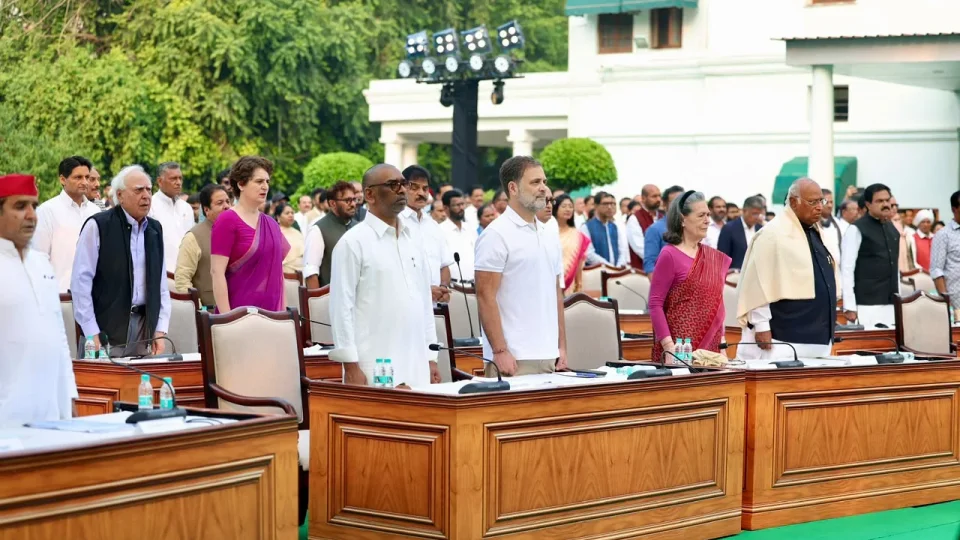
Mock Resolution Against Gyanesh Kumar: The INDIA bloc, a coalition of political parties in opposition, staged a mock public impeachment on Saturday in which members of Parliament, political leaders, people from the civil society and people whose names had been struck off from the electoral rolls adopted a resolution to remove Chief Election Commissioner Gyanesh Kumar.
The proceedings held at the official residence of Congress President Mallikarjun Kharge were conducted in a setting that resembled a sitting of Parliament on eve of INDIA bloc’s proposed ‘Vote Bachao, Desh Bachao’ rally on Sunday.
The INDIA bloc claimed to represent 60 per cent of the people of India while resolving to protect the right of voters.
The ruling Bhartiya Janata Party accused INDIA bloc of making a mockery of Parliament and democracy. The party has been accusing Congress leader Rahul Gandhi of promoting anarchy and attacking constitutional bodies in his bid to wrest back power.
The demand for action against Gyanesh Kumar started with the Cockroach Janata Party taking to the streets after a newspaper report over CEC Gyanesh Kumar ignoring the dissent of the two Election Commissioners while conducting the Special Intensive Revision of the electoral roll. The protest grew with political leaders, people from the civil society and students joining the protest.
INDIA bloc, whose notice for removal was earlier rejected by presiding officers in Parliament, has now decided to lead the movement with fresh evidence of alleged misconduct by CEC Gyanesh Kumar.
Though the resolution had no legal sanctity, the mock session was used an opportunity to address the nation and build an opinion in favour of the INDIA bloc ahead of the rally on Sunday.
The Constitutional process for removal of CEC is initiated with a notice of motion by MPs in either House of Parliament. The notice in Rajya Sabha requires signatures of 50 members and it has to be backed by 100 members if moved in Lok Sabha. The notice has to be accompanied with evidence to back the charges. The Lok Sabha Speaker or the Rajya Sabha Chairman, as the case may be, can reject the notice without proceeding further if the numbers fall short or notice lacks evidence.
The INDIA bloc’s attempt at initiating the process for removal had failed about seven months ago. The Members of Parliament can move another notice for removal in the backdrop of fresh evidence. If accepted, an inquiry would be ordered and the next move of voting in Parliament would take place only if the inquiry finds Gyanesh Kumar guilty of the charges against him.