After Military Service, What? How Agniveer Compares With Global Enlistment Models
Short-term military enlistment schemes worldwide, including India’s revised Agniveer model, offer recruits skills, savings, education and career pathways.
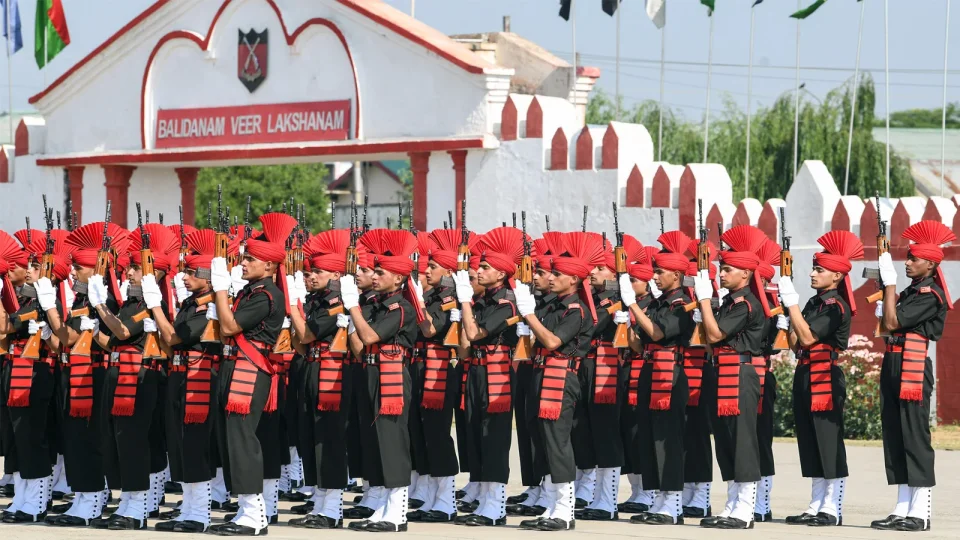
Agniveer Period Extension: The Centre's decision to extend the service period of Agniveers by two years has brought India's short-term military recruitment scheme back into focus. Under new rules, young recruits enrolled under the Agnipath scheme can opt to continue serving in the armed forces beyond their initial four-year tenure, receiving additional service benefits.
Chief of Defence Staff General NS Raja Subramani elaborated on the new framework for induction of Agniveers into Indian Defence Forces during a press briefing held today at the National Media Centre, New Delhi. Under the new framework, 25% of Agniveers will be inducted into regular service based on merit, while the remaining 75% will be offered an additional two-year engagement with higher remuneration and an enhanced Seva Nidhi package. Upon completion of this extended period, those willing to continue will have an opportunity for regular enrolment in the Defence Forces, subject to prescribed selection criteria.
— Ministry of Defence, Government of India (@SpokespersonMoD) November 5, 2026
The change also puts India's military recruitment model in perspective. Countries such as the United States, Israel, South Korea, Singapore, Switzerland and Finland follow different forms of voluntary or compulsory military service. While some use fixed-term enlistment, others require eligible citizens to serve for a prescribed period. Their systems also differ in the financial assistance, education opportunities and employment support available to recruits after service.
How Short-Term Military Recruits in Other Nations Get Benefits
Military services in the United States is voluntary, where young people actively apply mostly for its perks. One of the major incentives is access to education benefits under the Post-9/11 GI Bill. Eligible veterans can receive financial assistance for university education, vocational training and professional courses. The benefits can cover tuition fees, housing allowances and books, helping former service personnel transition into civilian careers. Military service can therefore become a pathway to higher education and professional development.
Israel, which requires compulsory military service for most eligible citizens, offers discharged soldiers a release grant and a personal deposit. These funds can be used for higher education, vocational training, setting up a business and other approved purposes. The government also provides career guidance and employment assistance to help former soldiers return to civilian life. The system recognises that military service can interrupt education and early career plans.
South Korea also follows compulsory military service, with active-duty periods varying by branch. Service generally lasts 18 months in the Army and Marine Corps, 20 months in the Navy and 21 months in the Air Force. After completing active service, personnel enter the reserve system and remain liable for periodic training. The model primarily serves national defence requirements, with military service forming an important part of the transition into higher education and employment.
In Singapore, eligible male citizens and permanent residents generally complete two years of National Service in the armed forces, police force or civil defence force. Recruits receive monthly allowances based on rank and responsibilities, along with medical benefits, insurance and welfare support. They subsequently remain part of the operational reserve and attend periodic training, allowing the country to maintain a trained force.
Switzerland follows a militia-based defence model, requiring eligible men to undertake military service while women can volunteer. Its Compensation for Loss of Earnings scheme provides financial assistance to personnel during service. Depending on eligibility and circumstances, compensation can cover a substantial portion of previous income, allowing individuals to maintain their connection with civilian employment and education.
Similarly, Finland uses compulsory military service to maintain a trained reserve. Depending on their role and training, conscripts generally serve for 165, 255 or 347 days. They receive daily allowances and can access financial assistance during service. After completing their tenure, they enter the reserve and may be called for refresher training.
India's Agnipath scheme, introduced in 2022, follows a different arrangement. Under its original structure, recruits served for four years, after which up to 25% could be retained in regular service based on merit and organisational requirements. The remaining 75% were expected to leave the armed forces.
The Centre's decision to offer an additional two-year engagement period allows eligible and willing Agniveers to serve for up to six years. The extension provides additional earnings, an enhanced Seva Nidhi package and more time to gain military experience. However, it does not automatically guarantee permanent employment in the armed forces.
Those who eventually leave will have to rely on their financial package, skill certification and available employment opportunities. The government has also announced reservations and recruitment preferences for former Agniveers in certain central armed police forces and state police services, subject to vacancies and eligibility requirements.
The comparison with other countries highlights an important distinction. The US offers education benefits that can support a veteran's next career, Israel provides financial assistance and education-related deposits, while Switzerland and Finland have arrangements that help personnel balance military obligations with civilian employment and education.
What Benefits Agniveers Will Recieve in the End
The Real Test Lies in What Happens After Service
Across India, the United States, Israel, South Korea, Singapore, Switzerland and Finland, short-term military service serves different purposes. Some countries use it to maintain a trained reserve, while others link it to education, employment and a route into regular military service. India's Agnipath scheme combines elements of these approaches. The Seva Nidhi package, recruitment preferences in security forces, skill certificates and education programmes are intended to help Agniveers move into civilian life after their military service.
However, the effectiveness of these measures is yet to be established. The first batch of Agniveers has not completed its full four-year term, which means there is limited practical evidence of how many recruits will secure jobs, pursue higher education or use their military training to start businesses.
The availability of recruitment quotas and other benefits does not necessarily guarantee employment. Their impact will depend on how consistently government departments, state police forces, public sector enterprises and private employers implement these provisions. The same applies to education and skill programmes, whose value will ultimately be judged by how well they help former recruits find opportunities outside the armed forces.
The proposed two-year extension also changes the terms of the debate. It offers a longer period of service, but the wider question of post-service security remains important.
Ultimately, the success of India's model will depend not only on how effectively it recruits and trains young personnel, but also on what happens when they leave the armed forces. The real test of Agnipath will be whether its promises of financial support, employment and education translate into practical opportunities for those who serve.