Election Commission Cannot Claim Monopoly Over Voter Awareness Campaign: Supreme Court
Supreme Court on Civil Society Voter Awareness Campaign: Civil society cannot be barred from running voters' awareness campaigns merely because Election Commission is also mandated to conduct such awareness programmes for voters.
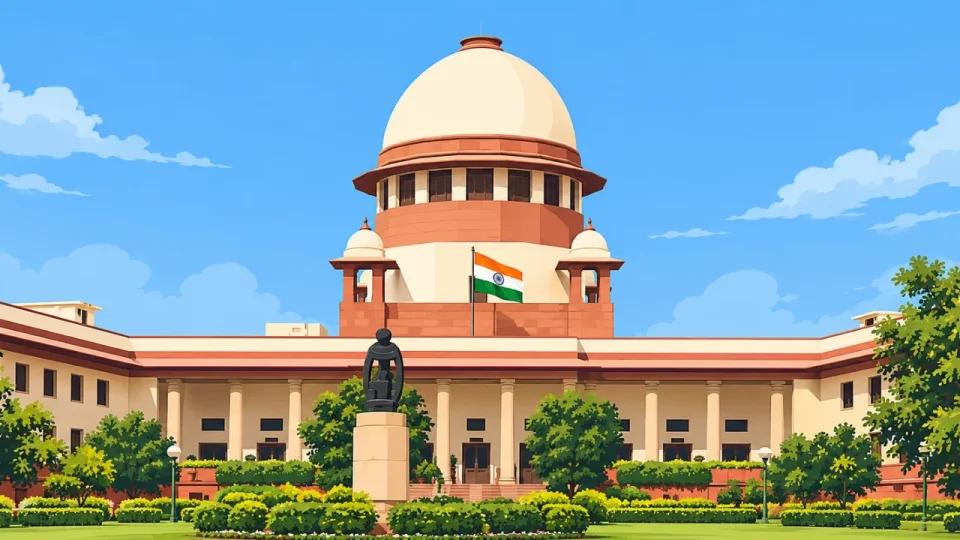
Supreme Court on Civil Society Voter Awareness Campaign: The Election Commission of India (ECI) cannot claim monopoly over voter awareness campaign, the Supreme Court observed on Monday while directing the Rajasthan State poll panel to consider the request by a civil society group to carry out voter awareness campaigns during the ongoing local body elections in the state.
A bench comprising Chief Justice of India (CJI) Surya Kant, Justice Joymalya Bagchi and Justice V Mohana rejected the state poll body's submission justifying the bar on civil society organisations on the ground that it was already conducting voter awareness campaigns in the state. Justice Bagchi emphasised that the poll panel should rather welcome if others take initiatives of spreading poll awareness. "Everyone has the right to go for voter awareness. You should welcome it," Justice Bagchi said.
Also Read: 3 AAP Leaders Switch Sides; What Does It Mean for BJP in Punjab?
Poll Panel Asked to Reconsider Restriction Within 2 Days
Social activists Aruna Roy and Nikhil Dey, co-founders of the Mazdoor Kisan Shakti Sangathan (MKSS), had challenged the state election commission's decision rejecting permission for their campaign. The panel had issued prohibitory orders under section 163 of the BNSS (the Bharatiya Nagarik Suraksha Sanhita) in poll-bound areas. Observing that civil society organisations should be encouraged rather than restricted, the court directed the state election commission to reconsider the organisation's request within 48 hours.
Advocate Prashant Bhushan, appearing for activists, had challenged the Rajasthan poll panel's refusal to allow the petitioner organisation to undertake voter awareness activities in the run-up to the local body elections. Bhushan submitted that the campaign, which has been conducted since 2004, seeks to educate voters about their democratic rights and electoral choices, including the option of None of the Above (NOTA).
It also aims to discourage electoral malpractice by sensitising voters against accepting money or other inducements in exchange for their votes, he added. He said the proposed activities were entirely non-partisan, did not support or oppose any candidate, and involved small groups conducting interactive awareness sessions in villages.
Why State Poll Body Opposed Civil Society Groups
The State Election Commission, on the other hand, alleged that it had examined the representation and apprehended that the proposed campaign may be undertaken at the behest of another person. It was already conducting its own voter awareness programmes, the panel pointed out. Justice Bagchi, however, rejected the Commission's reasoning, observing that its own awareness initiatives could not be a ground to prevent other organisations from undertaking similar efforts.
Also Read: The Slate Opinion - From the Banks of Godavari: What Kumbh Teaches us About Life
"That is not something within your domain. If you are conducting it, that does not stand in the way of any other authority conducting a voter awareness exercise. You cannot restrict people from doing it. They will be your helping hand," the judge observed. The bench further clarified that while the Commission could regulate any corrupt practices carried out in the guise of voter awareness, it could not take over or monopolise such initiatives. "If they indulge in any corrupt practices in the name of voter awareness, you are there to regulate. But you cannot take over or monopolise voter awareness exercises," Justice Bagchi said.
The Panchayati Raj elections in the state are being held in four phases. The elections cover 41 Zila Parishads, 457 Panchayat Samitis and 14,403 Gram Panchayats, with more than 4.03 crore voters reportedly eligible to exercise their franchise.