Jamia Standoff: Poll Demand, ‘Free Kashmir’ Graffiti, Political Involvement and a Campus on Edge
Jamia Millia Islamia shifts all classes online as student protests over union elections escalate, leading to police detentions and a political row over campus graffiti.
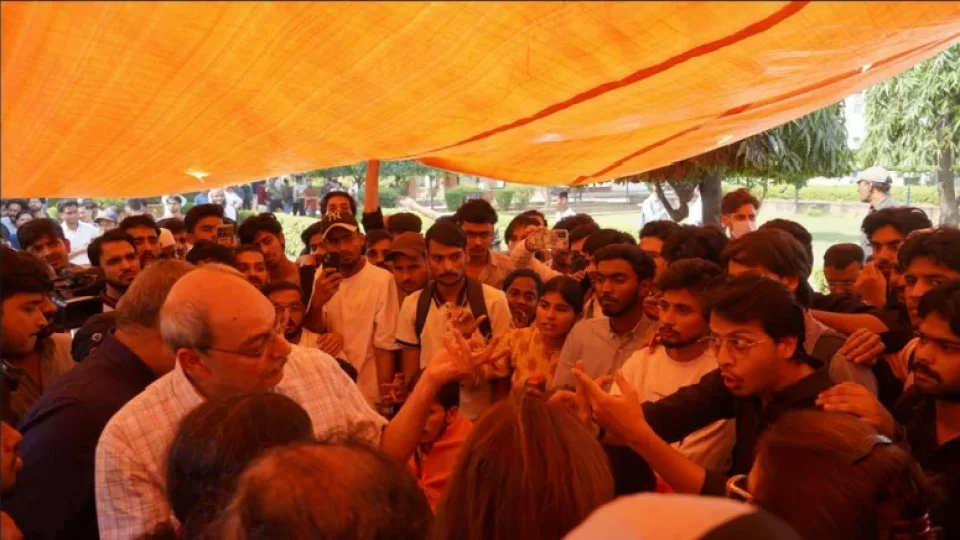
Jamia Controversy: Protests at Jamia Millia Islamia (JMI) continued on Sunday, leaving the Delhi Police and students face-to-face amid a complete campus lockdown. The demonstration initially began with demands for the restoration of the Jamia Millia Islamia Students’ Union (JMISU) and the conduct of official student union elections. However, the university administration’s order on Saturday turned the movement into a ‘Gate Kholo’ (Open Doors) campaign.
On Sunday, several students were reportedly detained by the Delhi Police. In a video shared by All India Students’ Association (AISA) president Neha Bora, police personnel can be seen removing protesters amid slogans of “Dilli Police Go Back”. She said, “The BJP govt, Delhi Police & Jamia admin are working tirelessly & brutally to break JMI's resolve. Yesterday students were attacked, today ID card carrying students were prevented from entering their own campus and detained. The only people working harder are Godi media dalaals! But students of JMI remain unshaken! Salute and congratulations to them!”
The BJP govt, Delhi Police & Jamia admin are working tirelessly & brutally to break JMI's resolve. Yesterday students were attacked, today ID card carrying students were prevented from entering their own campus and detained. The only people working harder are Godi media dalaals! But students of JMI remain unshaken! Salute and congratulations to them! Video: aisa_jamia (Instagram)
— Neha (@neha_aisa) October 25, 2026
A day before, on Saturday, October 24, JMI moved all academic classes online “to ensure the safety and well-being of bonafide students” amid the intensifying demonstrations. The university said, “In view of the ongoing situation and in order to ensure the safety and security of bonafide students in the University Campus, the Competent Authority, JMI, has decided to conduct classes of all courses of the University through online mode with immediate effect until further notice.” This was followed by the campus closure.
What Is Happening Inside the Campus?
A group of students demanding the restoration of student union elections began their strike on October 12, setting up a tent near Ghalib Lawn (Gate No. 7). The administration objected to the location, reminding the students that Ghalib Lawn is not a designated protest site and that Gate No. 18 is the designated location. More students joined the ongoing strike on October 22, as the administration had yet to respond to their demands.
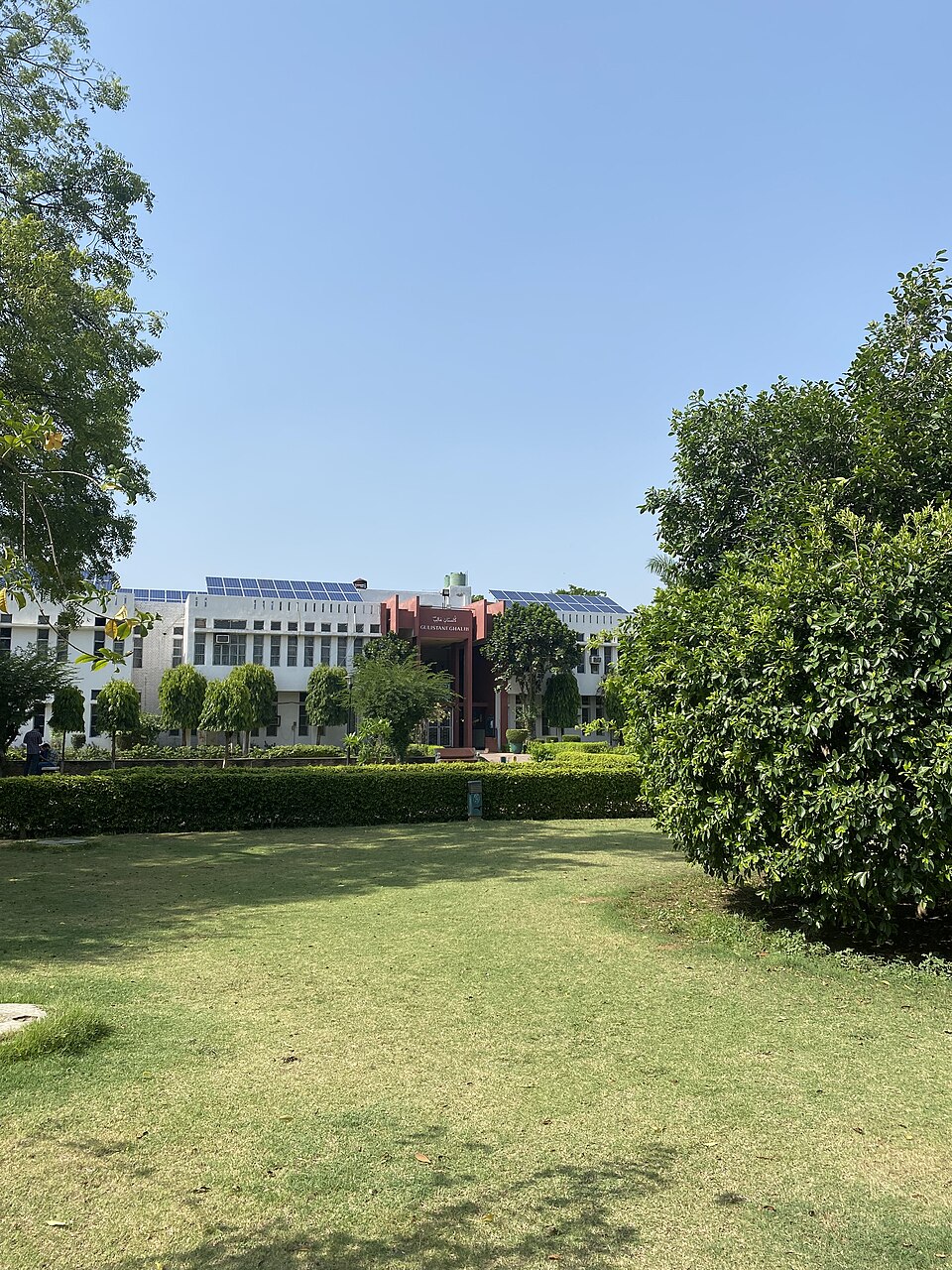
Meanwhile, the administration claimed that it had attempted to hold negotiations with the students three times and had also agreed to review action against the protesting students, but they did not budge. The administration maintained that elections had to be held constitutionally and on time. It said declaring a date at this stage, as demanded by the students, would be “premature”.
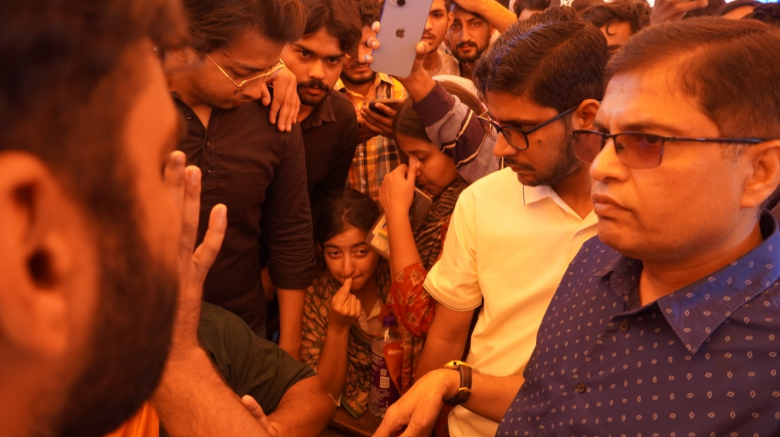
“The JMI Students’ Union was suspended in 2006 following recurring incidents of violent clashes, attacks on teachers and occasional disruptions of classes. The committee noted that the current administration had promptly notified the constitution of a JMISU Constitution Draft Committee on October 21, 2026, an initiative that no Vice-Chancellor or Registrar had undertaken since 2006. Despite this step, the students on hunger strike had shown no willingness to engage with the administration to find an amicable resolution,” the university said in an official statement.
The university also addressed the involvement of political elements, which it said had escalated the situation. It observed that the students had remained adamant and intensified tensions by inviting leaders and representatives of local, regional and national political parties and groups.
On Friday evening, authorities detained political figures, including Congress MP Imran Masood and Samajwadi Party MP Mohibbullah Nadvi, when they attempted to visit the campus. “Teachers expressed concern that these developments could further vitiate the campus atmosphere and lead to chaos, hooliganism, vandalism and further defacement of university walls,” the statement added. This appeared to refer to graffiti reading “Free Kashmir” and “Free Sharjeel Imam”. Sharjeel Imam, a PhD student, has been lodged in Tihar Jail since 2020 in connection with a controversial speech at Aligarh Muslim University (AMU) during protests against the Citizenship Amendment Act (CAA) and the National Register of Citizens (NRC).
Student representatives and independent observers, including former JNUSU president Aishe Ghosh, criticised the administration’s actions in social media posts, describing the construction of walls and security interventions as an unacceptable attack on campus democracy. Many also alleged that the administration had attempted to remove students under the guise of negotiations.
SOS Jamia This is unacceptable what's happening inside Jamia. While the students are on hunger strike demanding restoration of campus democracy, demand for students' union, the Administration is carrying out this kind of attack. We stand in solidarity with the students of Jamia in their fight for campus democracy ✊
— Aishe (ঐশী) (@aishe_ghosh) October 24, 2026
In another video posted on the Students’ Federation of India’s (SFI) Instagram page, activist Danish Ali, described as an AISA affiliate and joint secretary of the Jawaharlal Nehru University Students’ Union (JNUSU), alleged that a group of professors had met the protesting students. A while later, security guards arrived and forcibly tried to remove the protesters. Ali further alleged that the guards snatched the hijabs (headgears) of female students and brutally assaulted the protesters.