Whistleblowers Face ‘Systemic Persecution’, Magsaysay-Winning IFS Officer Chaturvedi Tells SC
Ramon Magsaysay Award-winning IFS officer Sanjiv Chaturvedi has moved the Supreme Court seeking an interim protection framework for whistleblowers, citing the Centre’s decade-long failure to implement the Whistleblowers Protection Act, 2014, and alleging systemic persecution of those exposing corruption.
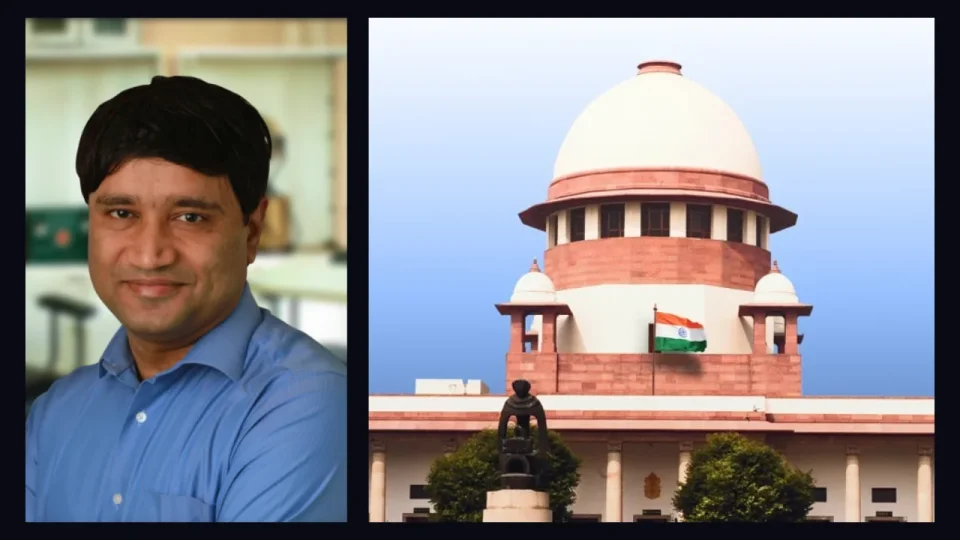
Indian Forest Service (IFS) officer and Ramon Magsaysay Award winner Sanjiv Chaturvedi has approached the Supreme Court seeking an interim institutional framework to protect whistleblowers, arguing that the Centre’s failure to operationalise the Whistleblowers Protection Act, 2014, has created a "constitutional and statutory vacuum."
Chaturvedi, who has exposed several high-profile corruption cases during his career, reportedly now faces multiple litigations and administrative actions, which were submitted in a pending petition that the persecution of whistleblowers in India is no longer an exception, but a "systemic norm".
Also Read: Akhilesh Rallied Alongside Rahul; What Does Congress' 181-Seat UP Pitch Mean For Their Bonhomie?
The Legal Battle Over a ‘Dead Letter’ Law
In his plea, Chaturvedi pointed out that although Parliament passed the Whistleblowers Protection Act in 2014 and notified it on May 12 that year, the legislation has remained a "dead letter" for over a decade because the Central government never issued the mandatory Official Gazette notification under Section 1(3) to bring it into force, reports PTI.
The Centre had previously held back operationalisation citing the need for amendments concerning national security and sovereignty. Chaturvedi elaborated that the Whistle Blowers Protection (Amendment) Bill, 2015, was passed by the Lok Sabha in May 2015, it lapsed upon the dissolution of the 16th Lok Sabha and was never reintroduced.
"The Bill has since lapsed upon the dissolution of the 16th Lok Sabha. Since then, the government has taken no legislative initiative whatsoever to re-introduce the Bill or to enact the requisite amendments, nor has the government considered bringing the existing Act into force even without the proposed amendments, and prescribing appropriate rules to address the purported concerns, with the result that the Whistle Blowers Protection Act, 2014, is still non-operational/dysfunctional," his plea said.
"The inaction of the executive is not merely a policy failure - it is a constitutionally impermissible abdication of a statutory obligation that strikes at the foundational rights of whistleblowers as well as citizens guaranteed under Articles 14, 19(1)( a) and 21 of the Constitution, creates a nationwide chilling effect on anti-corruption disclosures, undermines the very rule of law, which this court has consistently sought to fortify and continues to keep the lives of whistleblowers under tenterhooks," he said, reported the news agency.