For One More Berth, Delhi-NCR Sleeper Buses Expose a Wider Failure of Safety Oversight
A report submitted to the Delhi Disaster Management Authority flags illegal modifications, excess berths, flammable interiors and electrical hazards in sleeper buses, raising questions over safety inspections and regulatory enforcement in Delhi-NCR.
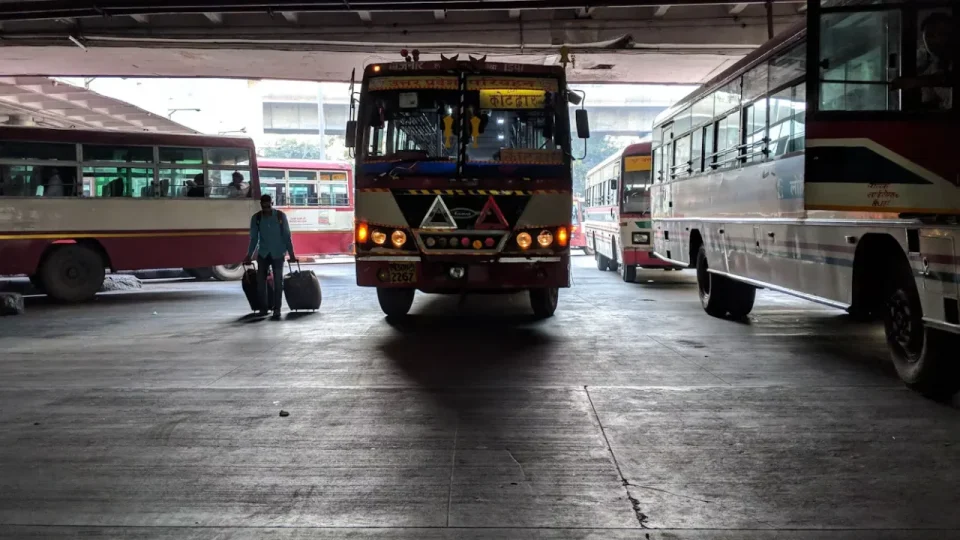
For passengers travelling on sleeper buses from Delhi, a comfortable overnight journey should not come at the cost of their safety. Yet, operators deliberately and illegally compromise passenger space to accommodate an extra berth. This is just one of many ways in which bus safety is jeopardised to earn an extra penny. Fatalities are often caused not only by a lack of safety protocols but also by the failure of basic vehicle systems.
A report titled Note on Systemic Safety Failures in Inter-State Sleeper Coaches, submitted to the State Executive Committee (SEC) of the Delhi Disaster Management Authority (DDMA), has revealed serious safety violations in sleeper buses involved in fire incidents. In a majority of cases, the mishaps could have been averted had operators complied with the prescribed safety protocols.
How Operators Compromise Safety to Maximise Profits
The report highlights how operators use cheaper components to give their buses an expensive appearance. "A standard chassis is designed for a specific load and centre of gravity. Operators buy a chassis registered as a 'seater' (lower tax, simpler compliance) and send it to an unauthorised workshop to fabricate a sleeper body. By narrowing the gangway and blocking exits, they can fit 40 berths instead of the 30 allowed by AIS-119. These 10 extra berths represent a 33% increase in revenue per trip. Over a vehicle's 10-year lifespan, this amounts to millions of rupees in illegal profit, far exceeding the cost of bribes or occasional fines. This arbitrage is the primary engine of the safety crisis."
Rajasthan Bus Fire Exposes Electrical Safety Risks
To illustrate the risks associated with cheaper chassis and expensive-looking buses, the report cites a horrific incident in Rajasthan last month, in which 20 people were burnt alive following a fire reportedly caused by a short circuit in the air-conditioning system. "Unaccredited bodybuilders frequently tap into the chassis electrical harness to power aftermarket AC units, entertainment systems, and charging ports for every berth. These 'parasitic loads' exceed the rated capacity of the wiring, leading to overheating, insulation failure, and ignition," the report states.
The report describes the resulting danger as the "Sealed Box" effect. Because the air-conditioned bus was completely sealed and lacked functional emergency hammers, which had either been stolen or gone missing, passengers were trapped inside an enclosure of glass and steel. As toxic combustion gases rapidly filled the cabin, the inability to break the windows turned the vehicle into a fatal gas chamber.
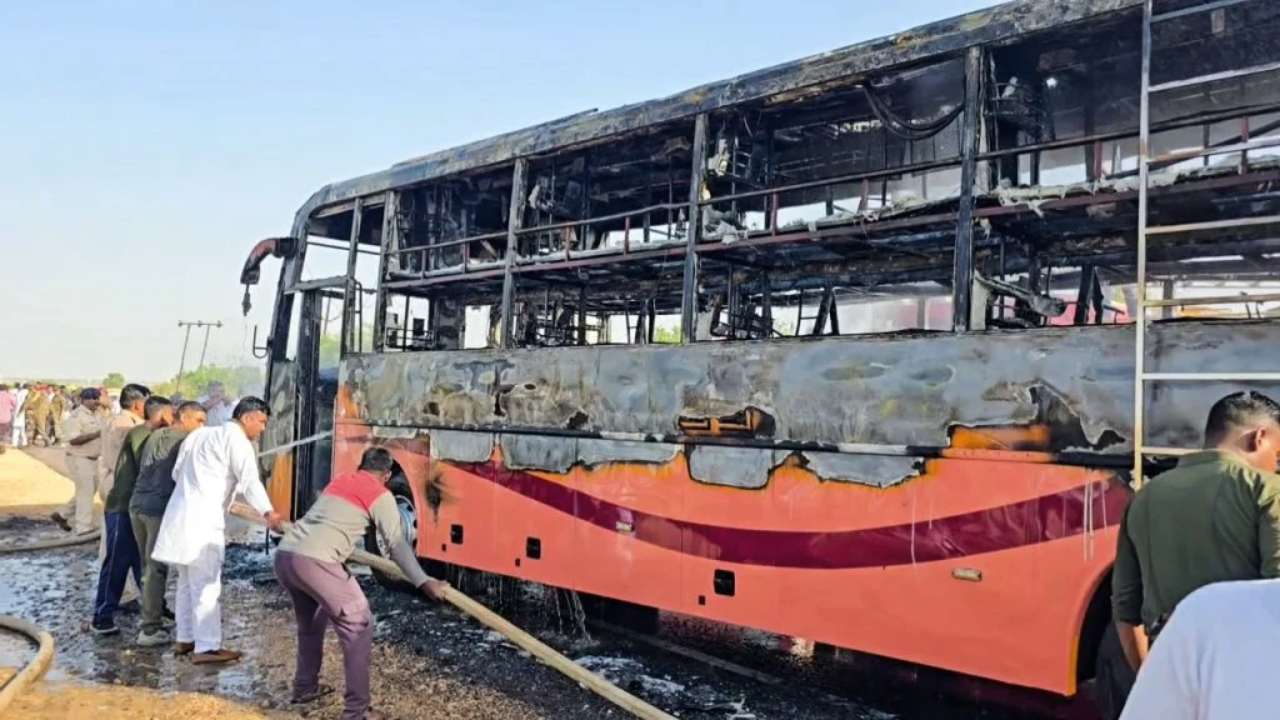
Rajasthan Bus Fire, Charred 20 Passengers | Image Source: DD News
Shamnath Marg Fire Raises Questions Over Delhi's Bus Safety Checks
The dossier examines similar incidents across several states before turning its attention to Delhi, a major destination for buses travelling from across India. It also raises concerns about an incident involving a private sleeper bus that caught fire near 5, Shamnath Marg, close to the Divisional Commissioner's office in Delhi's Civil Lines area, on 2 December 2025.
The private sleeper bus, bearing registration number AR 2R20 6001 and operated by Laxmi Holidays, caught fire and was rapidly reduced to a charred skeleton. According to the report, the fire load was intensified by the use of illegal, non-fire-retardant materials, including polyurethane foam mattresses and synthetic curtains, in violation of AIS-119 standards.
Although all 10 to 15 passengers escaped uninjured, the report describes the outcome as a statistical outlier and a "High-Potential Near Miss". Their escape was attributed to low occupancy, clear traffic in the early morning and the bus's proximity to a fire station. A similar incident involving a fully occupied bus during peak hours could have resulted in mass casualties, underscoring the need for urgent policy reforms by disaster management authorities.
For Delhi, the incident raises an important question: are buses entering and operating within the capital being adequately screened for safety, including those registered in other states?
What Turns a Bus Fire Into a Disaster?
The dossier identifies three broad areas of concern in sleeper coaches.
Flammable interiors: Mattresses, curtains, foam and plywood partitions can accelerate the spread of fire if they do not meet the applicable fire-safety requirements.
Inadequate escape routes: Narrow gangways, obstructed exits and missing emergency hammers can make evacuation difficult, particularly for passengers occupying upper berths.
Electrical failures: Faulty wiring and unauthorised modifications to air-conditioning units and other electrical systems can create ignition risks.
What Should Authorities Check?
| Safety component | What needs checking | |
| Emergency exits | Required exits are accessible and functional | |
| Gangways | Escape routes are clear of berths and luggage | |
| Fire safety | Required detection and suppression systems are operational | |
| Windows | Emergency-release provisions meet applicable requirements | |
| Electrical systems | Wiring and modifications comply with safety standards | |
| Certification | Fitness and body-approval documents match the vehicle |
Why Vehicle Inspections and Disaster Management Matter
The dossier also recommends making better use of the VAHAN vehicle database, improving coordination with other states and relying more heavily on automated testing stations to improve the reliability of vehicle inspections.
It invokes the Disaster Management Act, 2005, and its 2025 amendments to argue that sleeper bus fires should be treated as a preventable disaster risk rather than solely as a transport regulation issue. The precise legal powers available for enforcement, however, would depend on the applicable statutory provisions and procedures.
Section 72 of the Disaster Management Act, 2005
Section 72 has significant implications for the Delhi Transport Department. The dossier highlights the need to strengthen the physical inspection process for issuing Fitness Certificates (FCs). Granting a fitness certificate to a non-compliant bus undermines safety oversight and can increase the risk of a preventable disaster. Section 72 establishes the overriding effect of the Disaster Management Act over other laws where the provisions are inconsistent.
The National Disaster Management Authority (NDMA) guidelines on Fire Services and the Incident Response System (IRS) provide an important framework for strengthening disaster preparedness and response. The dossier's call for a "Zero-Tolerance" enforcement campaign reflects the emphasis on proactive prevention rather than relying solely on emergency response after an incident.
Furthermore, the dossier advocates for adherence to AIS-135 fire-safety standards during routine fitness certification. Such measures, if applicable to the vehicles and inspections concerned, could help incorporate standardised fire-risk mitigation into everyday transport management.
Can Passengers Verify a Bus's Safety?
For passengers, independently establishing whether a sleeper bus meets every technical safety requirement remains difficult. They can check whether visible exits are accessible, whether gangways are obstructed and whether the operator provides safety instructions. However, these checks cannot replace formal inspections, technical assessments and regulatory oversight.
The findings from Jaisalmer and the incident on Shamnath Marg underline the need for transparent safety inspections, functional emergency exits and accountability when violations are identified. Passengers should be able to book a sleeper berth with confidence, rather than uncertainty about whether the bus will protect them in an emergency.