25-Year Lok Sabha Seat Freeze, Women’s Quota: Kharge Tells Modi Govt ‘Don’t Bulldoze’ Again
Congress leader Mallikarjun Kharge urges Modi government to freeze Lok Sabha seats for 25 years, introduce women’s quota and hold all-party consultations on delimitation.
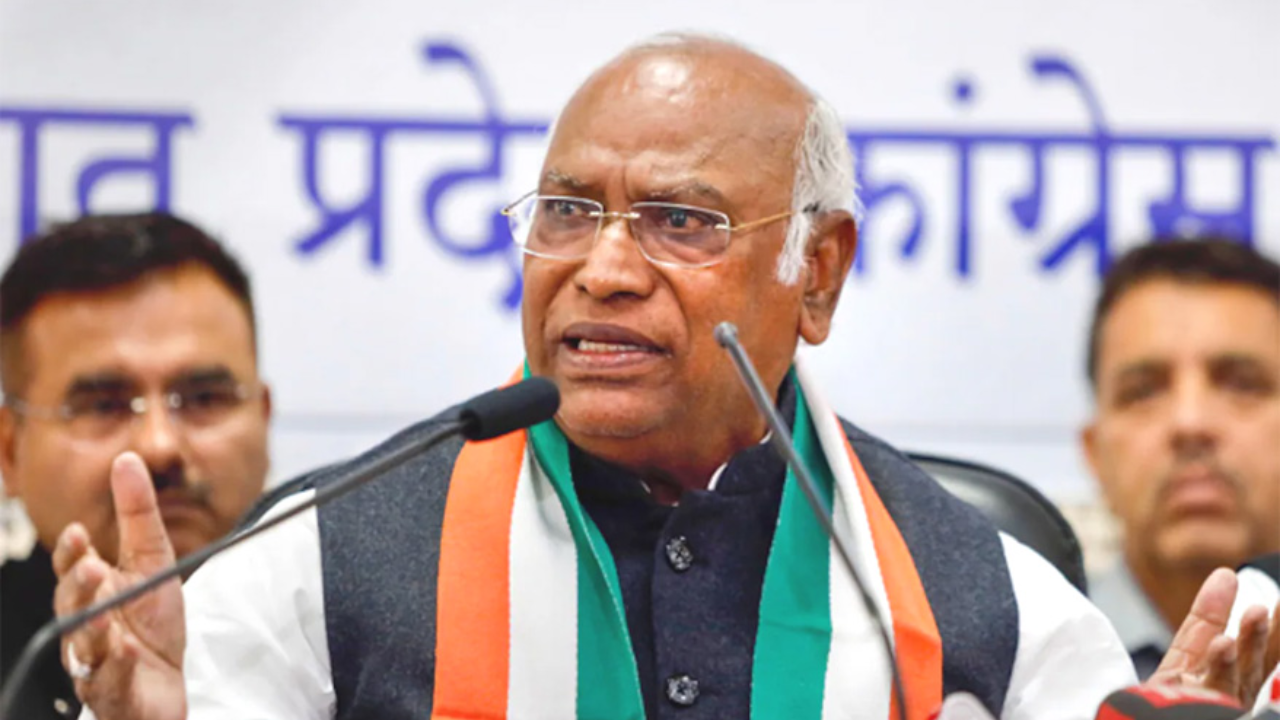
Congress leader Mallikarjun Kharge urges Modi government to freeze Lok Sabha seats for 25 years, introduce women’s quota and hold all-party consultations on delimitation.
By Pranjal Gupta
New Delhi, August 27: Congress president Mallikarjun Kharge on Thursday reiterated his request to convene an all-party meeting on the issue of delimitation. In a letter to Prime Minister Narendra Modi, Kharge called for freezing the current strength of the Lok Sabha for the next 25 years. He also called for introducing one-third reservation for women from the 2029 elections.
Kharge opened his letter by saying, "I had last written to you on July 16, 2026", requesting an all-party meeting days before the Monsoon Session of Parliament began. According to him, fresh concerns have emerged after the Union Minister of Parliamentary Affairs stated that a special session of Parliament could be convened.
"I am writing now to reiterate this request since the Union Minister of Parliamentary Affairs has publicly stated in a television interview last night that such a special session of Parliament could well be convened," Kharge said in the letter.
This, he said, perhaps explains the continued delay in the prorogation of the Monsoon Session.
What Kharge Demands
Congress president Mallikarjun Kharge has urged Prime Minister Narendra Modi to consult parties and states before advancing delimitation proposals. (Image Source:
apcc.assam.org
)
Maintain Existing Lok Sabha Strength: Keep the total number of Lok Sabha seats at 543 for another 25 years.
Freeze State-Wise Seat Distribution: Preserve the current state-wise allocation of Lok Sabha seats for 25 years.
Implement Women's Reservation: Introduce one-third (33%) reservation for women starting from the 2029 Lok Sabha elections.
Convene All-Party Meeting: Call a meeting with all political parties to discuss any proposed delimitation exercise.
Provide Time for Consultation: Ensure that all political parties and state governments are given sufficient time to review and study the proposals.
This is an issue that has enormous significance for the country, he asserted.
"Please do not again try and bulldoze as you attempted on April 16 and 17, 2026," Kharge said in his letter to Modi.
Sharing his letter on X, Kharge said, "I have written to PM Modi on delimitation, the delay in prorogation of the Monsoon Session of Parliament, and the likely special session mentioned by the Union Minister of Parliamentary Affairs in a television interview last evening."
Senior Congress leader Shashi Tharoor backed Kharge, saying, "One key additional detail is the request to consult state governments. The states are vital stakeholders in this exercise and no delimitation should be proposed without taking their views into account."
"In my intervention during the parliamentary debate on delimitation in the Lok Sabha in April 2026, I had called for a 'grand National consultation' on the issue before something of such portentous significance was finally decided," he said.
Tharoor said it was "truly deplorable" that the government was proceeding in a clandestine manner to achieve its goals without any such national consultation taking place.
Earlier this month, the Congress Working Committee passed a resolution reiterating its commitment to two key demands. The party dismissed the Prime Minister's appeal for bipartisan support on the delimitation-linked women's reservation bill as mere "drama", alleging that his true focus was "Modi preservation, not women's reservation".
The criticism followed a major legislative setback for the Modi government during the Budget Session on April 17, when the constitutional amendment bill failed to pass in the Lok Sabha.
While 298 of the 528 voting MPs supported the measure and 230 opposed it, the bill fell short of the 352 votes required to secure a two-thirds majority.