All Women Judges in Seven Benches: What the Historic Karnataka HC Roster Means for Judicial Diversity
The Karnataka High Court's Dharwad Bench will make history on August 1 as all seven Benches are presided over exclusively by women judges, marking a rare milestone in the higher judiciary. The special roster also reignites the debate on gender representation in constitutional courts. By Mahima Katal In a first for the Karnataka High Court's Dharwad Bench, all seven Benches, comprising both Division and Single Benches—will be presided over exclusively by women judges on August 1, 2026. The...
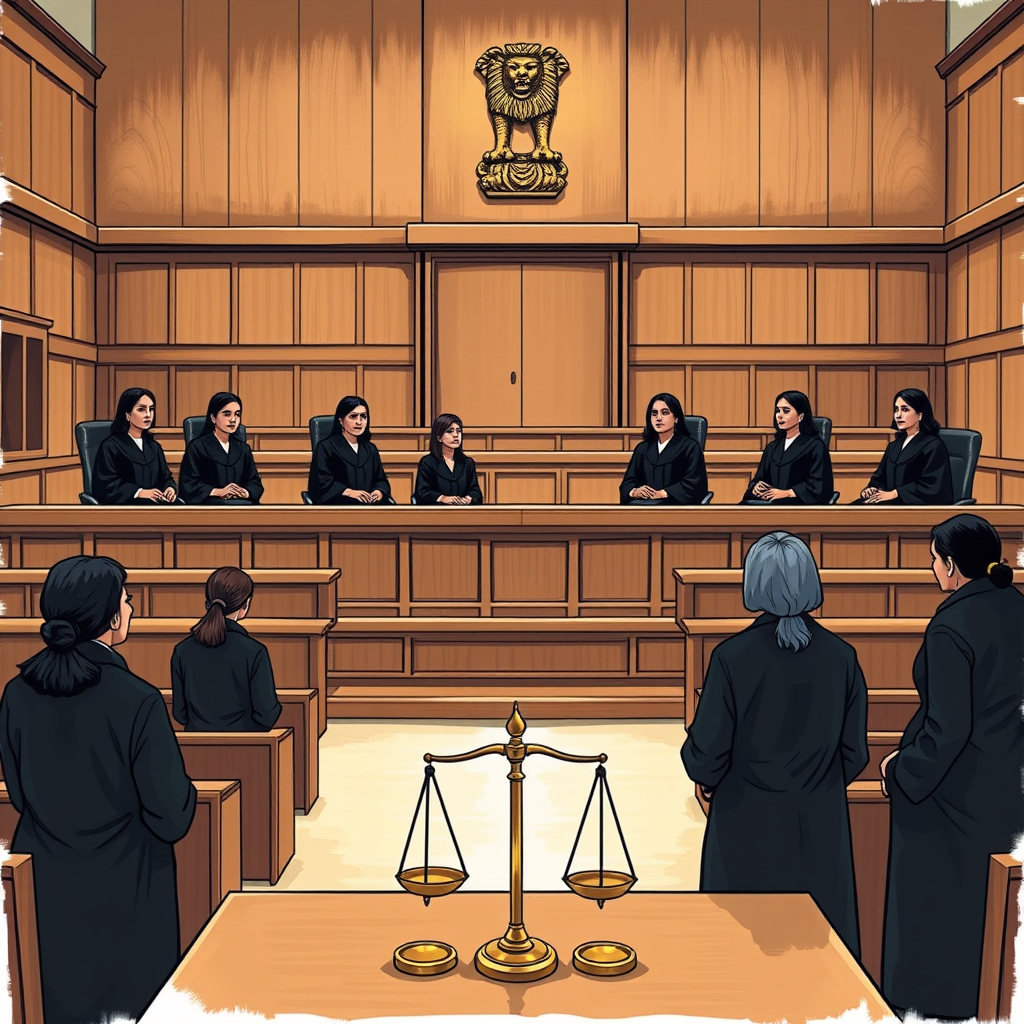
The Karnataka High Court's Dharwad Bench will make history on August 1 as all seven Benches are presided over exclusively by women judges, marking a rare milestone in the higher judiciary. The special roster also reignites the debate on gender representation in constitutional courts.
By Mahima Katal
In a first for the Karnataka High Court's Dharwad Bench, all seven Benches, comprising both Division and Single Benches—will be presided over exclusively by women judges on August 1, 2026. The special roster, issued under the orders of Chief Justice Vibhu Bakhru, marks a rare and symbolic moment in the history of India's higher judiciary, where women continue to remain significantly underrepresented despite steady gains over the past few decades.
The roster notification assigns all judicial work scheduled for August 1 to women judges, making it one of the few known occasions in the country where an entire High Court Bench has been constituted exclusively by women. While the arrangement is limited to a single day's sitting, it has reignited conversations around gender representation on constitutional courts and whether symbolic milestones can translate into lasting institutional change.
Three Division Benches will hear a wide spectrum of appellate and writ matters. Justice Anu Sivaraman and Justice K.G. Shanthi will preside over the principal Division Bench dealing with civil and writ matters. Justice Jyoti M. and Justice P. Sree Sudha will hear miscellaneous first appeals relating to motor vehicle, employees' compensation and ESI matters, tax appeals, as well as labour and service-related writ appeals. The third Division Bench, comprising Justice Lalitha Kanneganti and Justice K.S. Hemalekha, will take up family court appeals, excise and electricity-related writ appeals, along with matters arising from the Karnataka State Administrative Tribunal.
Four women judges have also been assigned Single Bench jurisdiction. Justice Chillakur Sumalatha will hear service, labour and general writ petitions, besides family court revision petitions. Justice Tara Vitasta Ganju has been rostered to hear education and civil procedure-related writ petitions. Justice Geetha K.B. will deal with miscellaneous first appeals, arbitration petitions and commercial suits, while Justice Rajeshwari N. Hegde has been entrusted with all criminal matters as well as civil matters not assigned elsewhere.
The roster has been issued by Registrar (Judicial) Ron Vasudev in accordance with the orders of Chief Justice Vibhu Bakhru.
While the all-women roster is being widely welcomed as a significant milestone, it also highlights the continuing imbalance in judicial appointments across the country. Women constitute a substantial proportion of judges in the subordinate judiciary in several States, yet their representation drops sharply at the High Court level and remains even lower in the Supreme Court. The reasons are varied, ranging from the relatively smaller pool of senior women advocates to long-standing structural barriers in judicial appointments and career progression.
The Dharwad Bench's initiative therefore carries significance beyond symbolism. It underscores the growing presence of women in constitutional courts while simultaneously reminding policymakers and the legal fraternity that isolated milestones cannot substitute for sustained institutional reform. Greater representation on the Bench is often linked to improved public confidence in the justice system and a judiciary that better reflects the diversity of the society it serves. At the same time, judicial appointments in India continue to be governed by merit, seniority and constitutional processes, making diversity one among several considerations.
Although the August 1 roster is an administrative arrangement for a special sitting rather than a permanent restructuring, it marks an important moment in the evolution of India's higher judiciary. Whether such initiatives remain commemorative events or become indicators of a broader transformation in judicial representation will depend on future appointments and the sustained inclusion of women at every level of the constitutional courts.