Assam's missing flood buffer is stuck a decade behind schedule
Assam floods despite a rainfall deficit because upstream factors, flow timing, sediment, sudden discharge, shape severity beyond local rain. SUMP, India's dam meant to buffer Assam against exactly this, remains stalled six years on, stuck between coercive authority and unresolved local consent, even as China's Medog dam nears completion upstream. By Mahima Katal New Delhi, Aug 7: Every monsoon that passes without India's Siang dam is a monsoon Assam floods without the one piece of upstream...
Assam floods despite a rainfall deficit because upstream factors, flow timing, sediment, sudden discharge, shape severity beyond local rain. SUMP, India's dam meant to buffer Assam against exactly this, remains stalled six years on, stuck between coercive authority and unresolved local consent, even as China's Medog dam nears completion upstream. By Mahima Katal
New Delhi, Aug 7: Every monsoon that passes without India's Siang dam is a monsoon Assam floods without the one piece of upstream infrastructure built to soften the blow, even as China's own dam on the same river moves toward completion
Representational Image
Assam's floods are conventionally explained by rainfall, and this year that explanation has already broken down. The State recorded a rainfall deficit through much of the pre-monsoon period, yet more than 1.3 lakh people have been affected and over 87 have died in flooding so far in 2026. The reason lies partly upstream, outside Assam and outside India's control. The Brahmaputra enters the State already shaped by conditions on the Tibetan plateau, where the river originates as the Yarlung Tsangpo, and by the Siang stretch in Arunachal Pradesh, where it collects volume before reaching the Assam valley. Flow timing, sediment load, and the risk of sudden discharge from upstream infrastructure all bear on how severe a flood becomes, independent of how much rain falls locally that season.
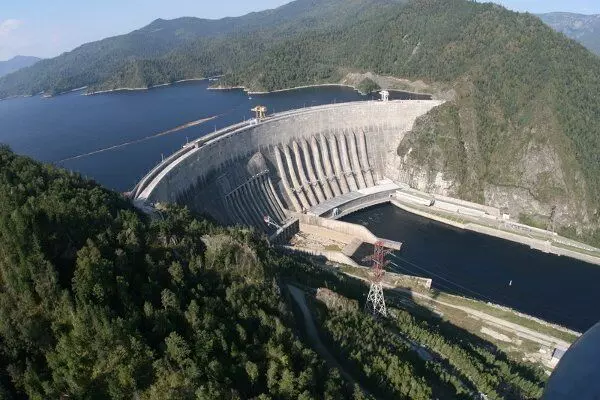
This is precisely the gap the Siang Upper Multipurpose Project was meant to close. Proposed in various forms since the early 2000s and revived with new urgency after China announced its 60,000 MW Medog hydropower complex on the Yarlung Tsangpo, SUMP was pitched not only as a strategic counterweight to Chinese upstream leverage but explicitly as flood-control infrastructure. A large storage dam on the Siang, in this framing, would regulate flow into Assam, absorbing peak discharge during heavy monsoon spells and offering a buffer against any sudden release from dams further upstream in Tibet. It is the one piece of India-side infrastructure directly responsive to the flood-governance failures that have made Assam's monsoon predictable in its devastation and unpredictable in its causes.
Six years after the project was revived, that buffer does not exist. The Siang project as currently conceived was rebuilt from the wreckage of an earlier framework: in 2022, the Gauhati High Court cancelled all 44 dams then proposed on the Siang river system over procedural and environmental lapses, and what survives as SUMP today carries the same execution problems that sank its predecessor. The Centre has not finalised a dam site. Preliminary survey work stalled against sustained opposition from the Adi community in the Siang valley, prompting a Rs 350 crore Special Development and Livelihood Programme designed explicitly to secure local consent before a pre-feasibility study could proceed.
Village-level agreements have followed unevenly since, with more than a hundred independent scientists and researchers calling for a halt to all survey activity, arguing that consent obtained under financial inducement and in the presence of central security deployments cannot meaningfully satisfy the standard that displacement on this scale would ordinarily require. Current infrastructure timelines place construction start in 2028 and commissioning in 2032, meaning at least six more monsoon seasons will pass in Assam without the buffer the project was designed to provide.
This delay matters more, not less, because of what is happening upstream in the interim. China's Medog project is already under construction, and while claims that it could simply switch off the Brahmaputra's flow are not supported by the river's hydrology, run-of-the-river projects of this scale do carry real risks for downstream flow timing and sediment behaviour, the two variables most directly tied to flood severity in Assam. India's own hydrological visibility into that upstream stretch is limited to a data-sharing arrangement that has lapsed and been renewed repeatedly since 2002, including a suspension during the 2017 Doklam standoff, leaving Assam's flood forecasting dependent on a mechanism with no binding force. Against that backdrop, a domestic storage buffer was never a discretionary asset. It was the fallback for a system that has neither reliable upstream data nor a functioning basin-wide institution to compensate for its absence, a gap already visible in the Brahmaputra Board's own record of approving only 52 of 73 identified basin master plans by 2025.
The comparison worth drawing is not simply that China is building and India is not. It is that the two projects are stalling for different reasons, and only one of those reasons is available to India as an explanation. The Brahmaputra Board fails through institutional weakness: no enforcement authority over State governments, chronic staff shortages, a mandate without means. SUMP fails through something closer to the opposite problem. The Centre has demonstrated real capacity here, deploying central forces into the Siang valley to manage protests and securing a statutory exemption from standard environmental clearance under the 2023 Forest Conservation Amendment Act. What it has not secured is legitimacy sufficient to convert that capacity into a durable settlement with the communities whose land the project requires. Coercive authority has not proven a substitute for consent, and the six-year delay against a flood risk the government itself calls urgent suggests the substitution does not work even on its own terms.
There is little value in treating this as a story about losing a race to Beijing. The more immediate cost is domestic and recurring: Assam enters each monsoon season with the same exposure it had before Medog was ever announced, because the infrastructure meant to change that exposure remains where it has been for most of the past decade, unbuilt. If the project's own justification is flood mitigation on a scale rainfall alone cannot explain, then every year SUMP stays stalled is a year that justification goes untested, while the risk it was meant to offset keeps moving toward completion on the other side of the border.