China Masters 'Throw and Catch' Technology: Launches Rocket into Space, Catches Booster at Sea
China successfully tests sea-based rocket booster recovery system: China Aerospace Science and Technology Corporation (CASC) confirms the first successful orbital-class booster recovery using a pioneering net-capture system in the South China Sea.
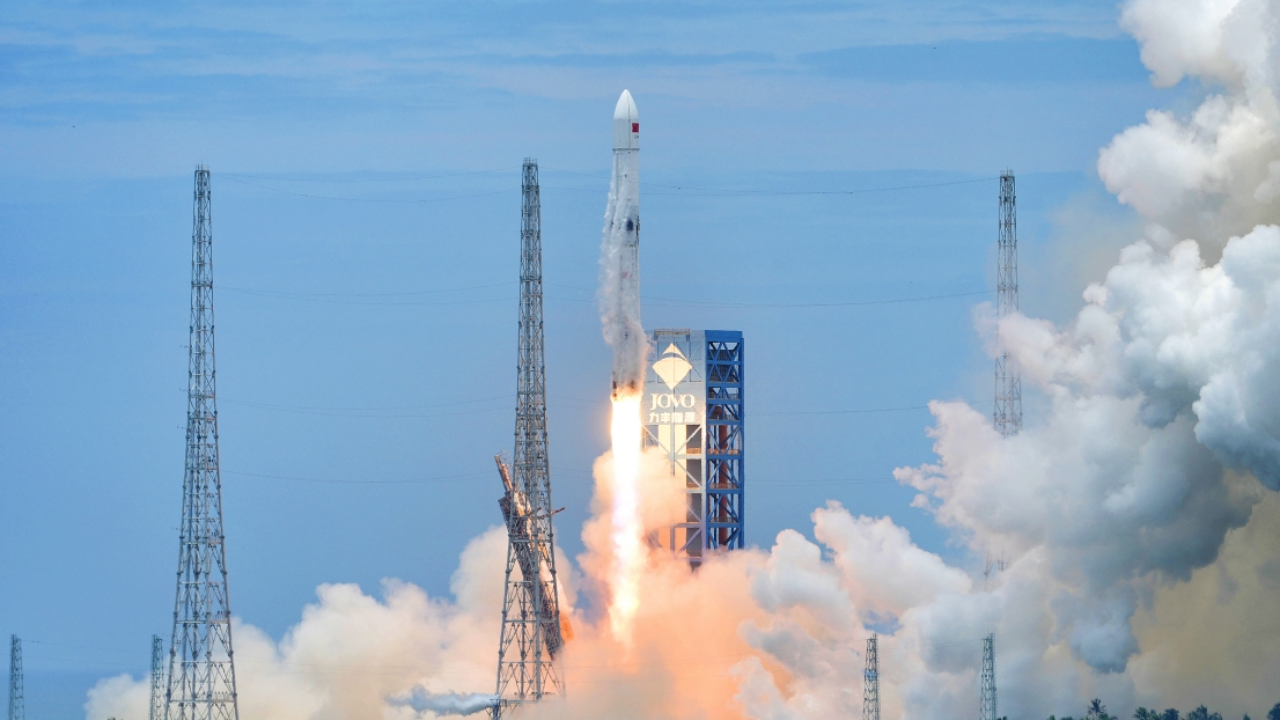
China successfully tests sea-based rocket booster recovery system: China Aerospace Science and Technology Corporation (CASC) confirms the first successful orbital-class booster recovery using a pioneering net-capture system in the South China Sea.
By Pranjal Gupta
New Delhi, July 10: China on Friday pulled off a major space milestone, which could change the trajectory of future missions. Basically, they launched the Long March-108 carrier rocket at the Hainan commercial spacecraft launch site, then safely caught its main booster, which fell back to Earth using a massive net on a ship.
"This mission marked China's first successful controlled recovery of a carrier rocket's first stage, representing a major breakthrough in the country's reusable rocket technology," said China Aerospace Science and Technology Corporation (CASC).
"The rocket, in its maiden flight, sent the payload into the preset orbit," they added.
It is a significant breakthrough because when a rocket launches, the heavy bottom half (the first stage or booster) runs out of fuel, detaches, and crashes into the ocean, turning into expensive junk.
China rocket booster landing: China successfully tests sea-based rocket booster recovery system (Image Source: CASC)
In this mission, China steered that falling booster backward down toward Earth. Instead of letting it land on legs (like SpaceX does), they used a net-capture system on a boat out at sea to literally catch the rocket. This means they check and use it again, saving millions of dollars.
To put it in perspective, building a rocket you used once is like throwing away the plastic bottle after drinking water, leading to more waste. By mastering the ability to safely catch and reuse the biggest part of the rocket, China has unlocked "reusable rocket technology," which will drastically lower the cost of its future space trips.
"After the separation of the rocket's first and second stages, the first stage returned and was successfully captured on a seaborne platform via a net-capture system. Both the launch and the first-stage recovery were successfully completed," the CASC stated.