Delhi's Lakshmi Yojana promised every woman, the fine print promises fewer
Delhi's Lakshmi Yojana offers Rs 2,500 monthly to eligible women; AAP calls residency and electricity-cap conditions exclusionary, while BJP says similar criteria exist in AAP-run Punjab's scheme. Separately, AAP MLAs were marshalled out on consecutive Assembly sittings over unrelated disciplinary issues, raising questions about opposition floor access during scheme debates. By Mahima Katal New Delhi, Aug 10: Delhi's Lakshmi Yojana was sold on a single figure: Rs 2,500 a month, direct to a...
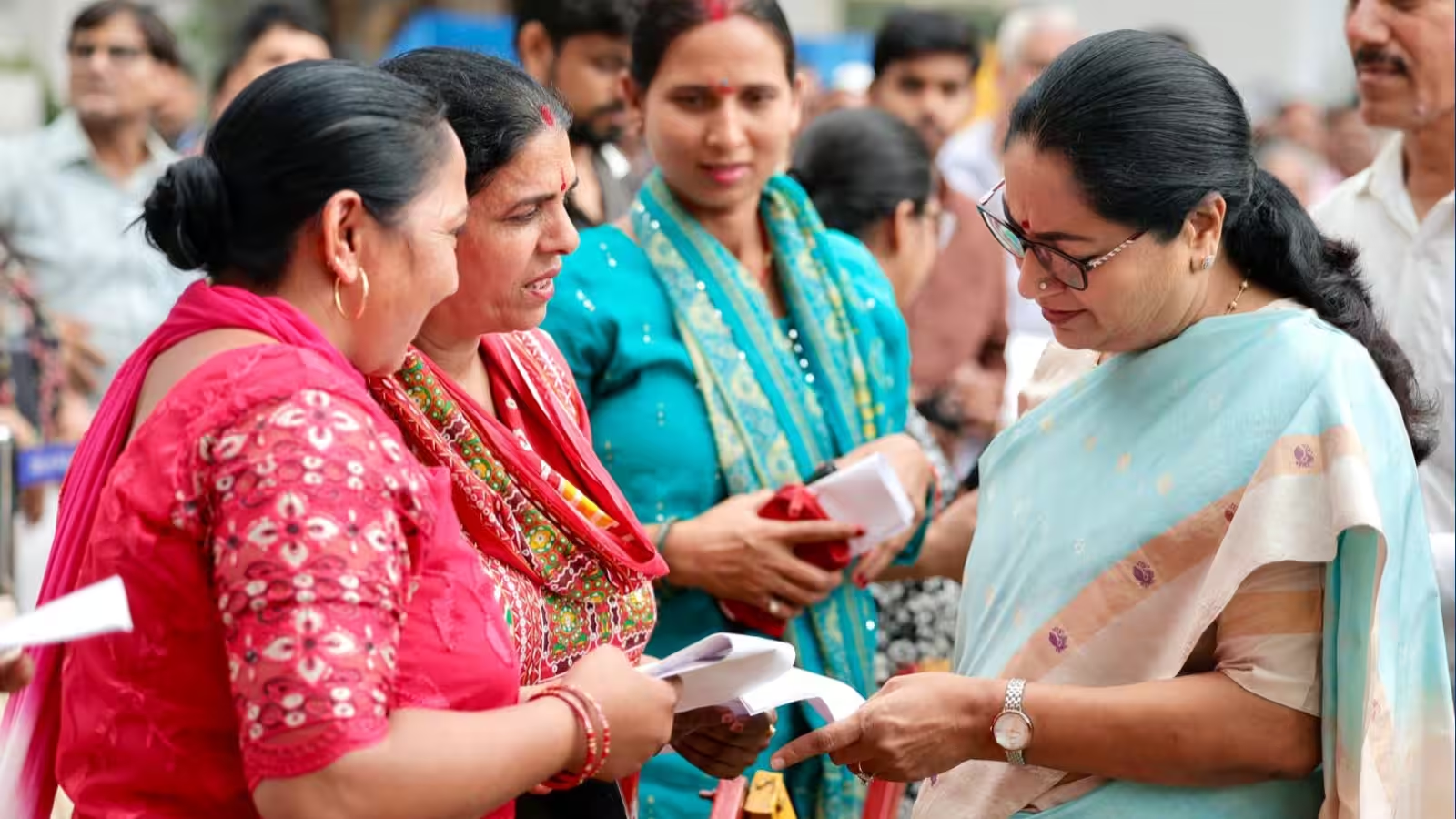
Delhi's Lakshmi Yojana offers Rs 2,500 monthly to eligible women; AAP calls residency and electricity-cap conditions exclusionary, while BJP says similar criteria exist in AAP-run Punjab's scheme. Separately, AAP MLAs were marshalled out on consecutive Assembly sittings over unrelated disciplinary issues, raising questions about opposition floor access during scheme debates.
By Mahima Katal
New Delhi, Aug 10: Delhi's Lakshmi Yojana was sold on a single figure: Rs 2,500 a month, direct to a woman's bank account. That figure was the entire pitch through the Assembly election campaign, repeated by the party's top leadership as an unconditional commitment to every woman in the city. What has since been notified is a scheme built around exclusions, and the gap between the two versions is now the actual political story.
Start with residency. A ten-year continuous residency requirement sits at the centre of the eligibility criteria. Delhi's population includes a large share of women who migrated from eastern Uttar Pradesh and Bihar, often within the last decade, for work or marriage. A flat ten-year bar does not merely tighten the applicant pool at the margins, it excludes an entire demographic segment that overlaps heavily with the lower-income households the scheme claims to target. A cash transfer aimed at economic security cannot simultaneously use duration of residence as a proxy for need, the two criteria measure different things, and conflating them produces exclusion that looks incidental but functions as design.
The electricity consumption cap compounds this. A 2,400-unit limit is being used as an indirect means test, on the assumption that higher consumption signals higher household income. But consumption is a household-level figure, not an individual one, and joint families, tenants, and women without independent metering are all vulnerable to being read out of eligibility by a number they do not control. Layered on top of the one-woman-per-family rule and the exclusion of women with more than three children, the scheme accumulates conditions that each sound like reasonable guardrails in isolation but compound into a filter far narrower than the headline promise implied.
The more consequential question is procedural, not technical. The opposition has claimed the eligibility criteria were finalised by the Delhi Cabinet directly, rather than arrived at through standard departmental rule-making. If accurate, that matters, because it means the exclusions were a political decision made at the point of notification, not an administrative side effect discovered later. A scheme can be broad in its public messaging and narrow in its Cabinet-approved conditions by design, and the sequencing here, expansive campaign promise first, restrictive notification after, fits a pattern that invites that reading whether or not it was the intent.
This is where the Assembly's second day becomes relevant, and not as a separate story. On the first day of the Monsoon Session, two AAP legislators were marshalled out while attempting to raise questions on an alleged medical procurement scam, and the rest of the opposition benches walked out once the House moved to take up the Lakshmi Yojana discussion. On the second day, six more AAP MLAs were marshalled out within minutes of proceedings resuming, this time over T-shirts the Speaker termed objectionable, worn during sloganeering on an alleged bicycle scam.
Two different pretexts, T-shirts on one day, unparliamentary conduct on the other, produced
the same outcome on consecutive sittings: opposition members removed from the floor before substantive questions on government schemes could be pressed. The Speaker's control over what counts as disorderly is a legitimate procedural power, but its repeated invocation at the exact moments opposition members attempt to raise the Lakshmi Yojana's eligibility criteria or an unrelated procurement allegation is a pattern worth naming plainly. Marshalling is meant to function as a last-resort tool for physical disruption, not a routine response to a party raising an inconvenient question through the only channel the House gives it.
The Speaker has also asked the opposition to clarify who is leading it in the Leader of Opposition's continued absence from the House. Whatever the merits of that demand, its timing, delivered in the same sitting as another round of marshalling, reads as an attempt to fold AAP's post-defeat organisational disarray into the justification for silencing it, rather than treating the two as separate matters.
None of this proves the eligibility criteria were engineered to produce failure, and none of it proves the marshalling was coordinated with the scheme's political defence. But a welfare scheme whose restrictive conditions were reportedly Cabinet-approved rather than bureaucratic, defended in a House where the party raising the objections keeps losing its floor time on procedural grounds, is not a coincidence that survives close reading. The residency clause and the electricity cap will determine, in rupee terms, how many women actually receive Rs 2,500 a month. The marshalling determines whether that question gets asked on the record before the scheme is a fait accompli. Both belong in the same story because they are, functionally, the same story.