Delimitation Bill's Return: What Special Session Signals About Numbers
The Delimitation Bill's return hinges less on political alliances than on a granular vote-by-vote and abstention-by-abstention count that, by most current estimates, still falls short of the two-thirds mark. The reported special session looks like time bought to close that gap, not evidence that it already has been. New Delhi, Aug 6: When the Constitution (131st Amendment) Bill was put to a vote in April, the outcome was unambiguous. Of the 528 members who voted, 298 backed the bill and 230...
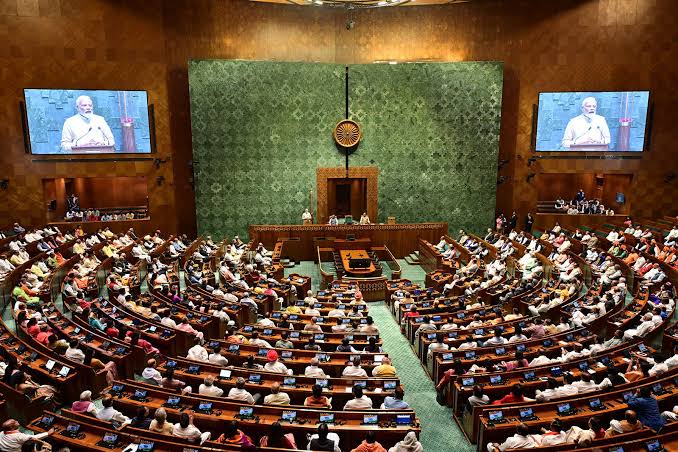
The Delimitation Bill's return hinges less on political alliances than on a granular vote-by-vote and abstention-by-abstention count that, by most current estimates, still falls short of the two-thirds mark. The reported special session looks like time bought to close that gap, not evidence that it already has been. New Delhi, Aug 6: When the Constitution (131st Amendment) Bill was put to a vote in April, the outcome was unambiguous. Of the 528 members who voted, 298 backed the bill and 230 opposed it, a comfortable simple majority, but nowhere near the two-thirds threshold a constitutional amendment demands under Article 368. That threshold, calculated against the votes actually cast, stood at 352. The bill fell short by 54 votes. Two related pieces of legislation, including the Union Territories Laws Amendment Bill, were withdrawn in the aftermath, and the government's public position shifted from confidence to grievance, with Union Home Minister Amit Shah accusing the Opposition of "ruthless politics."
What makes the bill's return in the Monsoon Session a numbers story, rather than a purely political one, is that Article 368 imposes what is effectively a double-lock: an absolute majority of the House's total membership, and a two-thirds majority of members present and voting. Both conditions must hold simultaneously. This is a meaningfully higher bar than the simple majority that ordinary legislation requires, and it means the government's arithmetic problem cannot be solved by winning over a handful of allies alone, it depends just as much on who does not show up to vote as it does on who votes in favour.
The Lok Sabha math illustrates why. With an effective House strength of 540, the two-thirds mark sits at 360. The NDA's own numbers, 294 by one recent count, leave a deficit of roughly 66 votes. Even a best-case scenario in which every unaligned or fence-sitting MP falls in line adds only a handful of seats to that tally, nowhere close to closing the gap through alliance-building alone. This is where the abstention question becomes central rather than peripheral to the story. If a bloc of Opposition MPs,, reported to include Trinamool rebels, Shiv Sena (UBT) rebels, DMK members and the NCP (Sharad Pawar) faction, were to abstain rather than vote against the bill, the effective size of the House for the purposes of the two-thirds calculation would shrink accordingly, and with it, the number of votes the government actually needs to clear. Abstention, in other words, is not neutrality under this arithmetic; it is a vote that costs the Opposition less politically while doing real work for the government's count.
The Rajya Sabha presents a narrower but still real gap. Against a House strength of around 245, the two-thirds mark is 164; the NDA's own strength, even after accounting for BJP-backed candidates expected to enter through West Bengal bypolls, leaves it short by more than 20 votes. Here the DMK's eight Rajya Sabha MPs and the NCP (Sharad Pawar) member matter disproportionately, because in a House this size, single-digit blocs can be the difference between a bill passing and failing. The DMK's position is complicated by its own arithmetic concerns, the party has argued that population-based delimitation could reduce the political weight of southern states that have controlled population growth, a substantive objection distinct from party-political alignment. Whether the DMK abstains, extends issue-based support, or opposes the bill outright will likely be decided closer to the vote than the government would prefer.
Set against this, the reported plan for a special session, convened separately from the Monsoon Session's existing calendar, which runs to August 13, reads less like scheduling convenience and more like an admission that the count is not yet secure. A government confident in its numbers has little reason to carve out standalone floor time outside a session already underway; doing so requires a fresh procedural apparatus without the efficiency of folding the vote into sittings already scheduled. What a special session buys, instead, is time — time to continue the outreach to individual MPs from the Trinamool Congress, the DMK and the NCP (Sharad Pawar) that sources describe as already underway, and time to see whether last-minute realignments of the kind that followed the Congress's decision to back a different candidate in Tamil Nadu translate into actual floor votes rather than speculation.
The bill's substance, an expansion of the Lok Sabha to roughly 850 seats, delimitation based on the 2011 census, and the operationalisation of women's reservation, has been debated at length since April. What has changed less than the government's rhetoric might suggest is the arithmetic itself. The deficit has narrowed since April's defeat, but by most current counts it has not closed, and closing it will depend less on formal alliance commitments than on the granular, MP-by-MP calculus of who votes, who abstains, and who simply is not counted.