Dirty Toilets, Unsafe Water ‘Normalised’ for Years: Will Railway Fix Them After CAG Flags Danger?
The CAG’s findings suggest that the railway makeover is not only about building new stations and introducing modern trains. It is equally about ensuring that everyday facilities - drinking water, toilets, urinals, seating and sanitation - actually work and remain properly maintained.
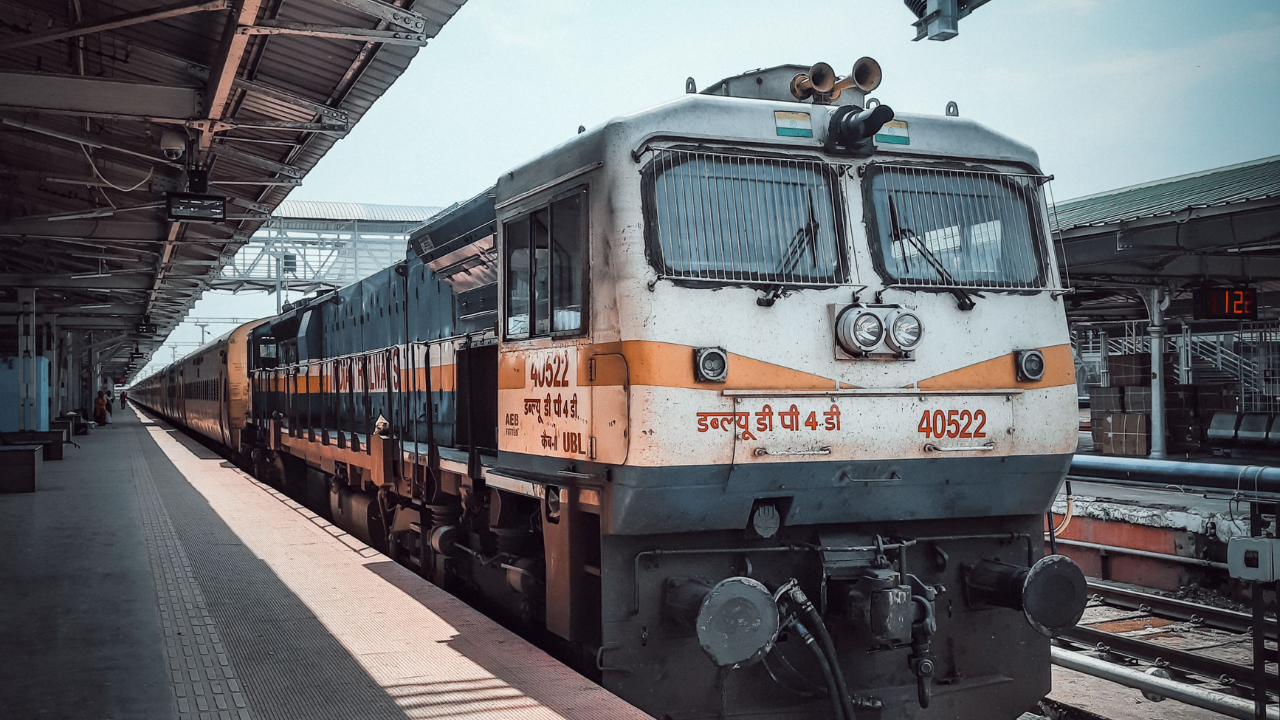
The CAG’s findings suggest that the railway makeover is not only about building new stations and introducing modern trains. It is equally about ensuring that everyday facilities - drinking water, toilets, urinals, seating and sanitation - actually work and remain properly maintained.
By Sakshi
Delhi, August 27: Indian Railways is undergoing one of its most ambitious modernisation phases, with massive investments in new trains, station redevelopment, electrification, new railway lines and upgraded infrastructure. But while the transformation is visible at major stations and in flagship trains such as Vande Bharat, a recent audit by the Comptroller and Auditor General of India (CAG) has highlighted a more basic concern: whether passengers across the network are consistently getting clean, safe and functional facilities.
The CAG’s findings suggest that the railway makeover is not only about building new stations and introducing modern trains. It is equally about ensuring that everyday facilities - drinking water, toilets, urinals, seating and sanitation - actually work and remain properly maintained.
CAG finds deficiencies at 458 of 512 stations
The CAG’s Report No. 31 of 2026, covering passenger amenities and sanitation at non-suburban railway stations, was tabled in the Parliament on August 12.
The audit examined 512 railway stations and found deficiencies in one or more essential passenger amenities at 458 of them - nearly nine out of every 10 stations surveyed.
The gaps included basic facilities such as toilets, urinals and drinking-water arrangements.
For millions of railway passengers, these are not minor conveniences. A train journey often begins with finding a place to sit, locating a toilet or looking for drinking water before boarding. At smaller stations, these basic facilities can define the entire passenger experience.
The findings therefore raise an important question about the ongoing modernisation drive: Can railway transformation be considered complete if the infrastructure passengers use every day is still inconsistent or poorly maintained?
The audit examined 512 railway stations and found deficiencies in one or more essential passenger amenities at 458 of them - nearly nine out of every 10 stations surveyed. ( Image source from pexels)
E. coli found in drinking-water samples
Among the audit findings, the issue of drinking water stands out as one of the most serious concerns.
Water samples collected from coolers at eight stations were found to contain E. coli, a bacteria commonly associated with faecal contamination. Its presence in drinking water raises concerns over water safety and the potential risk to public health.
For passengers, a water cooler at a railway station may appear to be a simple facility. But behind it is an entire chain of tanks, filters, pipelines, coolers, cleaning schedules and quality checks. If any part of that system fails, simply having a water cooler at the station does not guarantee safe drinking water.
The findings have prompted Indian Railways to launch a special drive to clean and disinfect drinking-water tanks and filters. Zonal Railways have also been advised to inspect drinking-water infrastructure comprehensively and address deficiencies wherever they are found.
The Railways has also directed that deficiencies and corrective action be monitored on a station-wise basis.
That approach is significant because the challenge is not just to clean a facility once. The real task is to ensure that the water remains safe day after day.
The harder part of modernisation: maintenance
Over the past decade, Indian Railways’ transformation has largely been represented through its most visible achievements - Vande Bharat trains, redeveloped stations, new concourses, lifts, escalators, electrification projects and major infrastructure corridors.
These projects are easy to see and photograph.
Maintenance is different.
A newly constructed toilet may look impressive when inaugurated, but passengers experience its value only if it remains clean months and years later. An escalator is useful only when it is operational. A drinking-water facility matters only when the water is safe.
This is where the CAG audit adds another layer to the modernisation story.
Building infrastructure is one part of the job. Keeping it functional is the bigger, continuous challenge.
Unlike a station redevelopment project, maintenance does not have a finishing date. It requires regular inspections, accountability, quality checks and timely repairs.
Record investment, but financial pressures remain
The passenger amenities audit comes at a time when Indian Railways is receiving unprecedented levels of investment.
For 2026-27, railway capital expenditure has been budgeted at Rs 2.93 lakh crore, with around 95 per cent of the spending expected to be financed through central government budgetary support, said a report by The Times of India.
The CAG’s Report No. 30 of 2026, also tabled on August 12, examined the finances of the Ministry of Railways for the year ended March 2025.
The scale of government support reflects the enormous financial requirements of modernising a railway network as vast as India’s. New lines, doubling projects, electrification, signalling upgrades, station redevelopment and new rolling stock all require substantial investment.
But a growing asset base also means growing maintenance responsibilities.
The Railways must therefore ensure that the money being spent on creating new infrastructure is matched by adequate resources for maintaining what has already been built.
Operating ratio remains a concern
Another important indicator is the railway operating ratio, which shows how much of every rupee earned is spent on working expenses.
For 2026-27, the operating ratio is budgeted at 98.4 per cent, compared with a revised estimate of 98.8 per cent for 2025-26.
A ratio close to 100 per cent leaves the Railways with limited financial room after meeting its operating expenses.
Revenue pressures also remain part of the larger picture. According to the 2026-27 analysis by PRS Legislative Research, freight revenue in 2025-26 was estimated to be 5.1 per cent below the budget estimate, while passenger revenue was expected to be 13.8 per cent lower than the budget target.
This does not mean the modernisation programme is slowing down. Capital investment remains extremely high.
But it highlights the importance of ensuring that these investments eventually translate into a railway system that is more efficient, financially sustainable and capable of generating stronger revenues.
From showcase stations to everyday passenger experience
There is no question that Indian Railways is changing.
Passengers at major cities are seeing redeveloped stations, modern concourses and new facilities. New trains have changed the perception of rail travel for many passengers, while electrification and capacity expansion are reshaping the network.
But India’s railway system is much bigger than its flagship projects.
Millions of people use ordinary stations every day — workers commuting for employment,
students travelling home, families visiting relatives, migrants moving between cities and small traders depending on trains for their livelihoods.
For these passengers, modernisation may not be measured by the appearance of a futuristic terminal.
It may simply mean a clean toilet, safe drinking water, adequate seating, a working escalator and a station that is properly maintained.
That is why the CAG’s findings matter.
The audit does not take away from the scale of railway modernisation. Instead, it points to an important gap between creating infrastructure and delivering reliable services through that infrastructure.
The real test begins after inauguration
The Railways’ response to the water contamination findings is an important first step. Cleaning and disinfecting tanks and filters, conducting inspections and monitoring station-wise deficiencies can help address immediate problems.
But the bigger challenge will be to turn these measures into a permanent system.
That means regular water testing, preventive maintenance, timely replacement of ageing equipment, clear accountability for sanitation and continuous monitoring of passenger amenities.
The same principle applies to toilets, waiting halls, seating areas, platform shelters and accessibility facilities.
A modern railway station should not be judged only on the day it is inaugurated. Its success should be measured months and years later, when thousands of passengers have used it and the facilities are still functioning properly.
A railway makeover that passengers can actually feel
Indian Railways is clearly in the middle of a historic transformation. The scale of investment, infrastructure expansion and new projects is difficult to ignore.
But the latest CAG findings offer a reminder that modernisation cannot be measured only in kilometres of new tracks, number of new trains or stations redeveloped.
For the ordinary passenger, the meaning of modernisation is much simpler.
It is being able to reach a station and find a clean toilet. It is getting safe drinking water. It is having a place to sit while waiting for a train. It is finding lifts and escalators that work when they are needed.
The railway makeover, therefore, is not just about building bigger and newer. It is also about maintaining better and delivering consistently.
The CAG audit has put the spotlight on that less glamorous side of transformation. Indian Railways has begun responding, particularly on the issue of drinking-water safety. The real test now will be whether these corrective measures become part of a long-term maintenance culture across the network.
Because ultimately, the success of India’s railway modernisation will not be decided only by what looks new.
It will be decided by how reliably the system works for the millions of passengers who depend on it every day.