Ganga's Five-Year Floodplain Rule Put Under Legal Test
NGT has sought Centre's response on a plea challenging a 2026 notification that replaced Ganga's no-construction buffer with a five-year floodplain rule, alleging it violates the Environment (Protection) Act, 1986. By Mahima Katal New Delhi, Aug 23: The National Green Tribunal has sought a response from the Centre on a plea challenging a August 2026 notification that amends the River Ganga (Rejuvenation, Protection and Management) Authorities Order of 2016, with the petitioner alleging the...
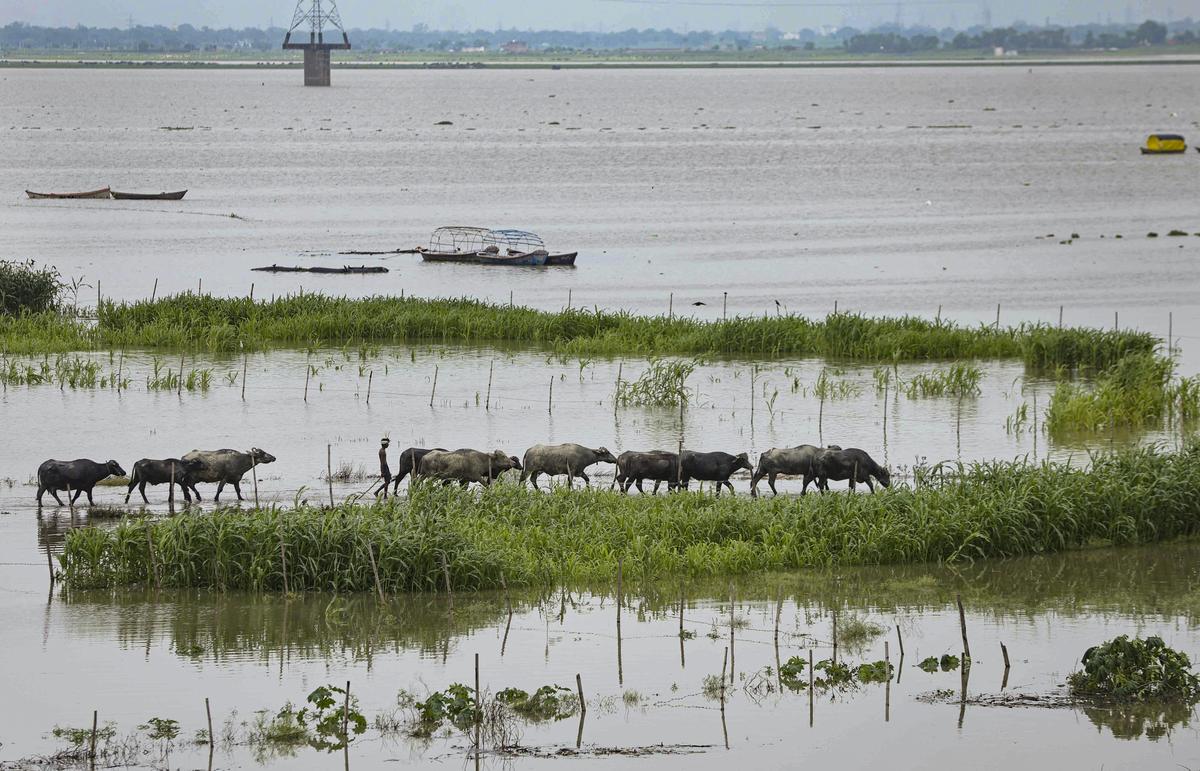
NGT has sought Centre's response on a plea challenging a 2026 notification that replaced Ganga's no-construction buffer with a five-year floodplain rule, alleging it violates the Environment (Protection) Act, 1986.
By Mahima Katal
New Delhi, Aug 23: The National Green Tribunal has sought a response from the Centre on a plea challenging a August 2026 notification that amends the River Ganga (Rejuvenation, Protection and Management) Authorities Order of 2016, with the petitioner alleging the changes strip the river of a protection it has held for a decade.
A bench of NGT Chairperson Justice Prakash Shrivastava and expert member Afroz Ahmad issued notice to the Centre, the National Mission for Clean Ganga and the Union Ministry of Environment, Forest and Climate Change, posting the matter for further proceedings on October 27
The plea, filed by Amit Kumar, challenges a notification that the applicant says removed the "no construction zone" clause contained in the original 2016 order and replaced it with a floodplain definition based on a one-in-five-year return period, a flood recurrence metric that carries roughly a 20 per cent probability of occurring in any given year.
At the centre of the challenge is a claim that the new notification is ultra vires the Environment (Protection) Act, 1986, and dismantles the scheme the original order was designed to enforce.
The original 2016 order had established a no-construction buffer along the river and its tributaries, a protection the petitioner traces back further to judicial directions predating the order itself. The plea cites a 2015 NGT ruling that noted prior Supreme Court and high court directions requiring a 100 to 200 metre construction-free zone from river banks, and a 2017 tribunal order that fixed 100 metres from the river's edge as a no-development zone for the Haridwar to Unnao stretch.
By replacing a fixed distance-based buffer with a floodplain definition tied to a five-year return period, the amended notification changes the method by which construction limits near the river are determined, a shift the petitioner argues weakens rather than preserves the underlying protective intent of the 1986 Act and the tribunal's own precedents.
The Centre has not yet filed its response, and the tribunal's October 27 hearing is expected to take up the substantive question of whether the notification survives scrutiny under the 1986 Act and existing case law.