Gulf States Welcome US-Iran Peace Deal, Urge Protection of Strait of Hormuz
By Mahima Katal Dubai, June 15, 2026: Gulf Arab states on Monday welcomed a newly announced peace agreement between the United States and Iran aimed at ending more than three months of conflict, while emphasizing the need to safeguard maritime trade routes and ensure freedom of navigation through the strategically vital Strait of Hormuz. The agreement, announced by US President Donald Trump on Sunday, is scheduled to be formally signed in Switzerland on June 19. The deal seeks to end a...
By Mahima Katal
Dubai, June 15, 2026: Gulf Arab states on Monday welcomed a newly announced peace agreement between the United States and Iran aimed at ending more than three months of conflict, while emphasizing the need to safeguard maritime trade routes and ensure freedom of navigation through the strategically vital Strait of Hormuz.
The agreement, announced by US President Donald Trump on Sunday, is scheduled to be formally signed in Switzerland on June 19. The deal seeks to end a 107-day conflict that disrupted regional security and threatened global energy supplies.
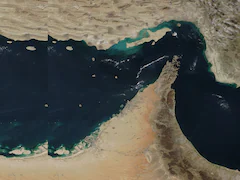
The Strait of Hormuz, which is a key passage for around 20 per cent of the world's oil and gas shipping, was closed after the US and Israel launched their war against Iran on February 28.
In separate statements, the governments of the United Arab Emirates, Saudi Arabia, Qatar and Kuwait praised the agreement and called for its full implementation.
The UAE's Foreign Ministry stressed the importance of dialogue, diplomacy and adherence to international law in strengthening regional security and stability. It urged all parties to comply fully with the terms of the agreement and ensure an immediate and comprehensive cessation of hostilities.
The ministry also highlighted the need to protect maritime routes and maintain uninterrupted navigation through the Strait of Hormuz, a critical waterway connecting the Persian Gulf to global markets.
During the conflict, Iran effectively shut down traffic through the Strait of Hormuz, through which approximately one-fifth of the world's oil supply passes. The waterway serves as the primary maritime outlet for several Gulf states, including Kuwait, Qatar and the UAE.
Iran also launched strikes against Gulf countries hosting US military facilities that were used in operations targeting the Islamic Republic.
According to Trump, the agreement will reopen the Strait of Hormuz and end the US naval blockade of Iranian ports. In a subsequent statement, he said maritime traffic through the strait is expected to resume after the agreement is formally signed later this week.
The UAE reiterated its support for continued negotiations to build on recent progress and achieve long-term stability. It also called for respect for state sovereignty, good-neighbourly relations and international law as foundations for regional security and economic prosperity.
Saudi Arabia similarly welcomed the agreement, expressing hope that it would contribute to lasting peace while taking into account the security concerns of countries across the region. Riyadh also stressed the importance of restoring normal navigation and security conditions in the Strait of Hormuz.
Qatar, which played a significant mediating role during the negotiations, described the agreement as an important step toward sustainable peace and economic growth both regionally and internationally.
In a statement, Qatar's Foreign Ministry reaffirmed its support for diplomatic efforts aimed at resolving disputes through dialogue and peaceful means in accordance with international law. It said the agreement could create new opportunities for regional cooperation, development and prosperity.
Qatari Prime Minister Mohammed bin Abdulrahman Al Thani said the country would continue supporting initiatives designed to strengthen regional and international stability through diplomacy.
Kuwait also welcomed the agreement, describing it as a significant step toward addressing outstanding regional disputes through sustainable political solutions.
The Kuwaiti Foreign Ministry called for stronger commitments to good-neighbourly relations, mutual respect, non-interference in domestic affairs and the renunciation of force or threats of force. It also stressed the importance of ending support for proxy groups and ensuring freedom of navigation in the Strait of Hormuz.
Kuwait urged all parties to approach future negotiations constructively in order to strengthen cooperation, enhance regional stability and promote economic prosperity.
The agreement was reached through a mediation process involving several countries, including Pakistan and Qatar. Earlier diplomatic efforts resulted in a temporary ceasefire on April 8, which was subsequently extended while negotiations continued.
The conflict began on February 28 when the United States and Israel launched military strikes against Iran. The attacks resulted in the deaths of Iran's Supreme Leader, Ali Khamenei, along with several senior military commanders.