Half the ICC's bench is sanctioned. Is it still a court?
The ICC condemned fresh US sanctions on its president and a senior prosecutor, bringing sanctioned officials to nine judges, both deputy prosecutors, and a former chief prosecutor. Washington disputes the court's jurisdiction over non-member nationals. Venezuela and Chad have announced withdrawal; HRW has sued the administration over the sanctions campaign. New Delhi, Aug 19: Nine of the International Criminal Court's eighteen judges are now under US sanctions. So are both deputy prosecutors,...
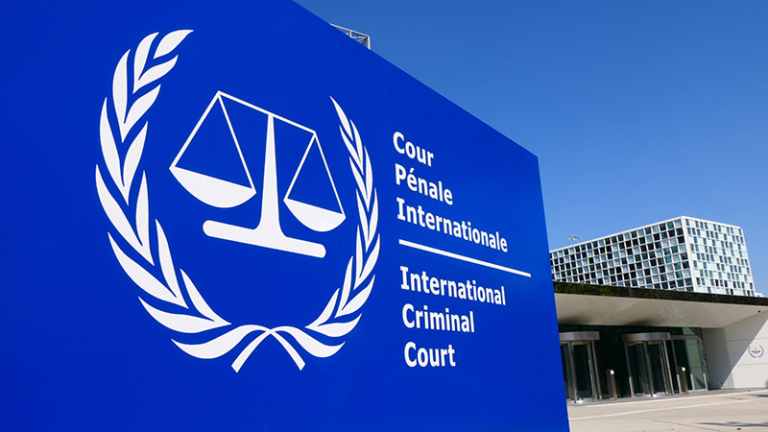
The ICC condemned fresh US sanctions on its president and a senior prosecutor, bringing sanctioned officials to nine judges, both deputy prosecutors, and a former chief prosecutor. Washington disputes the court's jurisdiction over non-member nationals. Venezuela and Chad have announced withdrawal; HRW has sued the administration over the sanctions campaign.
New Delhi, Aug 19: Nine of the International Criminal Court's eighteen judges are now under US sanctions. So are both deputy prosecutors, the former chief prosecutor, one prosecution staffer, and, as of this week, the court's own president. That is not a court under pressure at the margins. That is a court whose leadership structure is now more sanctioned than not.
The State Department announced Tuesday that it was sanctioning ICC president Tomoko Akane of Japan and senior trial lawyer Abdoulaye Seye of Senegal, freezing any US-jurisdiction assets and cutting off their access to the US financial system. The court's response framed the stakes in institutional terms: when judicial actors are threatened for applying the law, it said, the risk is to the international legal order itself, and it pledged to keep working "with independence and impartiality."
That is the right thing for a court to say. It is also, at this point, a question rather than a statement, because a court's independence is not just a legal claim, it is a practical condition, and financial sanctions on half its bench are a direct test of whether that condition still holds.
Washington's position has not moved. The US argues the ICC has overstepped its mandate by pursuing officials from Israel and the United States, states that never joined the court, and Secretary of State Marco Rubio called it "a corrupt and fatally politicised supranational court" that has abused its authority. This traces back to a jurisdictional dispute that predates this week's sanctions by years: the Rome Statute gives the ICC jurisdiction over crimes committed on the territory of a member state, regardless of the nationality of the accused, and the court has used that provision to justify investigations touching non-member nationals. Washington rejects that theory entirely where its own citizens and allies are concerned. Neither side has moved an inch on this in the years the dispute has run, and sanctions on individual judges do not settle it, they just raise the cost of the court continuing to act on its own reading of its mandate.
What sanctions do settle, immediately and concretely, is what happens to the people named. Canadian judge Kimberly Prost, sanctioned last year, has described losing access to her credit cards and even having her Amazon Alexa stop responding to her. "Your whole world is restricted," she said. That is worth sitting with, because it reframes the question this piece opened with. A court doesn't stop being a court because a press release says so — it stops functioning when the individuals who run it can no longer bank, travel, or operate normally. Sanctions are not a rhetorical device aimed at an institution. They are aimed, one by one, at the people who currently make up half its senior leadership.
Rubio has been explicit that sanctions are only one prong. He has said he intends to pressure the court's 125 member states toward withdrawal, sanction organisations that cooperate with the ICC, and bar its staff from the United States entirely. The withdrawal count is already moving: Venezuela and Chad have both announced their intent to leave since that campaign was announced, bringing the total to five departures in the past year, though the Rome Statute gives each a full year before the exit is formal. Judge by judge and country by country, this is a campaign built to be measured in numbers and both numbers are currently rising.
Not every reaction has matched the court's careful institutional language. Japan's Foreign Ministry called the sanctioning of its own national "very unfortunate" while reaffirming support for the ICC and signalling it would keep talking to Washington rather than escalate, the posture of an ally trying to hold two relationships at once. Human Rights Watch went considerably further, with MENA director Balkees Jarrah describing the sanctions as reflecting contempt for international law and an attempt to shield American and Israeli officials from accountability. HRW and three other organisations have already sued the administration over this campaign in the Southern District of New York, arguing that the executive order targeting the ICC, alongside separate sanctions on a UN human rights expert and three Palestinian rights groups, amounts to an illegal attack on international justice.
So: is it still a court? Structurally, yes, it still issues warrants, still hears cases, still has a president who can speak on its behalf. Functionally, the answer depends on something harder to measure: whether judges and prosecutors under sanction can keep doing the job under financial siege, and whether member states watching Venezuela and Chad head for the exit decide the institution is still worth defending. Neither the litigation in New York nor the one-year withdrawal clocks will answer that quickly. What they will do is turn "is it still a court" from a rhetorical question into an empirical one, tracked one sanctioned official and one withdrawal notice at a time.