India Is Deepening Ties With Eastern Europe Through President Murmu's Landmark Visit
President Droupadi Murmu's historic visit to Moldova, the first by an Indian head of state, is more than a diplomatic milestone. As part of a three-nation tour of Eastern Europe, the visit reflects New Delhi's growing effort to strengthen economic, strategic and political partnerships beyond Europe's traditional power centres. The outreach comes as India seeks to diversify trade, enhance technology cooperation and reinforce its presence in a region reshaped by the war in Ukraine. New Delhi,...
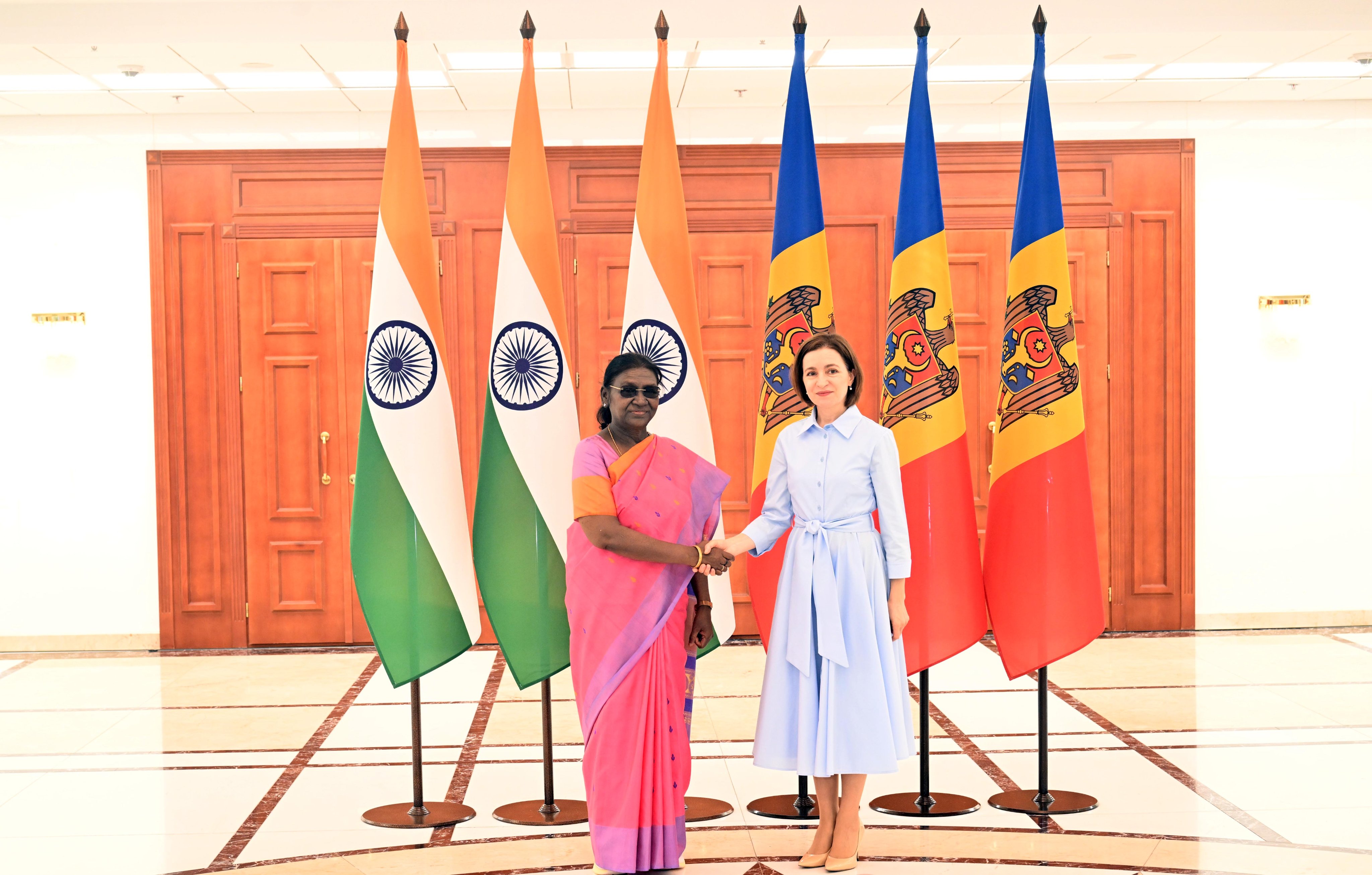
President Droupadi Murmu's historic visit to Moldova, the first by an Indian head of state, is more than a diplomatic milestone. As part of a three-nation tour of Eastern Europe, the visit reflects New Delhi's growing effort to strengthen economic, strategic and political partnerships beyond Europe's traditional power centres. The outreach comes as India seeks to diversify trade, enhance technology cooperation and reinforce its presence in a region reshaped by the war in Ukraine. New Delhi, July 20: President Droupadi Murmu's arrival in Moldova on Monday marks a diplomatic first for India. No Indian head of state has previously visited the Eastern European nation, making the trip a symbolic milestone in bilateral relations. Yet the significance of the visit extends far beyond diplomatic protocol.
Murmu's three-nation tour, covering Moldova, North Macedonia and Romania, signals a broader shift in India's engagement with Eastern Europe at a time when the region has acquired greater geopolitical and economic importance. While New Delhi has traditionally focused its European diplomacy on major partners such as France, Germany and the United Kingdom, the current tour suggests an effort to cultivate deeper ties with smaller but strategically important countries across the continent.
The visit comes as India seeks to expand trade, strengthen technology partnerships, diversify supply chains and reinforce its diplomatic presence in a region transformed by the Russia-Ukraine conflict.
A Diplomatic First With Strategic Implications
Upon arriving in Chisinau, President Murmu was received by Moldova's Deputy Prime Minister and Foreign Minister Mihai Popșoi. During her visit, she is scheduled to hold delegation-level talks with President Maia Sandu, meet Parliament Speaker Igor Grosu, interact with members of the Moldova-India Parliamentary Friendship Group, address a business forum and engage with the Indian community.
While such engagements are standard components of state visits, the decision to send India's President to Moldova for the first time carries strategic significance.
High-level visits often signal a government's intention to elevate bilateral relations. In diplomacy, symbolism matters. A presidential visit can create political momentum for expanding cooperation in trade, investment, education and institutional exchanges.
Why Eastern Europe Matters Now
Eastern Europe has assumed greater strategic relevance since Russia's invasion of Ukraine in 2022. Countries across the region have faced shifting security dynamics, economic disruptions and changing trade patterns, prompting governments worldwide to reassess their engagement with the region.
India has maintained a policy of strategic autonomy throughout the conflict, preserving its longstanding relationship with Russia while simultaneously strengthening partnerships with the European Union and individual European states.
Against this backdrop, expanding ties with countries such as Moldova, Romania and North Macedonia allows New Delhi to broaden its European engagement without limiting its diplomacy to the continent's largest economies.
The approach reflects India's effort to maintain a diversified foreign policy that balances geopolitical interests with economic opportunities.
Looking Beyond Traditional Partners
For decades, India's engagement with Europe has largely centred on countries including France, Germany, Italy and the United Kingdom. These nations remain among India's largest trading partners and strategic collaborators.
However, Eastern Europe presents emerging opportunities in sectors such as information technology, pharmaceuticals, agriculture, renewable energy, infrastructure and higher education.
As global supply chains continue to evolve, India is also seeking to expand its commercial footprint in newer markets and reduce dependence on a limited number of economic partners.
Business forums accompanying high-level diplomatic visits increasingly serve as platforms for encouraging investment and identifying areas of commercial cooperation.
The Education Connection
Moldova occupies a unique place in India's engagement with Eastern Europe because of its sizeable Indian student population.
Approximately 2,000 Indian nationals reside in the country, including nearly 1,800 medical students. This makes India one of Moldova's largest foreign student communities. The presence of Indian students has given educational cooperation an important place in bilateral relations. High-level political engagement can strengthen collaboration on student welfare, academic exchanges and healthcare partnerships.
Following the COVID-19 pandemic and the evacuation of Indian students from neighbouring Ukraine in 2022, overseas medical education has become an increasingly significant element of India's diplomacy with several Eastern European countries.
Part of a Broader European Strategy
After concluding her visit to Moldova, President Murmu will travel to North Macedonia before proceeding to Romania.
The North Macedonia visit will also be the first by an Indian President, while the Romania leg will be India's first presidential visit to the country in more than three decades.
Viewed together, the itinerary reflects a deliberate diplomatic strategy rather than three isolated visits.
It demonstrates India's intention to deepen engagement across different parts of Europe while building relationships with countries that have received comparatively less attention in New Delhi's foreign policy.
Economic Diplomacy at the Centre
Trade, technology and tourism feature prominently on the agenda for the President's tour.
India has increasingly used high-level diplomatic visits to promote economic partnerships, encourage business-to-business collaboration and identify new investment opportunities. As global markets become more interconnected, diplomacy is increasingly measured not only by political dialogue but also by its ability to facilitate commercial cooperation.
For smaller European economies, closer ties with India offer access to one of the world's fastest-growing major markets. For India, these partnerships support efforts to diversify exports, attract investment and strengthen resilience in global supply chains.
A Signal of India's Expanding Diplomatic Footprint
President Murmu's visit underscores a broader evolution in India's foreign policy.
Rather than concentrating solely on established strategic partners, New Delhi is widening its diplomatic engagement across regions that are becoming increasingly relevant to global politics and economics.
The tour also reflects India's aspiration to play a larger role in shaping international partnerships through sustained political engagement, economic cooperation and people-to-people ties.
While no major agreements have yet been announced, the symbolism of the first-ever presidential visits to Moldova and North Macedonia should not be underestimated. In diplomacy, landmark visits often lay the foundation for future cooperation.
As geopolitical competition intensifies and economic partnerships become more diversified, India's outreach to Eastern Europe suggests that New Delhi is looking beyond traditional alliances to build a broader and more resilient network of international relationships.