Kejriwal E20 March Halted Before PM Modi House, But Protest Continues with 2.3L Anti-Ethanol Petitions
Kejriwal E20 March: AAP chief Arvind Kejriwal's march against E20 petrol was stopped by police before PM Modi's residence, but protesters continued their demonstration.
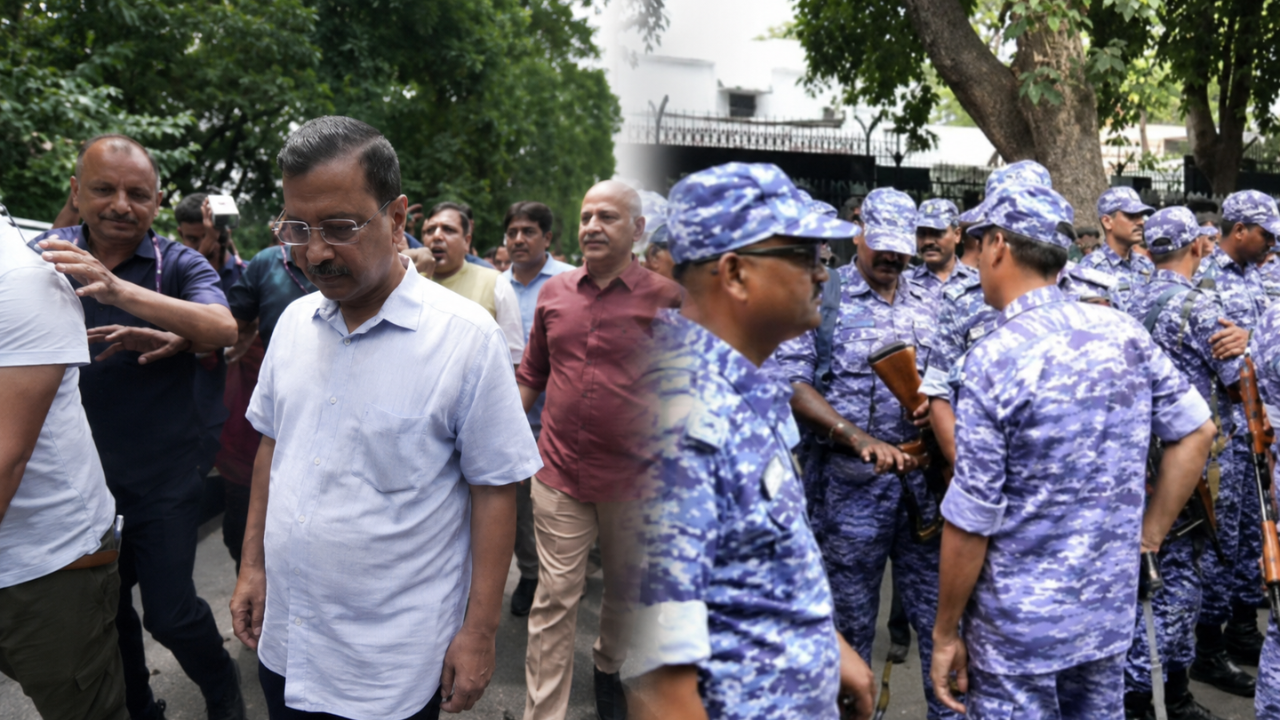
Kejriwal E20 March: AAP chief Arvind Kejriwal's march against E20 petrol was stopped by police before PM Modi's residence, but protesters continued their demonstration.
By Pranjal Gupta
New Delhi, August 4: Former Chief Minister of Delhi and Aam Aadmi Party (AAP) supremo Arvind Kejriwal on Tuesday led a march to the residence of Prime Minister Narendra Modi in Delhi. The convoy claimed to have gathered more than 2.30 lakh petitions from people across India who said they had been affected by E20 petrol. However, the Delhi Police stopped the march, and the protesters continued their demonstration on Firoz Shah Road.
Kejriwal began the march with former Deputy Chief Minister Manish Sisodia, AAP leader Jasmine Singh, other party leaders, and hundreds of supporters, alleging that E20 petrol had caused significant damage to their vehicles.
The AAP convener accused the Centre of taking the decision under pressure from US President Donald Trump, claiming that the United States is the world's largest producer of ethanol. "We hope that the Prime Minister ji will surely listen to the voice of the people," he added.
Police sources said the protesters would not be allowed to proceed beyond 5, Firoz Shah Road.
Kejriwal E20 March: Arvind Kejriwal leads an anti-E20 petrol march before police stop protesters near Prime Minister Narendra Modi's official residence in Delhi. (Image Source: X/AAP)
"No one will be allowed ahead of 5, Firoz Shah Road. We have deployed adequate security, including Delhi Police and paramilitary forces, to maintain law and order," a police source said.
What Triggered Kejriwal's Protest Now
The protest comes days after the AAP held an "Ethanol Town Hall" and launched a signature campaign against E20 fuel.
Kejriwal had earlier written to the Prime Minister seeking an appointment to discuss concerns over ethanol-blended petrol.
He had also demanded that consumers be given the option to choose between pure petrol and E20 at fuel stations.
Kejriwal alleged that the government was continuing with the policy despite concerns raised by the public.
"People are asking why the government is forcing E20 petrol despite complaints from vehicle owners. We only want people to have the choice of buying pure petrol and E20, and if E20 is being promoted, it should be sold at a lower price," he said.
E20 and Controversy
E20 petrol is a fuel blend containing 20 per cent ethanol and 80 per cent conventional petrol. The Union Government maintains that ethanol blending is critical for national energy security, reducing expensive crude oil imports, and lowering tailpipe carbon emissions.
However, the policy has been opposed on multiple grounds. While vehicle owners have claimed to face mechanical issues, experts have warned that ethanol production consumes large quantities of water.
Standard petrol sold at public retail pumps across India is now E20. The government implemented the nationwide rollout ahead of its original target timeline.
As pure petrol (E0) and lower blends such as E10 are no longer distributed to retail outlets, E20 has effectively become the primary fuel for petrol vehicles across the country.