Math Explained: Why Karnataka's Seventh Council Seat Is the Real Deal
Karnataka Council polls: Congress needs 6 extra votes while BJP-JD(S) needs 4. Here's the electoral math behind the high-stakes battle for the seventh seat.
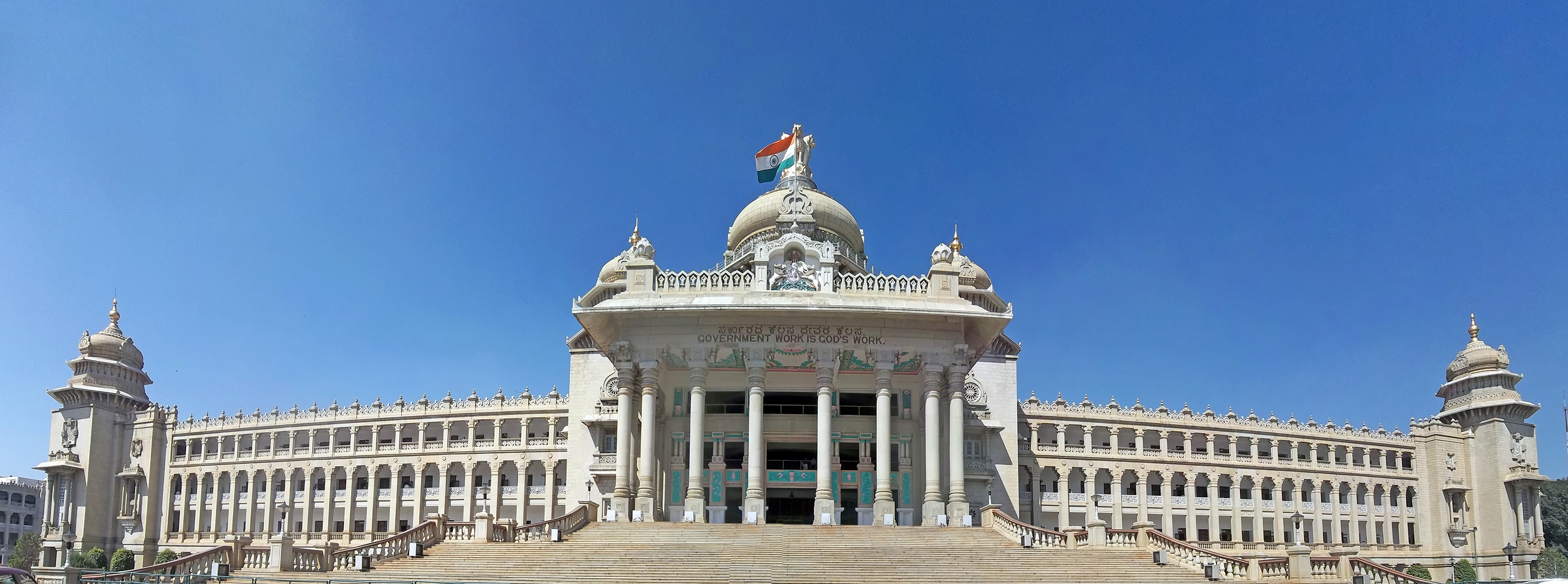
By The Slate Bureau
Bengaluru, June 17: With elections to seven seats of the Karnataka Legislative Council approaching, the spotlight has shifted to a high-stakes contest for the final seat. While the numbers suggest that the major parties can comfortably secure six of the seven seats, the battle for the seventh has triggered intense political maneuvering, including the return of the familiar phenomenon of resort politics.
Based on the current strength of parties in the Assembly, the ruling Congress is well placed to win four seats, while the BJP–JD(S) alliance can comfortably secure two in the Vidha Soudha Election due on June 18. The remaining seat, however, is expected to be decided by a handful of non-aligned legislators and the ability of parties to prevent cross-voting or absenteeism - if it happens.
Congress and BJP-JD(S) legislators gather ahead of Karnataka Legislative Council elections, where the battle for the crucial seventh seat has intensified amid resort politics and cross-voting concerns. (Source: Wikimedia Commons)
Congress Eyes Fifth Seat
The Congress, with 134 MLAs in the Assembly, has the numbers to comfortably elect four candidates. With 28 votes required to secure a seat, the party would need 112 votes to win four seats, leaving it with 22 surplus votes.
To elect a fifth candidate, however, Congress would require 28 votes, leaving it six votes short. As a result, the party is actively seeking support from independent and smaller-party legislators while ensuring that all its MLAs remain united.
Chief Minister Siddaramaiah and Deputy Chief Minister D.K. Shivakumar have been closely monitoring the situation. Congress legislators were recently brought together at a resort on the outskirts of Bengaluru, a move aimed at preventing defections and ensuring full attendance during voting.
BJP–JD(S) Alliance Targets Third Seat
The opposition alliance, comprising the BJP and JD(S), has a combined strength of 80 MLAs.
The BJP, with 62 legislators, can comfortably secure two seats by utilizing 56 votes, leaving six surplus votes. These surplus votes are expected to be transferred to the JD(S) candidate.
Combined with JD(S)'s 18 MLAs, the alliance can muster 24 votes for its third candidate—four short of the 28-vote mark required for victory.
Like the Congress, the BJP–JD(S) alliance is banking on support from independent
legislators and smaller parties to bridge the gap.
Eight Votes Could Decide the Outcome
The contest for the seventh seat is expected to revolve around eight legislators who are not aligned with either of the two major blocs. These include:
One MLA from the Kalyana Rajya Pragathi Paksha (KRPP)
One MLA from the Sarvodaya Karnataka Paksha (SKP)
Two Independent MLAs
Three unattached legislators who were expelled from the BJP
The Speaker
With Congress requiring six additional votes and the BJP–JD(S) alliance needing four, these lawmakers have emerged as the key players in the election.
Political observers note that even a small degree of cross-voting or absenteeism could alter the outcome, making every vote crucial.
Resort Politics Returns
As the election draws closer, both camps have taken steps to keep their legislators together.
Congress held a legislature party meeting at a resort near Bengaluru and is reportedly considering keeping some MLAs there until polling day.
Meanwhile, JD(S) legislators are expected to be shifted to a resort near Devanahalli, reflecting concerns over possible poaching attempts and cross-voting, reported India Today.
Candidates in the Fray
Eight candidates are contesting for seven seats:
Congress
Thippannappa Kamkanoor
P.V. Mohan
B.K. Hariprasad
B.S. Shivanna
Vinay Karthik Prakash
BJP
Lingaraj Patil
Raghu R.
JD(S)
Govindaraju
With six seats appearing largely predictable on paper, the real contest now centers on the seventh and final seat—where a few votes could determine whether Congress expands its tally to five or the BJP–JD(S) alliance succeeds in winning a third seat.