Meta-Modi Video Row: Zuckerberg and the Limits of Section 79
The committee's threat to withdraw Meta's Section 79 protection over a single content-moderation error, rather than a demonstrated pattern of due diligence failure, tests a legal mechanism designed to police platform-wide conduct, not individual incidents, and sets a precedent that could push platforms toward risk-averse moderation of political speech rather than principled, standard-based enforcement. By Mahima Katal New Delhi, Aug 5: The Parliamentary Standing Committee on Communications...
The committee's threat to withdraw Meta's Section 79 protection over a single content-moderation error, rather than a demonstrated pattern of due diligence failure, tests a legal mechanism designed to police platform-wide conduct, not individual incidents, and sets a precedent that could push platforms toward risk-averse moderation of political speech rather than principled, standard-based enforcement. By Mahima Katal New Delhi, Aug 5: The Parliamentary Standing Committee on Communications and Information Technology has done something it does not do lightly: it has invoked the possibility of withdrawing safe harbour protection under Section 79 of the Information Technology Act from a global platform over a single content-moderation incident.
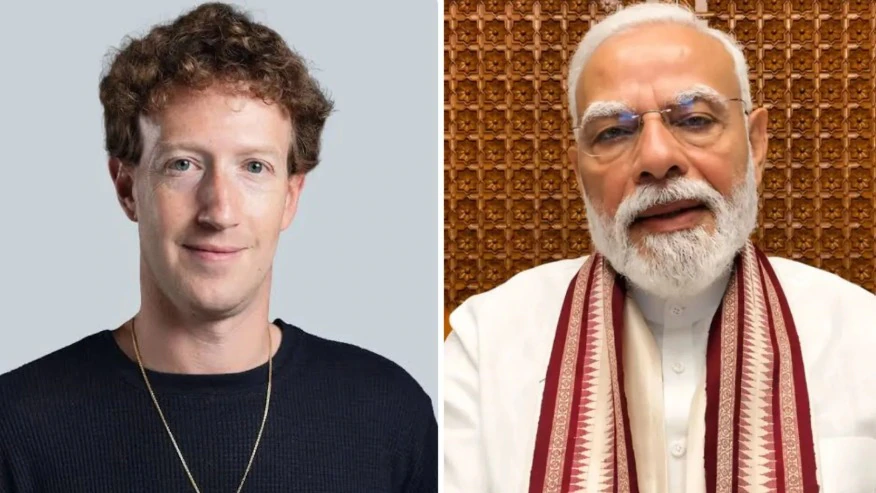
The trigger was the temporary removal of a Facebook video in which Prime Minister Narendra Modi addressed the issue of exam paper leaks. Meta has already apologised twice, citing a technical error. Committee chairman Nishikant Dubey has said that will not be enough, the apology, he has stated, must come from Mark Zuckerberg personally, and if it does not arrive, the committee has recommended examining whether Section 79 protection should be withdrawn.
The legal mechanism being invoked here is worth separating from the political theatre around it, because the two are being treated as interchangeable in most coverage, and they are not.
Section 79 of the IT Act is what makes platforms like Meta, Google and YouTube legally viable to operate at scale in India. It provides that an "intermediary" — a platform that merely hosts or transmits content without initiating it — is not liable for third-party content published through it, provided the intermediary observes due diligence and complies with government-issued takedown orders. This is the same basic architecture that underlies Section 230 of the US Communications Decency Act and equivalent provisions in most democracies with large user-generated-content platforms: without some form of safe harbour, no platform could function, because it would face potential liability for every post, comment or video its users upload.
Safe harbour is not, however, unconditional. Indian law and the IT Rules, 2021 already impose due diligence obligations on intermediaries — grievance redressal mechanisms, compliance officers, traceability requirements for significant social media intermediaries — and safe harbour can be lost if a platform fails to meet these obligations after being notified. What the committee is doing, procedurally, is threatening to treat this specific removal-and-restoration incident as evidence that Meta's content moderation systems and internal accountability have failed that due diligence standard, and using that failure as grounds to reconsider Section 79 protection more broadly.
Whether one incident of algorithmic misfire, later corrected and apologised for, constitutes the kind of systemic due diligence failure that Section 79 review is meant to address is exactly where this controversy becomes legally interesting rather than merely political. The safe harbour framework was designed to police pattern and structure — a platform's approach to hate speech, misinformation, child safety, its consistency in applying its own takedown policies — not to function as a lever a parliamentary committee can pull over a single content-moderation error, however high-profile the affected account.
If Section 79 review becomes a routine response to individual takedown incidents involving political figures, particularly the sitting Prime Minister, the precedent it sets cuts in a direction that content-moderation policy in most democracies has spent the last decade trying to move away from: platforms moderating political speech more cautiously not because of a considered legal standard, but because of the asymmetric risk that any action against a ruling party's content invites regulatory retaliation, while inaction against everyone else invites none.
This is not a new fault line in Indian platform regulation. In 2020, following a Wall Street Journal report alleging Meta's India policy team had gone easy on hate speech from BJP-affiliated accounts, the same standing committee, then chaired by Congress MP Shashi Tharoor, moved to summon Facebook officials, and was met with the argument from a BJP member on the committee that the chairman lacked authority to set the agenda unilaterally.
The current episode inverts the underlying question rather than resolving it: in 2020 the concern was a platform allegedly protecting ruling-party content from moderation; in 2026 the concern is a platform allegedly over-moderating it. Both controversies proceed from the same unresolved structural issue, India's IT law gives government-adjacent parliamentary machinery significant informal leverage over platform content decisions, without a judicially settled standard for when that leverage is being exercised to enforce genuine due diligence obligations and when it is being exercised to secure favourable treatment for those in power. Neither instance has been tested in court, which means the standard the committee is applying remains a matter of political demand rather than adjudicated law.
There is also a narrower institutional question raised by Dubey's framing, which distinguishes between the company and its chief executive. Section 79 safe harbour, as a legal matter, attaches to the intermediary as an entity, and the IT Rules' due diligence and grievance-redressal obligations run to the platform, not to a personally named executive. The committee's demand that Zuckerberg apologise in his individual capacity, rather than Meta as a corporate entity, which has already done so twice, sits somewhat outside the statutory framework it is otherwise invoking, and reads as closer to a demand for political deference than a due diligence remedy contemplated by the Act itself.
That does not make the underlying accountability question illegitimate, a platform inconsistent in explaining why a sitting Prime Minister's video was taken down, when explicitly objectionable content elsewhere on the platform was not, is a fair question for a parliamentary committee to raise. But the remedy being sought is broader than the statutory mechanism cited to justify it.