Nobel Winner Takes Break From Congratulations to Make Lunch for His Kids
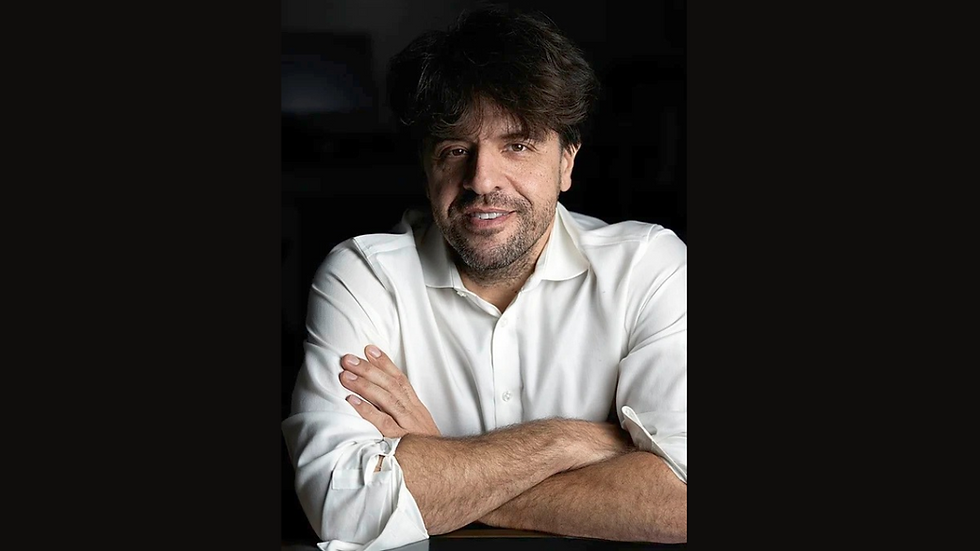
Dr Karl Deisseroth the D.H. Chen Professor at Stanford University, was told early Monday that he had won the Nobel Prize in Medicine.
By Sakshi
New Delhi, October 6: Dr Karl Deisseroth, an acclaimed American neuroscientist, bioengineer and psychiatrist who serves as the D.H. Chen Professor at Stanford University, was told early Monday that he had won the Nobel Prize in Medicine for his contributions to the development of optogenetics, a new branch of brain science. He spent hours answering congratulatory calls.
However, the Californian scientist soon requested some time away from the spotlight for an important duty: preparing school lunches for his children, who were fast asleep at the Stanford family home while their father was having late-night conversations with reporters and well-wishers.
Deisseroth, 54, shared this year's Medicine prize with two researchers in Germany for their work in optogenetics, a field that combines light with genes to switch neurons on and off in living brains.
Professor Describes Himself as a Night Owl
The Stanford University professor and Howard Hughes Medical Institute researcher is a self-described night owl who frequently works past midnight. He said that when he received the call from the Nobel Assembly in Stockholm, he had just gone to bed after reviewing papers and sending emails to his students.
“I almost felt as if I'd lost the power of forming words,” he told The Associated Press. “But I recovered after a minute or two.”
He regained his speech quickly enough to take part in remote interviews with AP science reporters. Speedy emails with Stanford's communications staff helped put them in touch.
“No real sleep was achieved,” he said an hour after the announcement.
As the science reporters spoke with Deisseroth over the phone and Zoom, an AP photographer and videographer raced to his home in Stanford.
AP Photographer Arrives at Nobel Winner's Home
The photographer arrived around 3:30 am to find Halloween decorations outside the home, but just one light was on inside. He was worried that he had the wrong house before mustering the courage to knock on the door.
Dr Michelle Monje-Deisseroth, the scientist's wife, answered and ushered the photographer into their home, where the Nobel winner was taking calls from the couch.
Monje-Deisseroth, an HHMI investigator and Stanford paediatric neuro-oncologist, was at his side when she wasn't making coffee for the Stanford communications staff who had joined the celebration.
Deisseroth was surprised to hear that his work had been honoured with a Nobel Prize, he told the AP, but his wife was not.
Deisseroth recounted the research he conducted with fellow Nobel winners Peter Hegemann and Georg Nagel, and its real-world impact.
“For me, I'm a physician-scientist. I am a psychiatrist. I care about patients and my patients who have autism, who have depression,” he said. “I care about the hope that this brings. But I'm also a basic scientist, and I care about understanding this amazing organ, the brain, and how it works and how it integrates and computes and delivers all the things that make us human.”
Deisseroth told the Stanford team that he wanted an hour-long break starting at 6:30 am as he concluded the interviews. He said his children would be waking up and needing lunch before heading to school.
Monje-Deisseroth brushed aside a Stanford representative's question about whether the neighbours would mind the late-night disturbance.
According to her, the family lives in faculty housing.
“The neighbourhood is full of Nobels.”
(Inputs from AP)