Noida International Airport Takes Off, But Can India Overcome Its Aircraft Shortage?
Noida Airport opens with a farmers' flight as India explores foreign partnerships and domestic manufacturing to address aircraft shortages.
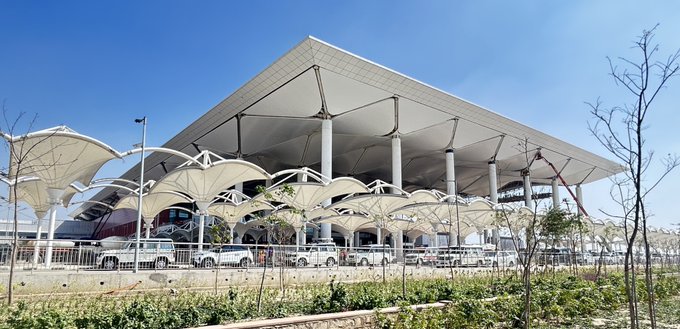
Noida International Airport began operations with a symbolic flight carrying 170 farmers who had surrendered land for the project. While the launch marks a major milestone in India's expanding aviation infrastructure, Civil Aviation Minister K. Rammohan Naidu acknowledged that aircraft shortages remain a challenge.
By Pranjal Gupta
New Delhi, June 15: Six years ago, many farmers in Jewar were cultivating crops on their ancestral land, which they gave up for the Noida International Airport, which began operations on Monday.
To mark the airport's opening, a special IndiGo flight carried 170 farmers, including 20 women, from Noida to Lucknow, where they were received by Uttar Pradesh Chief Minister Yogi Adityanath at the Chaudhary Charan Singh International Airport.
The symbolic journey reflected the dramatic change in the region—from agricultural fields to one of India's newest aviation hubs. For many of the farmers, it was also their first experience of air travel.
The Jewar Airport has will serve as a significant alternative for Delhi Airport, potentially easing the burden on the Indira Gandhi International Airport. It will also improve the air connectivity in the NCR (National Capital Region), especially for the passengers of Ghaziabad, Meerut, Noida, Greater Noida, Delhi, as well as Gurugram and Faridabad to some extent.
Also Read: Germany Out, India In? France's Nuclear-Capable FCAS Fighter Could Find Its Next Partner in India
With the latest addition, Uttar Pradesh emerged as one of India's strongest aviation ecosystems. According to Union Civil Aviation Minister K. Rammohan Naidu, the annual passenger traffic in the state has risen from around 32 lakh in 2014 to more than 1.4 crore in 2026. He added that India's airport network has expanded from 74 airports to around 165 over the same period.
Farmers from Jewar board a special inaugural flight from Noida International Airport, built on land they once cultivated. (Image Source: X/Noida International Airport)
However, he highlighted one simple issue that could affect the commercial operations across the nation: the shortage of aircrafts.
With Noida International Airport, India's Aviation Network Continues to Expand
Naidu said the government is continuing to invest in aviation infrastructure, with major cities either expanding existing airports or exploring second airports to accommodate growing demand. Alongside Noida International Airport, Navi Mumbai Airport has also begun operations, while Bengaluru and Chennai are planning additional airport capacity.
To address the shortage, he said the government is seeking greater foreign investment, international partnerships and joint ventures to strengthen India's aviation manufacturing ecosystem.
The minister reiterated the Centre's ambition to eventually develop a domestically manufactured civilian aircraft.
"Very soon, the people of India are going to travel in a made-in-India civilian aircraft," Naidu said, adding that achieving this goal would require collaboration with global aviation companies, technology partners and investors.
A Long-Term Vision
Naidu cited Noida International Airport itself as an example of successful international cooperation, highlighting the role of Zurich Airport International AG in developing the project.
While the vision of a made-in-India civilian aircraft aligns with the government's broader push for self-reliance, it remains a long-term objective that will depend on sustained investment, technology partnerships and the development of a robust manufacturing ecosystem.
For now, India's immediate aviation challenge remains ensuring airlines have enough aircraft to serve a rapidly growing passenger base, even as new airports continue to come online across the country.