Seed Diplomacy: How India Is Quietly Winning Afghanistan Without Recognizing the Taliban
India is using agriculture — not billion-dollar deals or political recognition — to quietly rebuild influence in Taliban-run Afghanistan, offering seeds and irrigation expertise where China's investments have stalled and Pakistan's ties remain conflict-prone. By Mahima Katal New Delhi, July 10: While the world watches China's stalled mining billions and Pakistan's on-again, off-again border war with Kabul, India has been playing a far quieter game in Afghanistan — and it may be paying off....
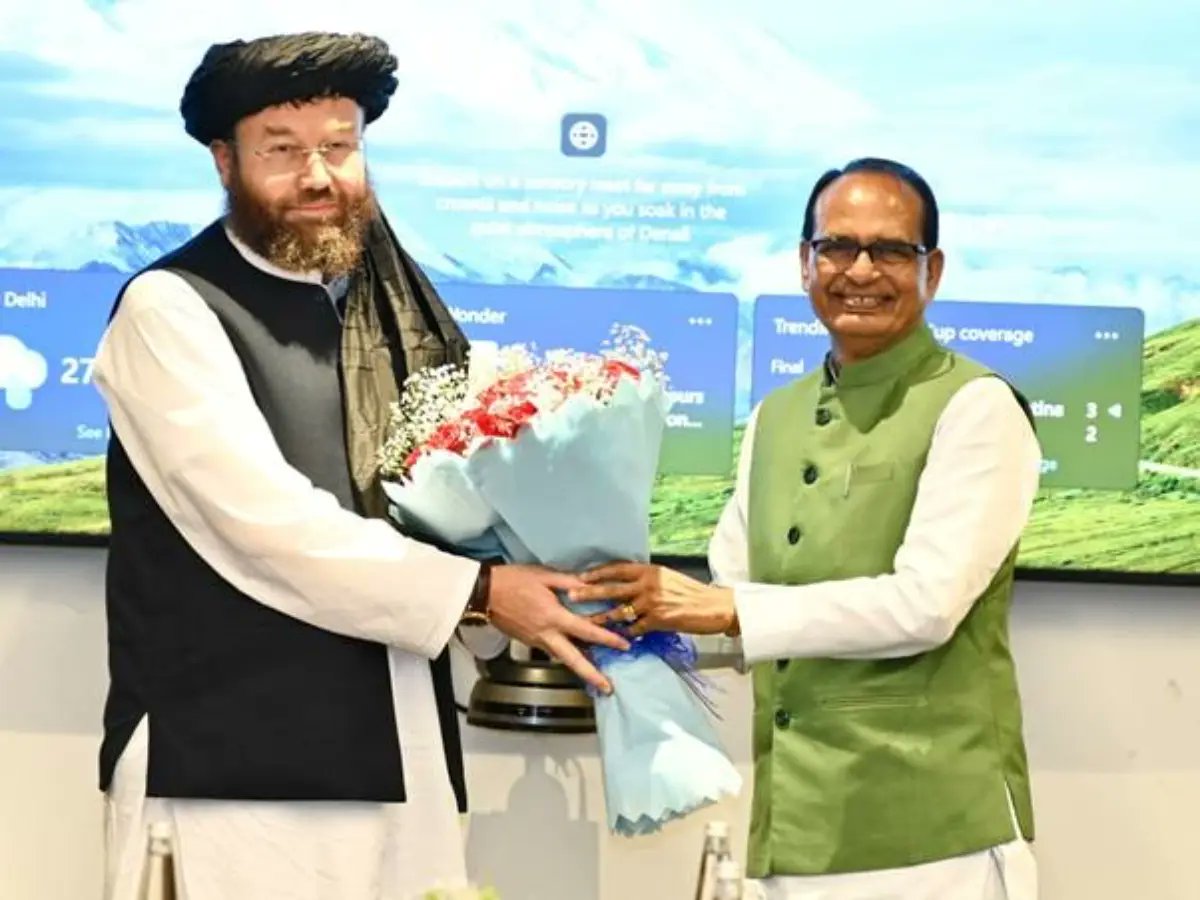
India is using agriculture — not billion-dollar deals or political recognition — to quietly rebuild influence in Taliban-run Afghanistan, offering seeds and irrigation expertise where China's investments have stalled and Pakistan's ties remain conflict-prone.
By Mahima Katal New Delhi, July 10: While the world watches China's stalled mining billions and Pakistan's on-again, off-again border war with Kabul, India has been playing a far quieter game in Afghanistan — and it may be paying off. This week's meeting in New Delhi between Union Agriculture Minister Shivraj Singh Chouhan and his Afghan counterpart, Mawlawi Ataullah Omari, wasn't just a routine bilateral courtesy call. It was another move in a deliberate Indian strategy: rebuild influence in Afghanistan through expertise and goodwill, without ever having to answer the politically loaded question of whether New Delhi recognizes Taliban rule.
What India Actually Offered And Why It's Smarter Than It Looks
At the talks, Chouhan offered Afghanistan quality wheat, maize, and potato seeds, climate-resilient and biofortified crop varieties, and access to the scientific expertise of the Indian Council of Agricultural Research. India also pledged to share its know-how in micro-irrigation, rainwater harvesting, farm ponds, and check dams — directly addressing the water scarcity and climate stress that Afghan officials identified as their most urgent farming challenge. The two governments agreed to set up a Joint Working Group to build a long-term cooperation roadmap and to extend an existing ICAR partnership with an Afghan agricultural university.
To a casual observer, this looks modest, seeds and irrigation tips, not billion-dollar mining deals. But that's exactly the point. India isn't trying to outspend China. It's building something China and Pakistan have both struggled to deliver: trust rooted in results.
The Real Advantage: India Doesn't Need to Recognize the Taliban to Win Afghan Goodwill
Unlike questions of embassies and formal diplomatic recognition — a step India, like nearly every country except Russia, has avoided — agriculture lets New Delhi engage Kabul on entirely humanitarian, non-political terms. There's no headline risk, no accusation of legitimizing the Taliban, and no domestic political cost. Yet the relationships being built through ICAR, seed systems, and irrigation projects are the kind that tend to outlast any single government or minister — precisely the sort of durable, on-the-ground influence that formal diplomacy alone often fails to produce.
This is India playing to its actual strengths. It has decades of experience solving exactly the problems Afghanistan is now confronting: drought-hit wheat farming, inefficient irrigation, and a population that depends on agriculture for its livelihood. Where China offers infrastructure it struggles to build and Pakistan offers a border it can't stop fighting over, India offers something practical and immediately usable — and Kabul knows it.
India Is Also Playing the Long Game Against Beijing and Islamabad
Afghanistan's own outreach to India — including inviting Indian firms into its mining sector — has been widely read as a deliberate signal to counterbalance Pakistan and remind China that Kabul isn't dependent on Beijing alone. That's a card India should be glad to hold. China's flagship promises to Afghanistan, including mining contracts reportedly worth billions and a proposed extension of the China-Pakistan Economic Corridor, have largely stalled amid insecurity and unresolved contract disputes. Pakistan, meanwhile, nearly went to war with the Taliban last year and continues to accuse Kabul of sheltering militants — hardly the foundation for the kind of trust India is quietly building instead.
In other words, while Beijing waits for security conditions to justify its bigger bets, and Islamabad manages a relationship defined as much by conflict as cooperation, India has positioned itself as the neighbor with no baggage and a genuinely useful offer. It's a rare case of India's soft-power instincts — built on decades of agricultural research and Green Revolution-era expertise — translating directly into strategic advantage in its own backyard.
The Bottom Line for India
New Delhi isn't going to out-invest China in Afghanistan, and it doesn't need to. By focusing on food security, seed systems, and irrigation — areas where India has genuine, provable expertise — it is building the kind of institutional relationships that could matter far more than headline-grabbing dollar figures once Afghanistan's agricultural economy actually needs to be rebuilt. For a country boxed out of Kabul's mineral wealth race and wary of embracing the Taliban politically, agriculture may be India's smartest and most sustainable route to relevance in Afghanistan.