SHANTI Act Under Scrutiny: Can Nuclear Liability Be Capped Without Limiting Victims’ Right to Compensation?
Supreme Court asks Centre to clarify if SHANTI Act's operator liability cap also limits courts' compensation power, and whether AERB appointments under the Act involve conflict of interest since the Atomic Energy Commission recommends its own regulator's members. No stay issued; matter to be heard after Centre's response. By Mahima Katal The Supreme Court on Monday asked the Centre to clarify whether a statutory cap on nuclear operator liability under the SHANTI Act also limits the...
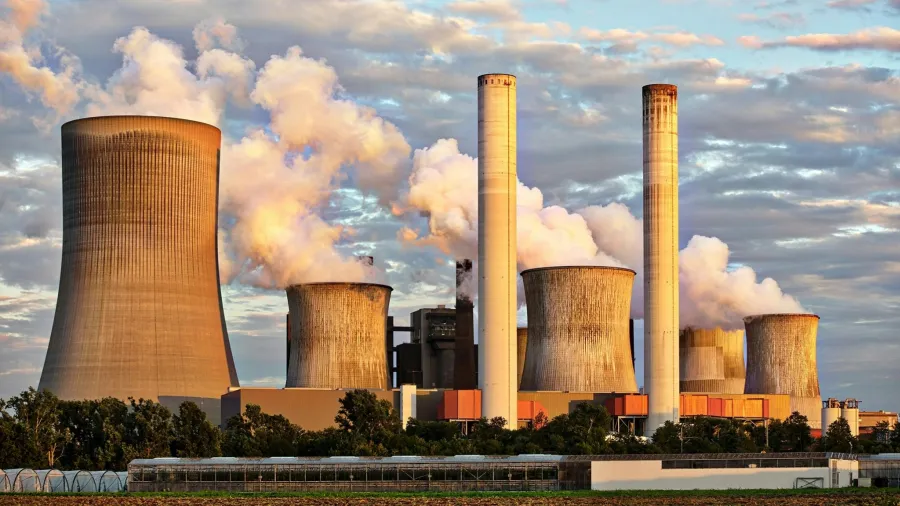
Supreme Court asks Centre to clarify if SHANTI Act's operator liability cap also limits courts' compensation power, and whether AERB appointments under the Act involve conflict of interest since the Atomic Energy Commission recommends its own regulator's members. No stay issued; matter to be heard after Centre's response.
By Mahima Katal
The Supreme Court on Monday asked the Centre to clarify whether a statutory cap on nuclear operator liability under the SHANTI Act also limits the compensation a court can award to victims of a nuclear accident. A bench of Chief Justice Surya Kant and Justices Joymalya Bagchi and V. Mohana issued limited notice on the question while hearing a challenge to the Act filed by a group of petitioners, including former bureaucrat EAS Sarma and several professors and scientists.
The SHANTI Act, 2025, the Sustainable Harnessing and Advancement of Nuclear Energy for Transforming India Act, repealed both the Atomic Energy Act, 1962 and the Civil Liability for Nuclear Damage Act, 2010 when it came into force in December last year. Its central departure from the older law is a sliding-scale cap on what a private operator owes in the event of a nuclear accident, topping out near ₹3,000 crore depending on reactor capacity.
The government's stated rationale is investment: the 2010 law's uncapped exposure for operators, and their unrestricted right to recover from equipment suppliers, had kept private and foreign capital out of India's nuclear sector for over a decade. The new Act narrows that recourse considerably, an operator can now pursue a supplier only where a contract expressly allows it, or where the damage was caused intentionally.
Advocates Prashant Bhushan and Neha Rathi, appearing for the petitioners, argued that the cap violates Articles 14, 19 and 21 of the Constitution, and that it effectively lets operators cut corners on safety by fixing their maximum exposure in advance of any accident. CJI Kant, in response, observed that there was "too much apprehension" in the challenge, and drew a distinction the Court is now asking the Centre to address directly: that Parliament capping what an operator owes does not, on its own, foreclose a court from separately awarding fair and just compensation.
That distinction has a specific doctrinal history that the current challenge sits inside. Following the 1985 Bhopal gas disaster and the 1986 Oleum gas leak in Delhi, the Supreme Court in M.C. Mehta v. Union of India departed from ordinary tort principles and evolved the doctrine of absolute liability for hazardous industries, a standard under which an enterprise engaged in an inherently dangerous activity owes compensation without exception or cap, precisely because negotiated or capped liability had left Bhopal's victims without adequate redress for years.
The SHANTI Act's liability ceiling, applied specifically to nuclear operators, sits at odds with the direction that doctrine had set. Whether the Act's cap survives constitutional scrutiny may turn on whether the Court treats a statutory ceiling on operator liability as a limit on its own remedial jurisdiction under Article 21, or as a separate, coexisting track that leaves its compensation power untouched. CJI Kant's remarks suggest the bench is inclined toward the latter reading, though the Court has made no finding at this stage and has issued only limited notice.
A second question sits inside the same order, concerning the Act's regulatory architecture rather than its liability cap. The SHANTI Act confers statutory status on the Atomic Energy Regulatory Board for the first time, a change regulatory reviews had sought since the early 1980s. But under Section 17(4), AERB's members are appointed on the recommendation of a search-and-selection panel constituted by the Atomic Energy Commission, the body responsible for operating India's nuclear power stations. Bhushan argued this is a conflict of interest: the entity being regulated effectively selects who regulates it. The bench has asked the Centre to clarify its position on this appointment structure as well.
The Court's order on May 19 had already flagged that the broader challenge to the Act touches on questions of economic policy a category the judiciary has traditionally approached with restraint. Monday's order does not disturb that posture. No provision of the Act has been stayed, and the bench has made no finding on constitutionality. What the order does is separate two questions that had been argued together whether the compensation cap is valid, and whether it is total and direct the Centre to answer the second one first. That is a narrower inquiry than the constitutional challenge itself, but it is the one that will determine what remedy, if any, remains available to a nuclear accident victim regardless of how the larger challenge is eventually resolved.
The matter will be heard next after the Centre files its response on both the compensation-cap question and the AERB appointment structure.