Taliban Denies Pakistan’s Claim of Infiltration as Border Shelling Escalates
Pakistan claims Taliban-backed militants attempted infiltration and shelled border posts, while Kabul denies allegations, escalating tensions amid regional mediation efforts.
By Pranjal Gupta
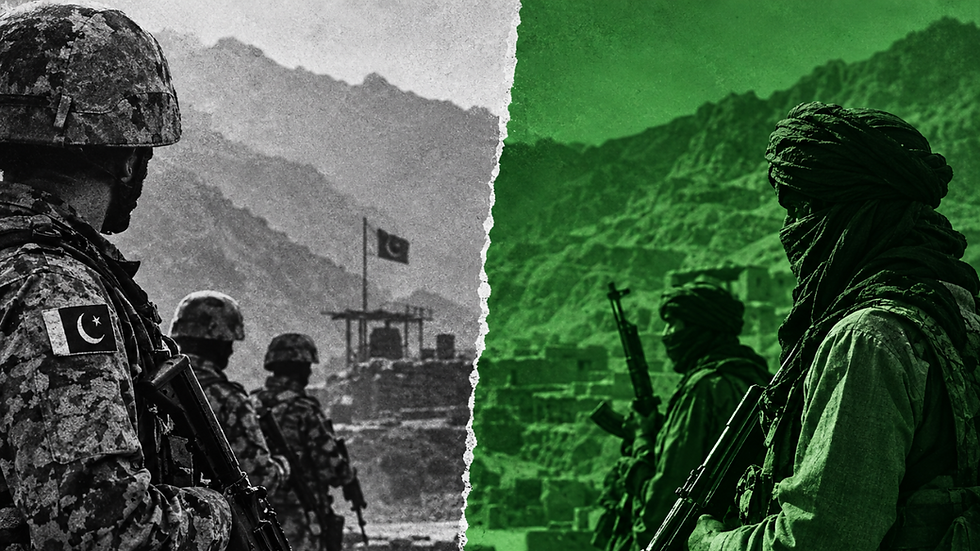
New Delhi, September 23: Pakistani officials claimed that Afghanistan’s Taliban forces made a cross-border infiltration attempt and shelled its border posts overnight. Meanwhile, the Taliban government spokesperson, Zabiullah Mujahid, has dismissed the allegations.
According to Pakistani officials, the militants who attempted the infiltration were Fitna-ul-Khawarij. Islamabad uses this term for the Pakistani Taliban, who operate with support from the Afghan Taliban. It has long been alleged that the Taliban government allowed these militants to operate from its territory and carry out attacks across the border, an accusation that Kabul denies.
Four local Pakistani officials said Wednesday that militants attempted to infiltrate Pakistan from areas near Afghan border posts in Paktia and Nangarhar provinces, allegedly with support from the Afghan Taliban forces, reported news agency AP.
After Pakistani troops thwarted the infiltration attempt, Afghan Taliban forces allegedly fired mortars and other heavy weapons at Pakistani border posts, the four officials said. Pakistani forces responded with artillery fire, targeting Taliban border posts, mortar sites, and defensive positions.
The officials said Afghan Taliban forces subsequently abandoned several positions and suffered casualties. The four officials spoke on condition of anonymity as they were not authorized to talk to the media about the latest flareup.
The accounts could not be independently verified. The latest escalations threaten mediation efforts by China, Turkey, Qatar and Saudi Arabia to broker a lasting peace between Kabul and Islamabad.
Pakistan Attacks
The fresh claims by Pakistan came just days after Pakistani fighter jets struck sites in eastern Afghanistan that Islamabad said were militant hideouts, an escalation between Kabul and Islamabad that threatens mediation efforts by regional powers.
The airstrikes ended several weeks of relative calm following months of cross-border hostilities. Also, earlier this month, Pakistani security forces killed 15 militants attempting to cross into the country from Afghanistan.
In Monday's airstrikes, Pakistan's Information Ministry said 28 militants were killed, while Afghan authorities said at least three civilians died and four others were wounded. The UN mission in Afghanistan confirmed the civilian casualties and Kabul formally protested the attack.
On the sidelines of the UN General Assembly in New York, Pakistani Foreign Minister Ishaq Dar expressed concern about what he said was the presence of more than two dozen anti-Pakistani militant groups in Afghanistan.
Monday's Pakistani airstrikes followed a shootout with militants in Hangu, a district in northwestern Khyber Pakhtunkhwa province near the Afghan border, that killed six Pakistani security personnel. Days earlier, a suicide bomber struck a mosque inside a police compound in the nearby city of Kohat.
Eight gunmen then stormed the compound, triggering a 20-hour gunbattle that killed at least 21 people, most of them police officers. No group had claimed responsibility for the attacks.
Pakistani authorities blamed the violence on the Pakistani Taliban and allied militant groups. The Pakistani Taliban, formally known as Tehreek-e-Taliban Pakistan, have stepped up their attacks on Pakistani security forces, boosted by the Afghan Taliban's return to power in Afghanistan in 2021.
(With Inputs from AP)