The 2022 Law That Turned Ram Rahim's Furloughs Into an Entitlement
A 2022 Haryana law, rewritten after Ram Rahim became ineligible under the old one, now lets him access 91 furlough days yearly, exposing how facially neutral "good conduct" statutes still favor prisoners with political and organisational leverage. By Mahima Katal New Delhi, Aug 25: Gurmeet Ram Rahim Singh left Sunaria jail at 6 am on Tuesday for a 21-day furlough, his 17th temporary release in nine years and his third of 2026 alone. The numbers behind that headline are what deserve scrutiny:...
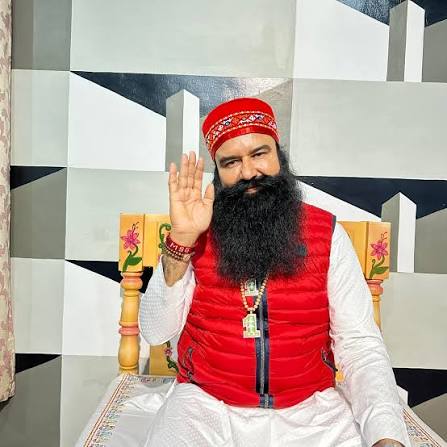
A 2022 Haryana law, rewritten after Ram Rahim became ineligible under the old one, now lets him access 91 furlough days yearly, exposing how facially neutral "good conduct" statutes still favor prisoners with political and organisational leverage. By Mahima Katal
New Delhi, Aug 25: Gurmeet Ram Rahim Singh left Sunaria jail at 6 am on Tuesday for a 21-day furlough, his 17th temporary release in nine years and his third of 2026 alone. The numbers behind that headline are what deserve scrutiny: 91 of 216 days spent outside prison in 2025, and more than 450 days across the last five years, for a man serving a 20-year sentence on two counts of rape. That volume of relief is not an accident of sympathetic administration. It traces to a specific legislative choice, and that choice is where a legal analysis of this case has to begin.
Until 2022, Ram Rahim did not qualify for parole or furlough at all under Haryana's governing statute, a 1988 law with eligibility conditions he could not meet. His only releases before that point, in October 2020 and May 2021, were one-day exceptions arranged outside the statutory framework to let him see his ailing mother.
That changed when the state government repealed the 1988 law and replaced it with the Haryana Good Conduct Prisoners (Temporary Release) Act, 2022, effective that April. The new Act caps parole at 70 days a year across two spells and furlough at 21 days at a stretch, the same 21-day window Ram Rahim is currently using. Haryana's then Jail Minister, Ranjit Singh Chautala, has maintained that these caps mean none of the releases breach any rule. That is true as a narrow reading of the statute. It is also beside the real question, which is not whether the Act was followed but why the Act was rewritten at all, in a form that happened to open the door for the state's highest-profile convict within months of his becoming eligible.
Journalist Ramchander Chhatrapati's family and allied activists have argued for years that the 2022 rewrite was built around this one case. A Haryana prisons official has told the press the update was only meant to simplify an unwieldy process and that every release still rests on a documented good-conduct record. Both things can be true at once, and that is precisely the loophole worth naming: a facially neutral, generally applicable law can still function as a bespoke instrument if the discretion built into it, the certification of "good conduct", is exercised by officials who report to the same state government whose political interests may be served by the prisoner's release.
Sudesh Kumari of the Jan Sangharsh Manch, whose organisation first raised the allegations against Ram Rahim in 2002, has put the structural problem plainly: a good-conduct certificate carries only as much weight as the independence of the officials issuing it, and those officials answer to the state, not to the courts. That is a legitimate institutional critique, distinct from the partisan framing Kumari layers on top of it, and it applies to any law that outsources a liberty-affecting decision to executive discretion without external review.
The judiciary has tested this discretion twice and, on balance, deferred to it. In February 2024, a Punjab and Haryana High Court bench reviewing the full record of Ram Rahim's releases called the tally striking given the nature of his convictions, and barred the state from granting further parole without the court's clearance. That order suggested the judiciary saw something worth restraining. Six months later, in August 2024, the same court disposed of a Shiromani Gurdwara Parbandhak Committee petition against the releases by directing only that future applications be considered without arbitrariness or favouritism, language that reads as a caution rather than a bar, and which the state has since treated as clearance to continue. When the SGPC pressed the point on appeal, the Supreme Court declined to intervene in February 2025. The net effect is a judicial record that flagged the pattern as unusual without ever supplying a standard specific enough to stop it, which is its own kind of loophole: appellate courts can note that something looks wrong without building a rule that prevents it from recurring.
The murder cases sharpen the point rather than settle it. Ram Rahim was convicted by CBI courts in both the 2019 killing of Chhatrapati and the earlier conspiracy to kill Dera manager Ranjit Singh, and the Punjab and Haryana High Court acquitted him in both, in May 2024 and March 2026 respectively, citing weaknesses in the underlying investigations. Chhatrapati's son has since taken the Chhatrapati acquittal to the Supreme Court, which agreed this month to hear the appeal, meaning the question of Ram Rahim's culpability in a journalist's murder is legally unresolved even as he moves in and out of Sunaria on furlough.
A separate, still-pending trial accuses him of orchestrating forced castrations of followers on Dera premises, based on a 2018 CBI chargesheet; he holds bail in that matter too. None of this affects his eligibility for temporary release under the 2022 Act, which is keyed only to conduct inside the rape conviction he is serving. But it means the state is administering a good-conduct entitlement to a man against whom two other serious criminal matters remain actively contested in appellate and trial courts, a combination the 1988 law, whatever its flaws, was never actually tested against.
The comparison worth pressing is not Ram Rahim against public sentiment, but Ram Rahim against the ordinary convict the 2022 Act was written to serve. The statute is formally caste-, class-, and status-blind: any prisoner with a clean disciplinary record can apply for the same 70 days of parole and 21 days of furlough. What is not blind is the administrative capacity to secure that certification reliably, to time it, and to mobilise the convoy of escort vehicles and organisational infrastructure that met Ram Rahim at Sunaria's gates this week.
A prisoner without a following of Dera Sacha Sauda's scale, or without a state government for whom his goodwill carries electoral weight in Sirsa, Fatehabad, and the other districts where the sect commands votes, has the same paper entitlement and a fraction of the practical means to see it exercised on this cadence. That gap between formal equality and administered equality is the loophole. It is not illegal. It is also not something the current framework requires anyone to explain, and that is the reform question this case actually raises: not whether Ram Rahim broke the rules of the 2022 Act, but whether a law this consequential for liberty should let good-conduct certification happen without published criteria or independent review, for him or for anyone else it will eventually be used on.