The Gorkha Question: Why Delhi's Latest Committee Is Different And Why It May Not Be
Fourth Time Around Delhi's Gorkha Committee Faces the Same Federalism Problem That Sank the Last Three By Mahima Katal New Delhi: The committee Home Minister Amit Shah announced at Sukna on August 22 is not new in kind, only in name. It is the fourth institutional attempt at resolving a demand that has outlived three prior arrangements, and the structural constraint that undid each of them remains fully intact. Headed by Pankaj Kumar Singh, a former BSF Director General and Deputy National...
Fourth Time Around Delhi's Gorkha Committee Faces the Same Federalism Problem That Sank the Last Three
By Mahima Katal New Delhi: The committee Home Minister Amit Shah announced at Sukna on August 22 is not new in kind, only in name. It is the fourth institutional attempt at resolving a demand that has outlived three prior arrangements, and the structural constraint that undid each of them remains fully intact.
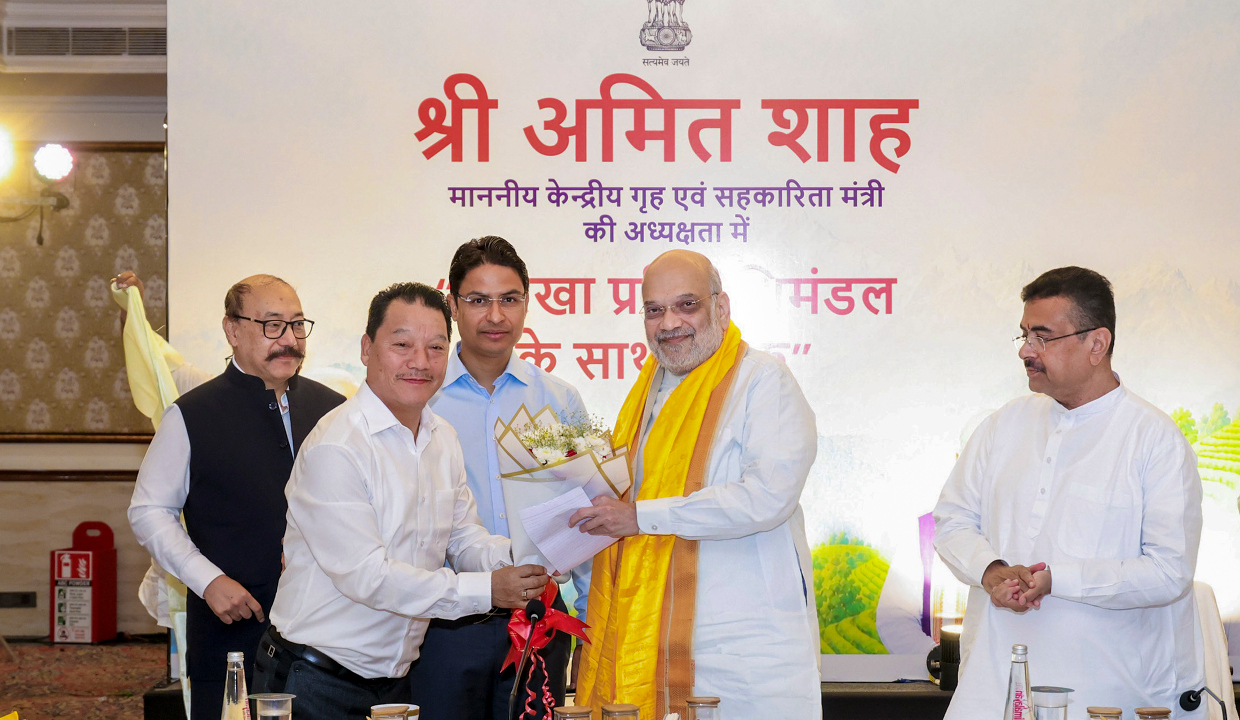
Headed by Pankaj Kumar Singh, a former BSF Director General and Deputy National Security Adviser who has served as the Centre's interlocutor for Darjeeling, Dooars and Terai since October 2025, the body has been tasked with drafting the text of a "permanent political solution" within the constitutional framework. West Bengal Chief Minister Suvendu Adhikari attended alongside the full spread of hill political leadership, Bimal Gurung and Roshan Giri of the GJM, Mann Ghisingh of the GNLF, and BJP hill representatives including MP Raju Bista. The date was pointed: August 22 marks the anniversary of the 1988 Darjeeling accord, the first of the three arrangements this committee now succeeds.
That lineage is the frame worth applying here, more than the meeting itself. The 1988 Darjeeling Gorkha Hill Council offered an executive council with limited autonomy but no legislative or constitutional backing, leaving it exposed to unilateral withdrawal by the state government. The 2011 Gorkhaland Territorial Administration, born of a tripartite agreement, expanded the subjects under hill administration but stopped short of Sixth Schedule protection, leaving the demand for constitutional identity unresolved. Talks resumed intermittently from 2021 without a binding outcome, consistent with negotiations that lack a mandated drafting mechanism.
Each of the three prior attempts bought a period of calm and then frayed, for the same underlying reason. What was offered, administrative autonomy, was never quite what was being asked for.
The MHA's own framing of the current demand is instructive for what it omits. The ministry describes the hill leadership's ask as threefold: a distinct identity, a permanent political solution, and constitutional recognition. Statehood, the demand that drove violent agitation in the 1980s and was revived under GJM leadership through the 2000s and 2010s, is absent from that list.
This is not incidental. It reflects a real evolution in the movement's own position, from Gorkhaland as a separate state toward a negotiated settlement of identity and autonomy within West Bengal. That shift is what makes a constitutional-framework solution, rather than state reorganisation, viable for the Centre to pursue.
But viability for the Centre is not the same as authority to deliver. Any durable arrangement, through Article 3 mechanisms, an extension of the Sixth Schedule, or enhanced autonomous council powers, touches West Bengal's territorial and administrative jurisdiction. State concurrence is a structural requirement, not a courtesy. This is why the 1988 and 2011 accords were both tripartite rather than bilateral, and why the 2026 process follows the same design.
The Centre can convene, appoint interlocutors, and set deadlines through symbolism. It cannot legislate a settlement on its own.
Three tests will determine whether this attempt outlasts its predecessors. Whether Singh's committee produces a draft that addresses constitutional recognition through legislative or constitutional change, rather than another executive-council structure resembling the GTA. Whether West Bengal's government remains committed to the outcome beyond any change in political dispensation, given that state concurrence has historically been the weak link in enforcement. And whether the hill leadership, now split across GJM, GNLF and BJP-aligned representation more than at any point during the 1980s agitation or the 2007–17 period, can present Delhi with a negotiating position it can treat as unified rather than contested.
None of those three conditions is met by Saturday's outcome. What exists is a mandate to draft, not a decision to implement. "Permanent political solution" has appeared in official language around this issue since at least 2011. The committee under Pankaj Kumar Singh is a mechanism worth tracking, not a resolution worth announcing.