Trump 'Tariff' on Wildfires: Canada Faces Another Forest Fire, America Too Feels the Heat
Trump blames Canada for wildfire smoke reaching the US, threatens higher tariffs, while Ottawa defends its forest management efforts.
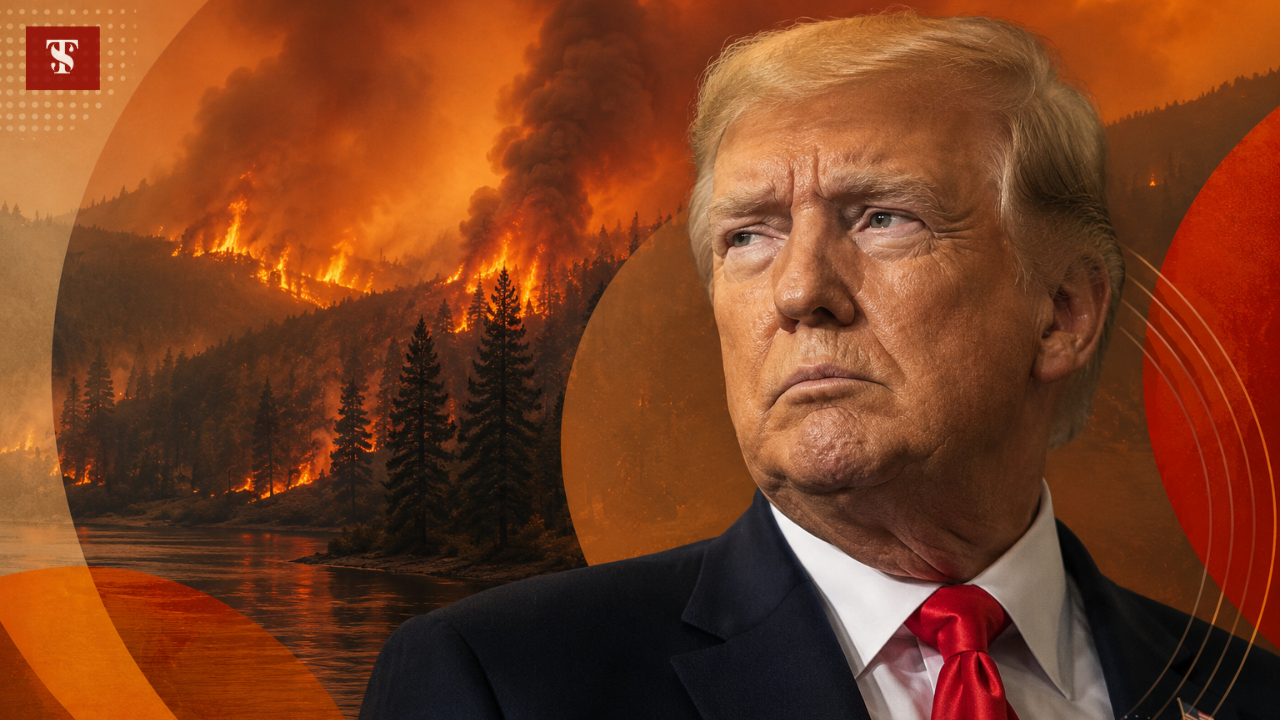
Trump blames Canada for wildfire smoke reaching the US, threatens higher tariffs, while Ottawa defends its forest management efforts.
By Pranjal Gupta
New Delhi, July 17: US President Donald J. Trump addressed the issue of poor air quality in parts of the United States, holding Canada responsible for mismanaging the escalating wildfires that intensified due to challenging climate conditions in mid-July. Thick smoke drifted into American territory as the two countries share the world's longest international land border. Trump said the United States would bill Canada for the bad air by adding the cost to the tariffs it currently pays.
His message came on Friday as parts of the Great Lakes, Midwest and Northeast experienced poor air quality for several days. Meanwhile, many states remain on high alert.
“We are holding Canada responsible for the fact that they are not properly maintaining their Forests, and Brush therein, and the United States is being unnecessarily invaded by filthy, polluted, and unhealthy air, the quality of which is dangerous, and totally unacceptable! I will call the Prime Minister during the day to find out what they are going to do about it. The cost is incalculable! Canada has refused to engage in basic Forest Management and Debris Removal, knowing that such refusal will lead to exactly this result. This is Willful Negligence, and becoming a yearly occurrence, costing the United States Billions of Dollars, which cost of this pollution must of necessity be added to the TARIFFS Canada is currently paying,” Trump said in a post on Truth Social.
Trump Tariff on Wildfire: Wildfire smoke from Canada blankets parts of the United States as Trump blames Ottawa and threatens to increase tariff costs.
Wildfires in Canada Are Common, Also Partly Preventable
Canada is one of the world's most densely forested countries, with around 40% of its land covered by forests. It is home to nearly 9% of the world's forests, making wildfires a natural part of its ecosystem. Fires can start from unattended campfires, discarded cigarettes, sparks from vehicles or equipment, power lines, fireworks, or other accidental and intentional sources of ignition.
Trump Tarrifs Canada Wildfire: The continuous span of Canada's Boreal Forest.. Source: Natural Resources Canada -
Canada.ca
During hot and dry weather, even a small spark can trigger a massive wildfire. Prolonged drought, low humidity and strong winds allow fires to spread rapidly and become harder to control.
Unlike tropical rainforests, which are moist and filled with broad-leaved vegetation, Canada's boreal forests are dominated by coniferous trees such as black spruce, jack pine and balsam fir. Many of these species have evolved to depend on wildfires for regeneration. Jack pine cones, for example, remain sealed with a thick layer of resin and only open when exposed to the intense heat of a forest fire. This releases their seeds onto freshly burned, nutrient-rich soil, helping the forest regenerate naturally.
What Is the Canadian Government Doing to Prevent Wildfires?
Since Canada's forests are highly vulnerable to accidental sparks, forest management plays
an important role in reducing the risk of large wildfires and repeated ignitions. Federal, provincial and territorial agencies carry out a range of wildfire prevention and mitigation measures, including prescribed burns, forest thinning, fuel-reduction projects, firebreak construction, vegetation management and public awareness campaigns, repprted N.
The country also coordinates firefighting resources through the Canadian Interagency Forest Fire Centre (CIFFC), which helps move firefighters, aircraft and equipment to areas facing elevated fire risk. These efforts are intended to reduce available fuel, protect communities and improve wildfire response capacity, particularly in regions where fire is a natural part of the ecosystem.
Urge for Better Forest Management
Despite these initiatives, some Republican lawmakers and Trump administration officials have argued that Canada is not doing enough to prevent large wildfires and the smoke that frequently drifts into the United States.
In recent years, members of Congress and Environmental Protection Agency (EPA) Administrator Lee Zeldin have urged Canada to place greater emphasis on forest management and fuel reduction. They argue that more extensive forest thinning and debris removal could help reduce the severity of wildfires and limit the amount of smoke reaching the United States.