UNSC Reform Stalls Not From Inertia But By Design, India Signals, As Veto Power Remains Untouched After 17 Rounds
UN reform talks have failed for the 18th straight year, with the process rolled over yet again to 2027. India says the real problem isn't slow progress but design, any reform that adds seats without touching the five permanent members' veto power changes nothing. By Mahima Katal New Delhi, July 29: Seventeen rounds of negotiations on reforming the United Nations Security Council have produced no structural change to the body's decision-making architecture, and India's latest intervention at...
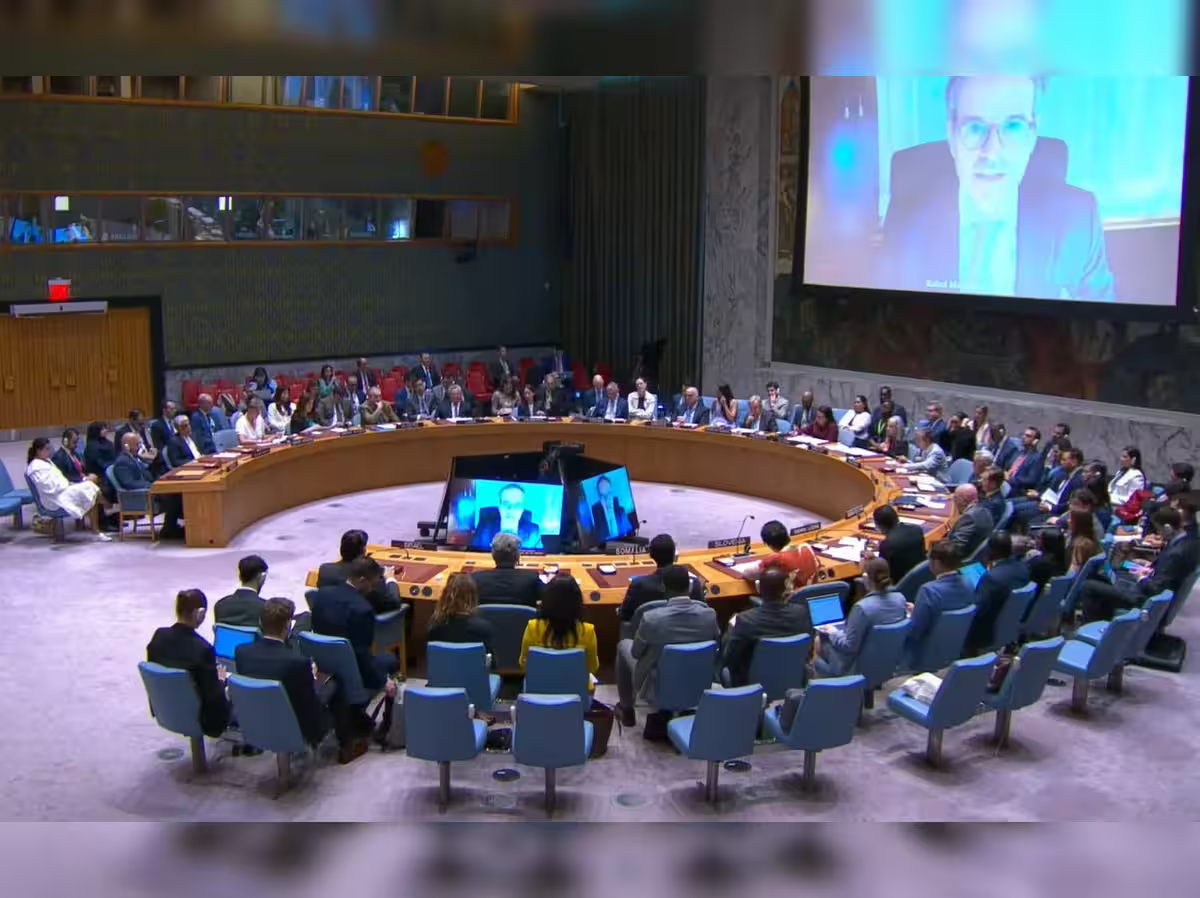
UN reform talks have failed for the 18th straight year, with the process rolled over yet again to 2027. India says the real problem isn't slow progress but design, any reform that adds seats without touching the five permanent members' veto power changes nothing.
By Mahima Katal
New Delhi, July 29: Seventeen rounds of negotiations on reforming the United Nations Security Council have produced no structural change to the body's decision-making architecture, and India's latest intervention at the UN General Assembly suggests this is not simply a failure of process but a reflection of what the Intergovernmental Negotiations were designed to avoid resolving. The General Assembly on Tuesday adopted a decision to roll over the IGN on Security Council reform to its 81st session, an annual procedural step that has now recurred for eighteen consecutive years without a concrete outcome or an end-date attached to the process.
India joined the consensus to adopt the rollover but used the occasion to draw a sharper distinction than procedural frustration alone would suggest. Ambassador Parvathaneni Harish, India's Permanent Representative to the UN, told the Assembly that the 80th IGN session, like those preceding it, had not produced outcomes capable of translating into actual reform, with cluster debates largely restating positions member states have held for years.
The more consequential part of India's statement, however, concerned what reform would need to include to qualify as reform at all: an expansion of both the permanent and non-permanent categories of Council membership, with greater representation for the Global South. India has previously cautioned, and reiterated in substance here, that any outcome confined to expanding the non-permanent category alone would amount to a structural failure, since it would leave the decision-making power concentrated among the five permanent members unchanged regardless of how many additional seats are added around the table.
This is the fault line that separates the reform debate from the diplomatic language typically used to describe it. The Uniting for Consensus group, comprising Canada, Pakistan, Türkiye and Italy, has proposed a 27-member Security Council expanded exclusively through additional non-permanent seats, leaving the permanent five and their veto authority untouched. India's position, aligned with the broader G4 push for permanent-seat expansion, treats this model as the version of reform that changes appearance without changing power.
The distinction matters because the annual rollover itself does not indicate disagreement over whether reform is needed; every member state involved in the IGN process has, at some point, endorsed reform in principle. What the repeated rollovers indicate is disagreement over whether reform should touch the veto-holding core of the Council or leave it structurally intact while redistributing seats elsewhere.
Harish's statement invoked the idea of successive cycles without resolution, framing the IGN's seventeen rounds as cycles that have not yet produced the intended outcome, and asked how much longer the process should be allowed to continue in its current form. He argued that the path to an actual outcome exists and is not mysterious: text-based negotiations conducted with defined timelines and milestones, rather than the recurring cluster debates that have characterised the IGN to date. India described the current arrangement as one in which member states restate known positions from within the UN's own institutional setting while the practical case for a Security Council capable of intervening meaningfully in ongoing conflicts grows harder to sustain outside it.
The reform question intersects with India's own institutional interest in Council membership, though the two are procedurally distinct. External Affairs Minister S Jaishankar formally launched India's campaign for a non-permanent Security Council seat for the 2028-29 term earlier this month, with elections for that single Asia-Pacific Group seat scheduled for June next year, where India will compete against Tajikistan. India has held a Council seat eight times since 1950, most recently in 2021-22. That contest, however, concerns the allocation of a seat within the Council's existing structure and does not bear on the separate, unresolved question of whether the structure itself will change. The rollover to the 81st session ensures that question remains open, with no indication from Tuesday's proceedings of what would need to shift for the eighteenth year of negotiations to produce a different result than the previous seventeen.