US Resumes Military Action Against Iran: What Changed After a Month-Long Lull
Tensions rise in the Middle East as the UAE intercepts an Iranian drone after US strikes on Iranian rocket launchers near the Strait of Hormuz.
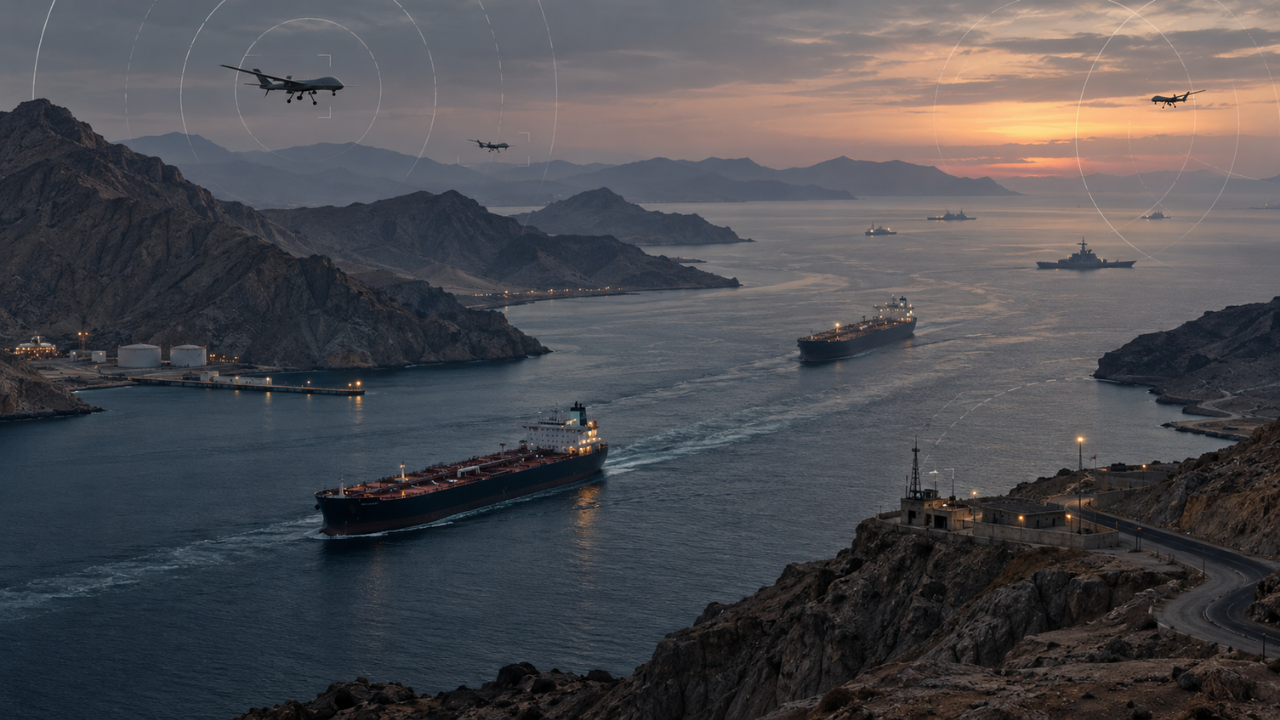
Tensions rise in the Middle East as the UAE intercepts an Iranian drone after US strikes on Iranian rocket launchers near the Strait of Hormuz.
By Pranjal Gupta
New Delhi, August 31: Tensions flared again in the Middle East after the United Arab Emirates, Iran and the US were involved in another round of hostilities within a month. The UAE Air Force on Monday intercepted an Iranian drone over its territorial waters, the Defence Ministry said. The incident came after the US and Iran exchanged fire over the weekend.
The UAE Defence Ministry said it had “dealt with” an Iranian drone that was detected over its waters while approaching from Iran. There were no immediate claims of responsibility from Tehran and no reports of damage.
US forces struck Iranian rocket launchers near the Strait of Hormuz in their first military action in a month on Sunday, breaking a lull in fighting during an intermittent war that has lasted for more than six months. Iran swiftly vowed to retaliate against what it described as a deadly attack.
Forces from Iran's Islamic Revolutionary Guard Corps were observed preparing to launch rockets and deploy sea mines in the strait, according to Tim Hawkins, a spokesperson for the US Central Command. The US military last week completed clearing sea mines from the strait's international shipping routes.
Semiofficial news outlets in Iran reported explosions near Larak Island in the strait. The Revolutionary Guard, in a statement carried by Iran's state broadcaster, reported “the martyrdom and injury of several of our fighters and compatriots”.
US-Iran tensions rise as UAE intercepts an Iranian drone, while fresh strikes near the Strait of Hormuz raise regional concerns. (AI-Generated Image)
A return to open conflict would be dangerous for the region, where Iran has targeted US military bases and infrastructure in Gulf countries since the war began on February 28.
The last time the US military confirmed strikes against Iran was on July 29, when it announced a “heavy wave of strikes” against dozens of Revolutionary Guard targets, including coastal surveillance and defence sites. On August 1, President Donald Trump said he would order the military to hold off on further strikes at the urging of Gulf allies Qatar, Saudi Arabia and the United Arab Emirates.
The US had turned to economic pressure
The attack came just days after the Trump administration said it would focus on increasing economic pressure, rather than military action, to try to end the war with Iran. The shifting strategy centres on threats to punish countries and entities that continue to conduct business with Tehran.
Sunday's attack was a “fatal mistake by the Trump regime during the economic war”, and the enemy would pay the consequences militarily and economically, Revolutionary Guard spokesperson Gen. Hossein Mohebi said in a statement carried by Iranian media.
The US shift towards sanctions came as the administration weighs declining munitions stockpiles after months of war, raising concerns that the prolonged conflict could undermine US military readiness in other parts of the world.
As the conflict continues, Trump's talk of finding a quick end to the war also appears to be fading. He stressed last week that he was “not in a hurry” to get Iran back to the negotiating table, while continuing to argue that the Islamic Republic's leadership was on the ropes.
Appointments to Iran's senior security leadership over the past month, however, have signalled Tehran's defiance after it weathered decades of sanctions and maintained its grip despite domestic dissent.
Trump has consistently emphasised that the US and Israeli campaign has devastated Iran's navy and air force. Iranian officials have said the country has suffered USD 270 billion in direct and indirect damage. Israeli military strikes during the first weeks of the war wiped out much of the theocratic government's leadership structure.
Iran leans on the strait for leverage
Iran has found leverage through strikes against vessels in the Strait of Hormuz, where relatively few ships carrying oil and liquefied natural gas are currently risking passage. Iran still has enough drones and missiles to target vessels transiting the waterway, through which around 20 per cent of the world's oil normally flows.
Tehran continues to assert that even after it reaches a management plan for the strait with Oman, its neighbour on the other side of the waterway, the US cannot use it until it fulfils its obligations under the memorandum of understanding signed by the two countries in mid-June.
Trump has repeatedly declared that the “Strait of Hormuz is open”, saying 24 vessels passed through last week. However, that is a fraction of the roughly 130 vessels that transited the waterway daily before the war began.
Earlier on Sunday, a multinational coalition overseen by the US Navy said commercial traffic through the strait remained at “reduced levels”.
A monitoring agency run by the British military said an unknown projectile struck a tanker on Saturday north of Khasab, Oman, in the strait. The United Kingdom Maritime Trade Operations said no casualties or environmental impact had been reported, citing unspecified military authorities. There was no immediate claim of responsibility.
The US military said that, as of Sunday, it had redirected 83 commercial vessels and disabled three others as part of its blockade of Iranian ports.
(With Inputs from AP)