USS Abraham Lincoln Rests After 9 Months of Labour — Delivered Amid Peak Middle East Conflict
The USS George Washington heads towards the Arabian Sea after the USS Abraham Lincoln was called home. The carrier remained a crucial asset for the US during the peak of the Middle East conflict.
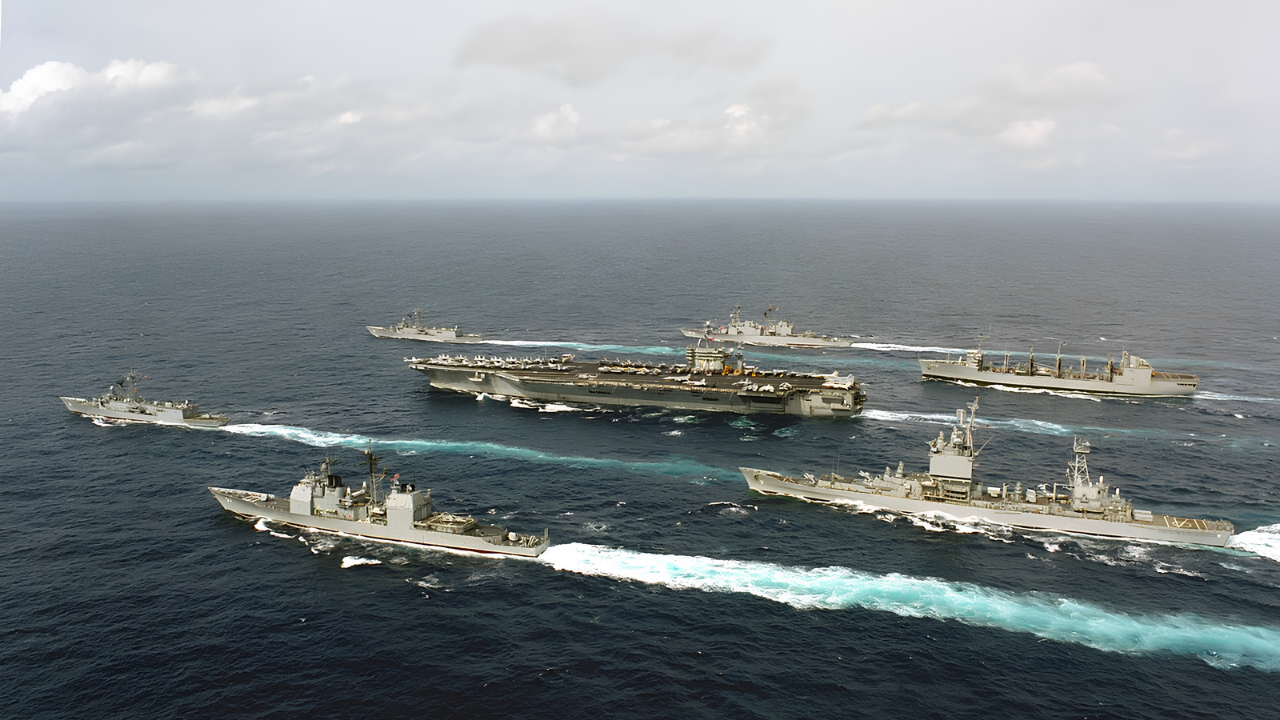
The USS George Washington heads towards the Arabian Sea after the USS Abraham Lincoln was called home. The carrier remained a crucial asset for the US during the peak of the Middle East conflict.
By Pranjal Gupta
The USS Abraham Lincoln is being withdrawn from the Middle East after more than nine months at sea, with the USS George Washington arriving in the Arabian Sea to take over its operations. The move brings an end to one of the US Navy carrier's longest deployments in recent years.
The Lincoln had remained in the region through a period of escalating tensions and open conflict involving the United States and Iran, making it a key part of Washington's military presence in the Middle East.
The carrier is now expected to return to its home base in San Diego, California. The US Navy has not given an official date for its return, reported The New York Times.
US Central Command said on Thursday that the USS George Washington was operating in the Arabian Sea. Its arrival allows the Lincoln to begin its journey home.
A US official also confirmed to the US media that the carrier had started its return journey. The Navy, however, declined to comment on future movements.
The withdrawal comes as concerns have grown over the conditions faced by the Lincoln's crew during its unusually long deployment.
Why the Lincoln is being replaced
The Lincoln left San Diego on November 21 for what was initially an Indo-Pacific deployment. It spent its first months operating in the Pacific, including military exercises in the South China Sea.
USS Abraham Lincoln sails in the Middle East after a nine-month deployment as the USS George Washington arrives to replace it. (Image Source: Wikimedia Commons)
Its mission changed as tensions between Washington and Tehran increased. The carrier moved west through the Strait of Malacca and was later placed under the authority of US Central Command.
By the end of January, the Lincoln had become part of the US military's growing presence in the Middle East. It subsequently operated in the area covered by the US Fifth Fleet, which includes the Persian Gulf, Gulf of Oman, Arabian Sea and parts of the Red Sea.
The carrier remained in the region for more than eight months after leaving California, supporting US military operations during a period of heightened conflict with Iran.
The exact movements of US warships are not usually disclosed for security reasons. However, military photographs and official statements confirmed that the Lincoln continued operating in the region through late July and early August.
With the George Washington now taking over, the Lincoln can finally return home.
Long deployment raises concerns
The carrier's prolonged deployment has also drawn increasing concern from sailors' families.
In recent weeks, relatives and friends of crew members have described difficult conditions aboard the ship. They have raised concerns about poor food, mould in showers and shortages of basic items such as soap and razors.
Ashley Rogers, the wife of a senior officer aboard the Lincoln, said families had attempted to send care packages to sailors after concerns emerged about supplies.
One package took about two and a half months to reach the ship, she told Newsweek.
Families have also raised concerns about the mental well-being of sailors after reports that some crew members had attempted to go overboard.
The Navy has rejected claims that there has been an increase in suicidal behaviour aboard the carrier.
"Based on information available to the command, we have not identified an increase in reported suicidal ideation or suicide attempts aboard the ship," a Navy spokesperson said on August 12.
The Navy said medical, religious and mental health professionals were available to support service members.
Trump and Hegseth reject criticism
The concerns over the Lincoln's deployment have also become a political issue in Washington.
President Donald Trump dismissed concerns that the carrier had been at sea for too long. Asked about families raising concerns over the deployment, Trump rejected their claims.
When asked whether the deployment had gone on too long after the ship passed 265 days at sea, Trump replied that it had not been "nearly long enough".
Defence Secretary Pete Hegseth also defended the deployment, saying the situation had been "completely misrepresented" and praising the sailors serving aboard the carrier.
The comments drew criticism from some family members and lawmakers.
California Representative Mike Levin, who had repeatedly raised concerns about the deployment, responded on X by challenging Trump to spend a week aboard the ship.
What happens next
The arrival of the George Washington marks a significant change for the US Navy's carrier presence in the Middle East.
The Lincoln has spent months operating far from its home port and remained deployed through one of the most intense periods of US-Iran tensions. Its replacement allows the Navy to maintain a carrier presence in the region without keeping the same crew at sea indefinitely.
US Central Command chief Admiral Brad Cooper has praised the Lincoln's sailors, describing their teamwork and resilience as impressive.
He also acknowledged that long deployments are difficult and said mental health must remain a priority for military leadership.
The Lincoln's journey home therefore comes at a critical point. Its withdrawal does not mean the US Navy is leaving the region. Instead, the George Washington is taking over while the Lincoln and its crew finally begin the long journey back to California.