What the 2026 Advocates (Amendment) Bill Reveals About the Limits of Consultation
By Mahima Katal New Delhi, July 21: The Bar Council of India placed a draft Advocates (Amendment) Bill before the legal profession for public comment, setting a deadline of 31 July at 3 PM for stakeholders to respond. The exercise carries an institutional weight that the bare procedural facts do not convey, because this is not a first attempt at amending the Advocates Act, 1961. It is a second attempt, following the withdrawal in February 2025 of an earlier draft that collapsed within...
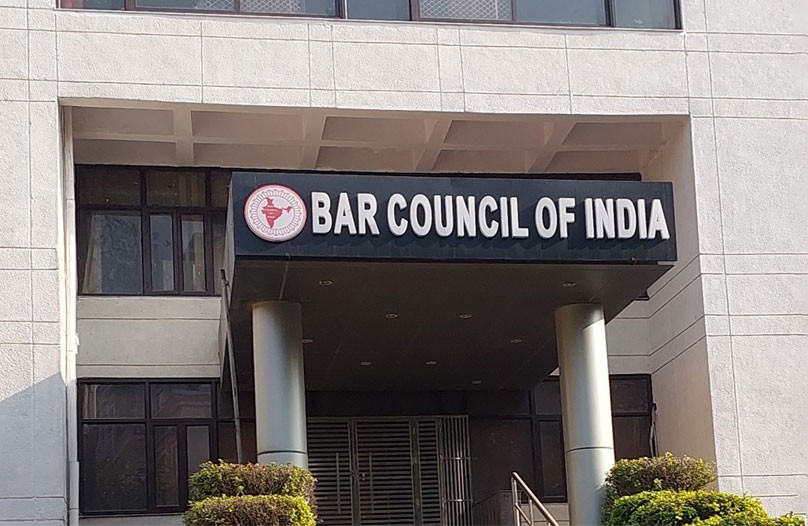
By Mahima Katal
New Delhi, July 21: The Bar Council of India placed a draft Advocates (Amendment) Bill before the legal profession for public comment, setting a deadline of 31 July at 3 PM for stakeholders to respond. The exercise carries an institutional weight that the bare procedural facts do not convey, because this is not a first attempt at amending the Advocates Act, 1961.
It is a second attempt, following the withdrawal in February 2025 of an earlier draft that collapsed within roughly ten days of its release under the weight of nationwide bar association protests, work stoppages, and formal objections from the Bar Council of India itself. Understanding what the 2026 draft actually proposes requires understanding what happened to the version that preceded it, because the two texts are in direct conversation with each other, and the changes between them trace the outline of a negotiation that has been conducted largely outside public view over the past year and a half.
The Advocates (Amendment) Bill, 2025 was published for consultation by the Union Law Ministry in February of that year with the declared aim of modernising a statute that had gone substantially unrevised since the early 1990s. Its most contentious provision was a proposed Section 35A, which would have designated participation by advocates or bar associations in strikes or boycotts that disrupted court proceedings as a form of professional misconduct, subject to disciplinary action, with only a narrow exemption for one-day or symbolic protests that did not interfere with judicial work. For a profession whose institutional memory includes strikes as a recurring instrument of protest against everything from judicial appointments to legislative overreach, this was read as an attempt to foreclose a mode of collective action that lawyers regarded as inseparable from their constitutional right to assemble and express dissent under Article 19. The 2025 draft compounded the objection by proposing disciplinary liability for the office-bearers of bar associations who called such strikes, and by attaching a substantial monetary penalty, reported at five lakh rupees, for advocates found culpable in serious disciplinary proceedings.
A second and equally significant flashpoint concerned the government's relationship to the Bar Council of India itself. The 2025 draft proposed provisions that would have permitted the Central government to nominate members to the Bar Council of India and to issue what were described as binding directions to the Council, alongside a shift of regulatory authority over foreign lawyers and foreign law firms from the BCI to the Central government under a proposed Section 49A. The Bar Council's own chairman, Manan Kumar Mishra, wrote to the Law Minister warning that these provisions would undermine the Council's autonomy, and the criticism found an echo in Parliament, where opposition members raised the question of executive overreach into a self-regulating profession. Faced with this combination of street-level protest and institutional objection, the Ministry of Law and Justice announced on 22 February 2025 that it would conclude the consultation process and return with a revised draft prepared in consultation with stakeholders.
The eighteen months between that withdrawal and the release of the 2026 draft is the period in which the substantive work of reconciliation appears to have taken place, and the Bar Council's covering letter accompanying the new draft is unusually candid about what changed and why. The strike and boycott provision has been removed in its entirety. There is no equivalent to the earlier Section 35A anywhere in the 2026 text, and the amendments to Section 35 that do appear are confined to procedural matters, principally a fifteen-day timeline within which a State Bar Council must refer a disciplinary complaint to its committee.
The proposed liability for bar association office-bearers has likewise been dropped, as has the five lakh rupee penalty provision. The BCI's letter attributes these deletions directly to what it describes as constructive deliberations with the Union Law Minister following representations from a coordination committee of bar associations across Delhi, Uttar Pradesh, Himachal Pradesh and other states, and states plainly that the government agreed to revise the draft to address the concerns that had given rise to the 2025 protests.
The provision for Central government nominees on the Bar Council of India and State Bar Councils has also been deleted, with no equivalent language anywhere in the 2026 text.
Where the picture becomes more complex, and arguably more consequential for the profession's future, is in the treatment of foreign lawyers and foreign law firms. The 2025 draft's proposal to transfer regulatory authority over foreign entry to the Central government has not survived in that form, but neither has authority simply reverted in full to the Bar Council.
The 2026 draft's substituted Section 47 retains rule-making power with the Bar Council of India for registering, renewing, suspending or cancelling the registration of foreign lawyers and foreign law firms, and for permitting the fly-in fly-out practice through which a foreign lawyer may visit India temporarily to engage in permitted work. But those rules must now be framed with the prior approval of the Central government, a formulation that splits the difference between the 2025 proposal and the pre-existing position rather than restoring the pre-existing position outright.
The BCI's own explanation frames this as necessary because only the Central government is positioned to assess India's diplomatic and reciprocal relationship with any given foreign country, but the practical effect is that the Bar Council's regulatory authority over this domain is now conditioned on executive concurrence in a way it was not before the 2025 Bill was ever introduced.
The substantive boundaries of what a foreign lawyer or firm may do have also been drawn
with considerably more precision than either the current Act or the withdrawn 2025 draft attempted. The new Section 47 expressly states that the permitted area of practice for a foreign lawyer or foreign law firm does not extend to appearance before any court, tribunal, authority or person before whom only an advocate is entitled to appear under Section 33 of the Act.
This forecloses appearance before the Supreme Court, any High Court, and any District or Taluka court, and bars foreign lawyers from undertaking Indian litigation or practising Indian law before any statutory authority, regardless of foreign qualification or professional registration elsewhere. The sole carved-out exception is appearance before an arbitral tribunal in an international commercial arbitration where the substantive law governing the dispute is foreign law, a concession the Bar Council's letter justifies by reference to the loss of arbitration business to hubs such as Singapore and Hong Kong. A reciprocity principle underwrites the entire framework: where a foreign country restricts Indian lawyers from practising there or subjects them to discriminatory treatment, nationals of that country may be barred from practising in India by Central government notification, subject to the Bar Council's residual discretion to permit or refuse registration having regard to that principle.
A related and arguably more consequential change concerns the ordinary route to enrolment as an advocate, independent of any foreign-lawyer framework. The existing proviso to Section 24(1)(a), which permits a national of another country to be admitted as an advocate where Indian citizens are permitted to practise reciprocally in that country, is proposed for deletion entirely. The Bar Council's letter explains this by reference to a Delhi High Court direction compelling the Council to enrol a South Korean citizen under the existing proviso, and expresses concern that the provision has opened enrolment applications from nationals of Bhutan, Nepal and Bangladesh studying law in India. If the proviso is omitted as proposed, Indian citizenship becomes, without qualification, a precondition for enrolment as an advocate on a State roll, a materially more restrictive position than either the current Act or the 2025 draft contemplated, and one that has received markedly less public attention than the foreign law firm provisions despite touching a comparable set of questions about who may practise law in India and on what basis.
Several further provisions in the 2026 draft have no real analogue in the 2025 text and represent a distinct, additive agenda rather than a retreat from anything previously proposed. A new Chapter IIIA requires every law firm operating in India, whatever its legal form, to register with the Bar Council of India, with a register to be maintained and furnished annually to the government, a first-time statutory recognition of the law firm as an institutional vehicle for the collective practice of law. The Legal Education Committee is more than doubled in size, from ten to twenty-five members, with mandated representation for former Supreme Court judges, sitting or former High Court Chief Justices, the Attorney General, the Solicitor General, the Chairman of the University Grants Commission, and university vice-chancellors and deans, a restructuring intended to draw the judiciary and academia more directly into the standard-setting function for legal education. An Election Tribunal mechanism is introduced under new Sections 14A and 15A to adjudicate disputes arising from State Bar Council elections, with the presiding officer required to have served as a judge of the Supreme Court or Chief Justice of a High Court, addressing a gap in the current Act that has left election disputes to protracted litigation before ordinary courts. State Bar Council composition is restructured to increase overall strength across all three existing electorate-based categories, with fixed numbers of women members elected and additional women advocates co-opted by the Bar Council of India, a change the BCI's letter frames as necessary to secure representation for under-represented regions such as Goa and parts of Assam and Jharkhand where the existing electoral system has left State Bar Councils without effective local representation.
The enrolment fee, frozen by statute at seven hundred fifty rupees for general candidates since a 1993 amendment, is revised upward to eighteen thousand rupees payable to the State Bar Council and four thousand five hundred rupees to the Bar Council of India. The Bar Council's letter ties this revision to the Supreme Court's judgment in Gaurav Kumar versus Union of India, which had held that the aggregate enrolment fee chargeable under the existing Section 24(1)(f) could not lawfully exceed the statutory ceiling, and to a subsequent writ petition directing the Union government to revise that ceiling in line with current costs. A one-fourth concession is preserved for candidates from Scheduled Castes, Scheduled Tribes, and persons with benchmark disabilities who are unable to pay owing to financial hardship.
Separately, a new Section 24C permits the removal of an advocate's name from the State roll upon conviction and sentencing to two years' imprisonment or more, subject to confirmation by a High Court or the Supreme Court, with a route to reapplication for enrolment preserved for those whose sentences fall below five years.
The cumulative effect of comparing the two drafts is a Bill that has been rebuilt with unusual specificity around the precise objections that destroyed its predecessor, while simultaneously advancing an institutional agenda, spanning welfare funds, legal education governance, election dispute resolution, and law firm registration, that goes considerably beyond anything the withdrawn 2025 version attempted. Whether this qualifies as the collaborative, profession-first process the Bar Council's letter describes, or whether it reflects a more contested negotiation in which the government retained meaningful leverage over the questions it cared most about, foreign lawyer entry and citizenship-based restrictions on enrolment chief among them, is a judgment that the submissions due by 31 July, and the shape of whatever draft follows them, will do more to answer than the text of this draft alone can.