Why China's Entry Into Bangladesh's Mongla Port Project Matters for India
China's takeover of the Mongla Port economic zone raises strategic concerns for India as Bangladesh appears to deepen ties with Beijing.
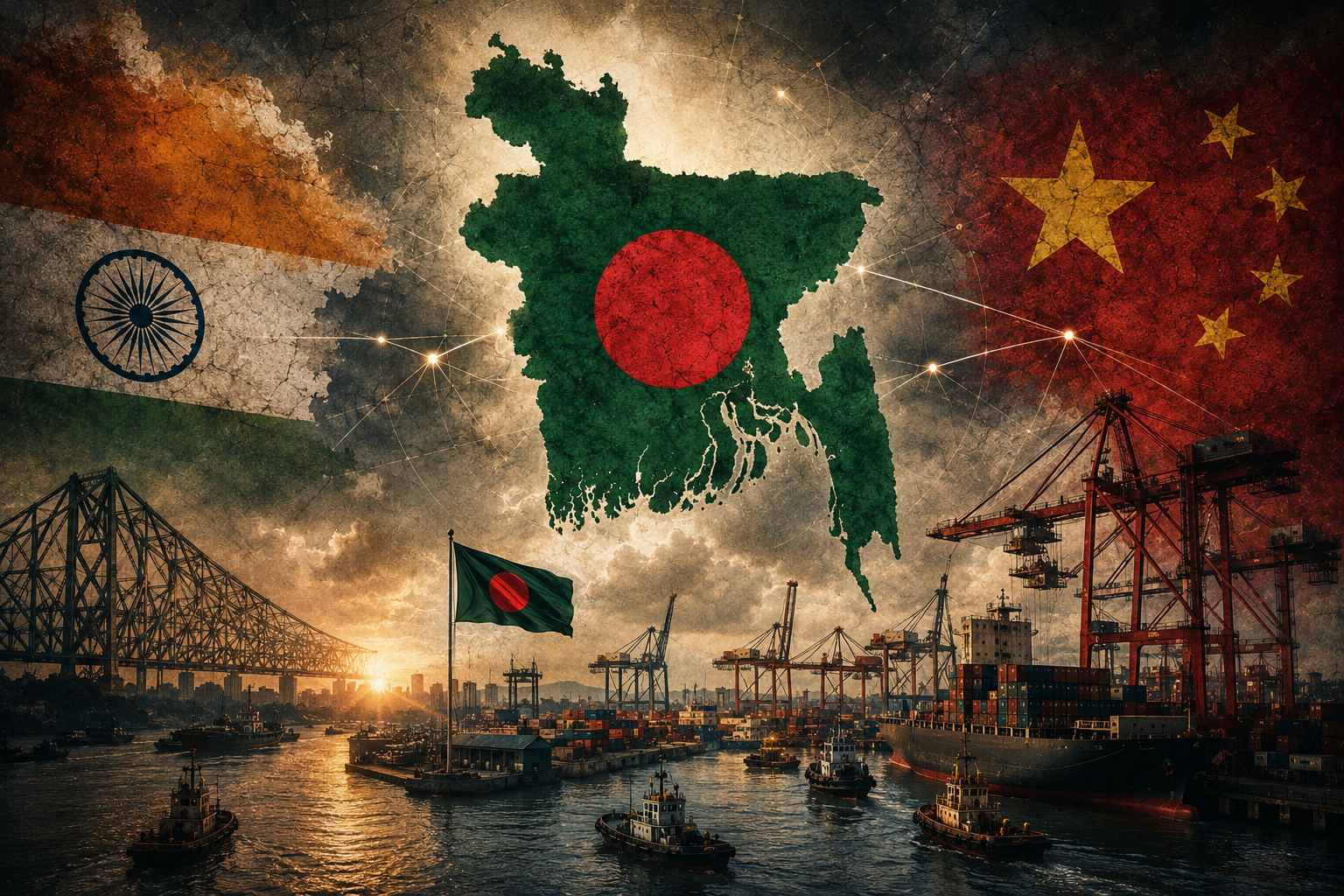
China's takeover of the Mongla Port economic zone raises strategic concerns for India as Bangladesh appears to deepen ties with Beijing.
By Pranjal Gupta
New Delhi, June 26: Bangladesh, a country that once shared an exclusive partnership with India, has now turned to China for trade, business, and the development of Mongla Port. Earlier, the port was to be developed by an Indian company, but the contract was scrapped by the interim regime of Nobel Laureate Muhammad Yunus in 2025, alleging inaction by the Indian contractors. China has made a wildcard entry, signing a deal with newly-elected Bangladesh Prime Minister Tarique Rahman. A Chinese state-owned company will now develop an economic zone near the strategically important Mongla Port.
The 110-acre site, located beside Mongla Port in Bagerhat, was meant to host an Indian-backed economic zone.
China's Mongla Port project in Bangladesh signals a strategic shift, raising concerns for India over regional influence and security in the Bay of Bengal.
Why Mongla Port Is Strategically Important
Mongla is Bangladesh's second-largest and second-busiest seaport after Chattogram. It is situated roughly 188 kilometres from India's Kolkata and close to the Sundarbans. Not to forget, it occupies a strategic location on the Bay of Bengal.
With India out of any administrative role here, China is planning to establish manufacturing industries, warehouses and storage facilities within the economic zone.
For India, the concern extends beyond losing an investment opportunity. A greater Chinese presence near India's eastern coastline could alter the strategic balance in the Bay of Bengal, a region New Delhi has traditionally regarded as vital to its security and influence.
Why India Is Concerned
India's concerns are primarily two-fold.
Xi Jinping met Bangladesh's Prime Minister Tarique Rahman at the Great Hall of the People in Beijing on June 26, during Rahman's official China visit.
First, it has lost a project that it had spent years planning and negotiating. Secondly, China's growing economic footprint could eventually strengthen its strategic presence in the wider Indian Ocean region.
It is important to note that investment in ports does not automatically translate into military access. However, China has previously faced allegations that some overseas ports developed by its companies have been used for intelligence gathering and surveillance activities, fuelling concerns among several countries.
The Mongla project in China's hands signals its continuing effort to expand its influence across the Indian Ocean under its Maritime Silk Road initiative.
Over the past decade, Chinese companies have invested in or developed major ports stretching from Gwadar in Pakistan to Djibouti in East Africa. Reports suggest Chinese firms are now involved in around 17 port projects across the Indian Ocean region.
Energy security is a major driver behind this strategy. China is the world's largest importer of crude oil, with nearly 80 per cent of its energy imports passing through the Indian Ocean. Developing infrastructure along these maritime routes strengthens Beijing's long-term
economic and strategic interests.
How India Lost the Project
India had recognised Mongla Port's strategic value years ago.
During Prime Minister Narendra Modi's visit to Bangladesh in 2015, the two countries signed a Memorandum of Understanding (MoU) to establish two economic zones—one at Mongla and another at Mirsarai in Chattogram. India agreed to extend a line of credit to support these projects.
Bangladesh also aimed to modernise Mongla Port to reduce pressure on Chattogram Port and boost bilateral trade. As part of these efforts, a railway line connecting Mongla Port with Khulna was constructed.
In 2018, the Modi government selected the Hiranandani Group to develop the Mongla economic zone. Four years later, an MoU was signed with the Bangladesh Economic Zones Authority (BEZA), raising hopes that work would begin soon.
However, political developments in Bangladesh changed the situation dramatically.
Mass protests erupted in 2024, forcing then Prime Minister Sheikh Hasina to leave the country and seek refuge in India. The interim government led by Muhammad Yunus inherited the project amid growing anti-India sentiment. Several political and Islamist groups accused the previous Hasina government of being excessively close to New Delhi.
As the project remained stalled, Bangladesh removed India from the initiative in 2025. Officials stated that the Indian developer had failed to begin work within the two-year deadline specified in the agreement.
Sensing an opportunity, China quickly stepped in.
The Chinese Embassy in Dhaka proposed developing a Chinese economic zone on the same 110-acre site that had originally been allotted to India. That proposal has now been formalised during Tarique Rahman's visit to China.
A Delicate Balancing Act
The developments surrounding the Mongla Port economic zone and the Teesta River project suggest that Bangladesh is gradually strengthening its ties with China. However, this does not necessarily mean Dhaka is abandoning its relationship with India.
China has long been Bangladesh's largest trading partner and an important source of investment. At the same time, Bangladesh shares its longest land border with India, and the two countries remain deeply connected through trade, transport, culture and people-to-people ties.
For Bangladesh, maintaining balanced relations with both Asian powers will be crucial.
The Mongla Port agreement therefore represents more than just an economic project. It highlights the growing strategic competition between India and China in South Asia and the Bay of Bengal. How Bangladesh manages its partnerships with both countries in the coming years will play an important role in shaping the region's geopolitical landscape.