Why Is Jammu & Kashmir Still Waiting for Statehood?
Seven years after the abrogation of Article 370, Jammu and Kashmir remains a Union Territory despite the Supreme Court's direction that statehood be restored "at the earliest." While elections have been held and constitutional integration has advanced, the continued delay raises important questions about federalism, democratic governance and the fulfilment of the Union government's constitutional assurances. By Mahima Katal New Delhi, Aug 5: Seven years after the Union government revoked...
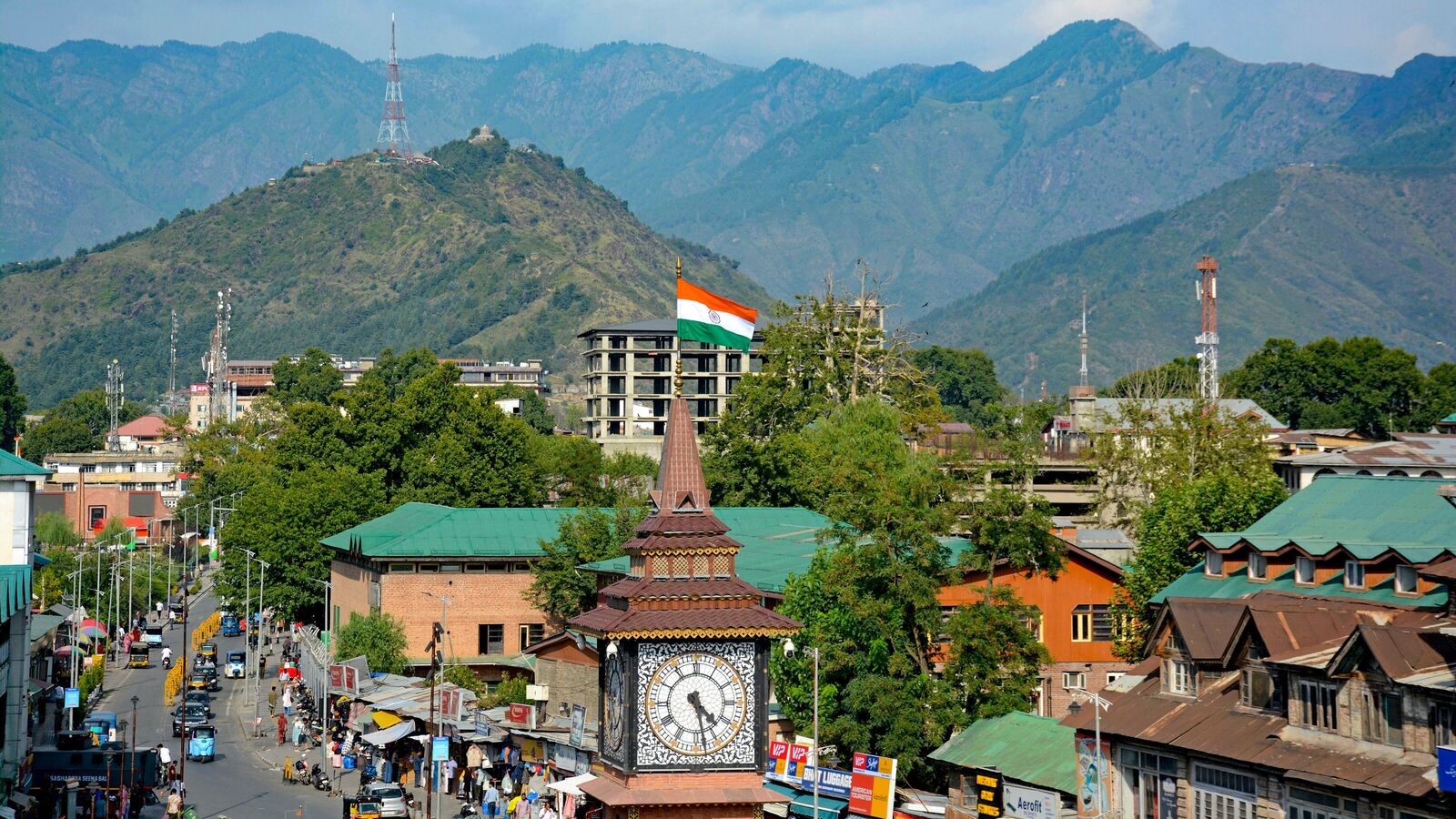
Seven years after the abrogation of Article 370, Jammu and Kashmir remains a Union Territory despite the Supreme Court's direction that statehood be restored "at the earliest." While elections have been held and constitutional integration has advanced, the continued delay raises important questions about federalism, democratic governance and the fulfilment of the Union government's constitutional assurances.
By Mahima Katal New Delhi, Aug 5: Seven years after the Union government revoked Article 370 and bifurcated the erstwhile State of Jammu and Kashmir into two Union Territories, one constitutional promise remains unfulfilled—the restoration of statehood. While the legal battle over Article 370 has largely concluded following the Supreme Court's 2023 judgment upholding the constitutional changes, the political and constitutional debate has shifted to an equally significant question: why has Jammu and Kashmir not regained the status of a State despite repeated assurances from the Union government?
The constitutional changes of August 2019 fundamentally altered the relationship between Jammu and Kashmir and the Union. Article 370 was made inoperative, Article 35A ceased to exist, the Constitution of India became fully applicable to the region, and Jammu and Kashmir was reorganised into the Union Territory of Jammu and Kashmir and the Union Territory of Ladakh. The government justified these measures as necessary to strengthen national integration, improve governance and create conditions for lasting peace and development.
When the constitutional validity of these measures reached the Supreme Court, the Constitution Bench unanimously upheld the abrogation of Article 370. However, the Court consciously refrained from deciding whether Parliament could permanently convert a State into a Union Territory. Instead, it relied on the Union government's assurance that the Union Territory status of Jammu and Kashmir was temporary. The Court directed that Assembly elections be conducted by September 30, 2024, and observed that statehood should be restored "at the earliest and as soon as possible."
The first part of that assurance has been fulfilled. Jammu and Kashmir held Assembly elections in 2024 after nearly a decade, and an elected government assumed office. Yet the second promise remains pending. Nearly two years after the elections, Jammu and Kashmir continues to function as a Union Territory, with significant executive authority vested in the Lieutenant Governor. This has revived questions over whether democratic representation is complete without restoring the federal status that existed before 2019.The Centre has consistently maintained that security considerations must guide the pace of constitutional restoration. It points to a sharp decline in organised stone-pelting, the disappearance of shutdown politics, greater electoral participation and the reintegration of communities that were previously excluded from domicile-based rights. These developments suggest that constitutional integration has advanced in several important respects.
At the same time, security challenges have not disappeared. Terror attacks such as the Pahalgam attack, targeted killings, cross-border infiltration and emerging narco-terror networks demonstrate that the region continues to face serious security threats. From the Union government's perspective, these concerns justify proceeding cautiously before restoring full statehood.
However, the constitutional debate is no longer centred on the legality of Article 370's abrogation. Instead, it concerns the duration of a temporary constitutional arrangement. The Supreme Court accepted the Union government's assurance regarding the restoration of statehood while leaving open the larger constitutional question of whether a State can permanently lose its status under Article 3. As the period without statehood extends, that unanswered constitutional question assumes greater significance.
The issue also extends beyond constitutional theory. Jammu and Kashmir continues to grapple with high youth unemployment, uneven regional development, dependence on tourism, the rehabilitation of displaced Kashmiri Pandits and the need for stronger local institutions. Many of these are governance challenges that require sustained political accountability and empowered representative institutions rather than prolonged central administration.
The restoration of statehood has therefore become more than a political commitment. It is now a constitutional test of India's federal structure and democratic governance. The question is not whether Jammu and Kashmir should remain fully integrated with the Union—that issue has been settled both politically and judicially. The question is whether the constitutional transition envisioned in 2019 is complete without restoring the powers and status of an elected State government.
Seven years after Article 370 was made inoperative, the debate has moved beyond the legality of constitutional change to the credibility of constitutional assurances. The Supreme Court's judgment, the Union government's commitments and the conduct of Assembly elections have all pointed towards eventual restoration of statehood. Until that promise is fulfilled, the constitutional journey that began in August 2019 will remain incomplete.