‘Zero Tolerance’ Along Border Belt: India Unveils 360° Security Crackdown
By Mahima Katal India has announced an intensified border security strategy along the India-Pakistan frontier in Rajasthan, unveiling what Union Home Minister Amit Shah described as a “360-degree security framework” aimed at tightening surveillance, dismantling illegal infrastructure, and curbing cross-border crimes. Chairing a high-level security review meeting in Bikaner on Tuesday, Shah directed authorities to demolish all illegal structures within 15 kilometres of the international...
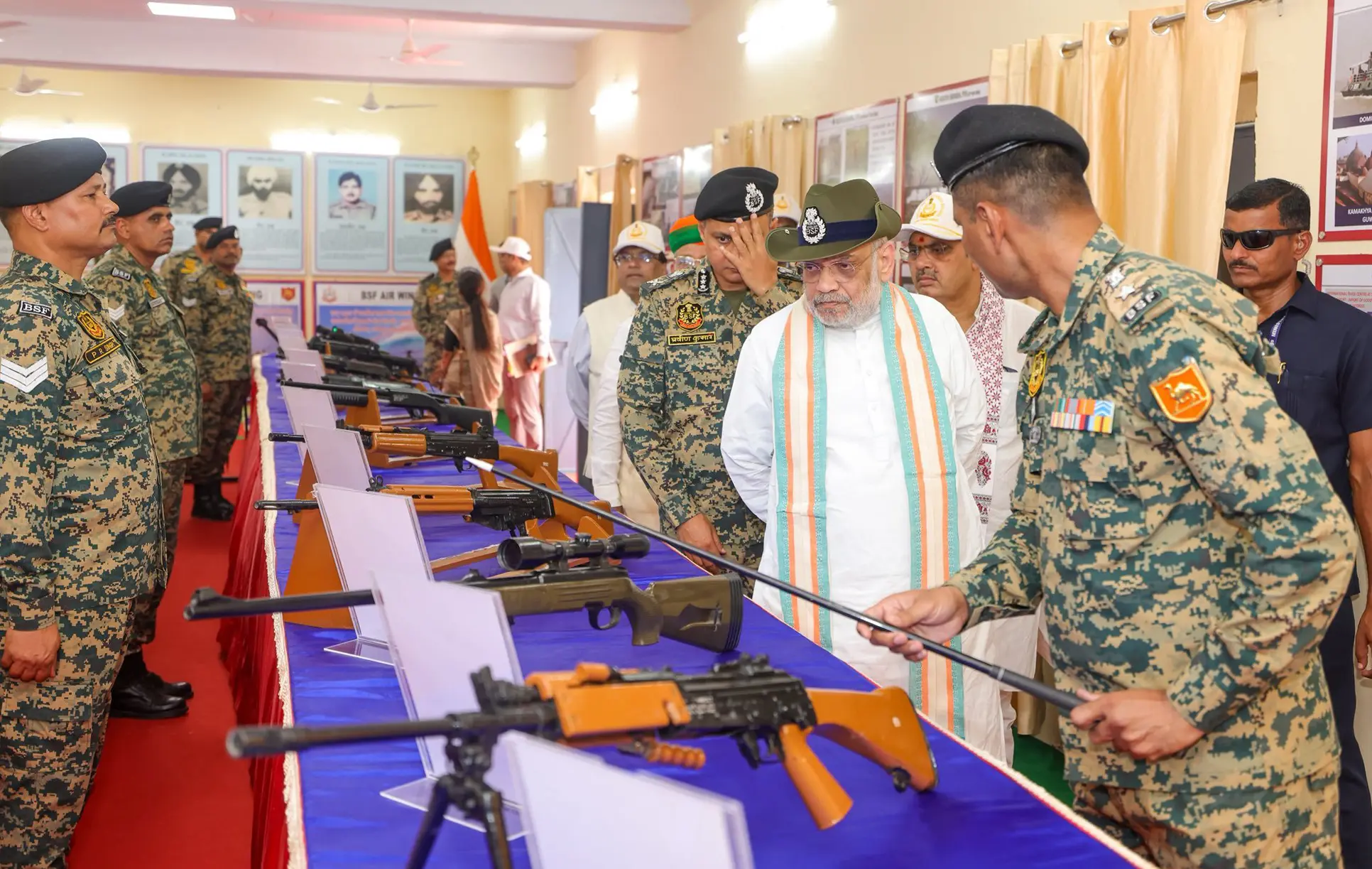
By Mahima Katal India has announced an intensified border security strategy along the India-Pakistan frontier in Rajasthan, unveiling what Union Home Minister Amit Shah described as a “360-degree security framework” aimed at tightening surveillance, dismantling illegal infrastructure, and curbing cross-border crimes.
Chairing a high-level security review meeting in Bikaner on Tuesday, Shah directed authorities to demolish all illegal structures within 15 kilometres of the international border, signalling a tougher approach towards infiltration routes, illegal settlements, narcotics smuggling, and terror-linked networks operating in sensitive frontier regions.
The meeting brought together Rajasthan Chief Minister Bhajan Lal Sharma, senior state officials, district magistrates, police chiefs, and security agencies from the five border districts of Bikaner, Jaisalmer, Barmer, Sri Ganganagar, and Phalodi.
15-Km Border Zone Comes Under Strict Security Watch
According to the Ministry of Home Affairs, the new framework seeks to create a multi-layered security grid integrating local communities, district administrations, intelligence networks, and central security forces.
Shah emphasized that the government would enforce a “zero-tolerance policy” against unauthorized constructions near the border, particularly in the 0–15 km zone adjoining Pakistan. Authorities were instructed to identify and remove illegal structures that could potentially aid smuggling, infiltration, or illegal financial activities.
The move comes amid growing concerns over trans-border narcotics trafficking, illegal financial networks, fake identity documents, and the use of border villages as logistical corridors by organized criminal groups.
Coordinated Crackdown on Smuggling and Terror Financing
The Home Minister called for deeper coordination between the Border Security Force (BSF), Narcotics Control Bureau (NCB), Central Board of Direct Taxes (CBDT), and Rajasthan’s state machinery to tackle:
Cross-border infiltration
Narcotics smuggling
Terror financing
Encroachment along border regions
Fake Aadhaar networks
Shell companies and mule bank accounts
District Magistrates were assigned expanded responsibilities, including scrutiny of large business establishments, verification of funding sources, monitoring suspicious financial activity, and ensuring compliance by banking institutions operating in border districts.
Officials were also instructed to conduct district-level studies into the patterns, routes, and financial structures behind organized crime and the drug trade in the region.
Cybercrime and New Criminal Laws
Shah further directed authorities to strengthen cybercrime response mechanisms through the national “1930” cyber fraud helpline and ensure effective implementation of India’s newly introduced criminal laws.
The government also reviewed the progress of the Vibrant Villages Programme-II (VVP-II), a flagship initiative aimed at improving infrastructure, governance, and economic opportunities in remote border villages.
Officials reiterated the Centre’s commitment to achieving full saturation of government welfare schemes in border areas to strengthen both development and security.
Strategic Significance
India shares a heavily militarized border with Pakistan across Rajasthan, a region historically vulnerable to smuggling, illegal crossings, and espionage-related concerns due to its vast desert terrain.
The latest measures indicate New Delhi’s attempt to combine hard security measures with financial surveillance and local governance reforms, creating what officials describe as a comprehensive border management architecture.
The government stated that under Prime Minister Narendra Modi’s leadership, securing international borders while strengthening coordination between central and state agencies remains a top national priority.