India's Lowest on LNG Import: Why is Oil Reserved But Gas Exposed to War Shocks?
While India stores 5.33 million tonnes of emergency crude underground, its natural gas grid relies on just-in-time tanker arrivals, a vulnerability exposed by the Gulf crisis.
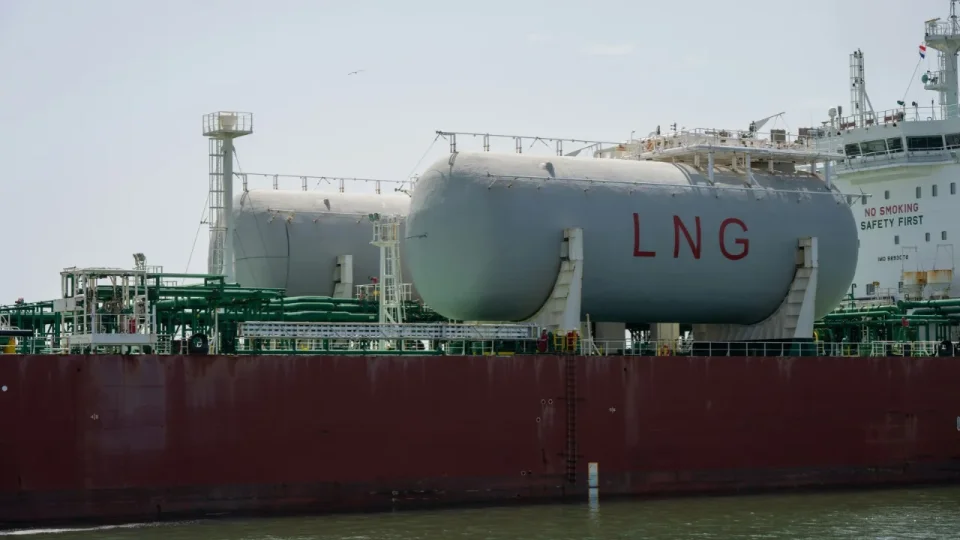
LNG Import in India Hits Lowest: India’s Liquefied Natural Gas (LNG) imports are on track to fall to their lowest monthly level this November, since March, as cooling winter power demand, high global spot prices, and maritime attacks near the Strait of Hormuz curb shipments from West Asia. The drop has reportedly pushed New Delhi to rethink a major gap in its energy security: while India holds emergency crude oil in underground caverns, it has no dedicated strategic reserve for natural gas.
The Numbers: India and Others
November imports are roughly 1.8 to 1.9 million tonnes, with 1.73 million tonnes arriving between November 1 and November 27, down from 2.85 million tonnes in October and 2.20 million tonnes in November 2025, according to analytics by Kpler. Improved domestic coal availability and stronger winter buying from Europe have further reduced Indian spot purchases.
Supplier rankings have shifted sharply as transit risks rose around the Gulf. Between November 1 and November 27, the United States became India’s top LNG supplier at 0.42 million tonnes, ahead of the United Arab Emirates at 0.32 million tonnes and Oman at 0.30 million tonnes, while pre-war leader Qatar slipped to fourth at 0.20 million tonnes. Before the West Asia conflict escalated in late February, roughly 60% of India’s LNG passed through Hormuz, and imported gas still meets about half of India’s total natural gas demand.
Crude Caverns Versus Commercial Gas Tanks
India’s fossil-fuel safety net is heavily tilted toward oil. The Indian Strategic Petroleum Reserves Limited (ISPRL) stores 5.33 million metric tonnes of crude oil in underground rock caverns at Visakhapatnam, Mangaluru, and Padur, providing about 9.5 days of strategic cover alongside 64.5 days of refinery and commercial stocks, according to Ministry of Petroleum and Natural Gas data.
Natural gas has no equivalent underground strategic reserve and depends mainly on commercial terminal tanks and pipeline stock, reports CBM News. After the fifth Inter-Governmental Group of Ministers meeting on West Asia on May 11, the Press Information Bureau stated that India held 60 days of crude oil, 60 days of natural gas, and 45 days of LPG rolling stock. Unlike an offline strategic reserve, however, rolling stock is operational gas already circulating inside pipelines, city gas networks, and import terminals to meet daily demand.
Engineering Hurdles and a Two-Track Pivot
Building a gas reserve is technically harder and costlier than storing oil. Above ground, LNG must be kept chilled at minus 162 degrees Celsius in specialised cryogenic tanks; underground, countries rely on depleted gas fields or salt caverns linked to high-capacity pipelines. Petronet LNG Limited, which handles most of India’s LNG imports and expanded its Dahej terminal capacity to 22.5 million tonnes per annum in March 2026, operates eight storage tanks at Dahej and two at Kochi while expanding tankage at Dahej, Kochi, and Gopalpur.
Research and Information System for Developing Countries (RIS) outlines a two-track response underway in New Delhi. In the short term, the government has weighed requiring LNG terminals to maintain a 10% extra storage buffer above daily operating needs, while the state-run energy firms, led by ONGC alongside GAIL, have moved to examine India’s first dedicated underground strategic natural gas storage project alongside broader supplier diversification.
Until dedicated gas reserves are built, every flare-up in the Gulf or winter price surge is likely to continue to test India’s gas supply and reserve available.