Chulhas Burning Still: LPG Import Refill Costs Stall Ujjwala’s Clean-Air Gains
Council on Energy, Environment and Water says Ujjwala averted 834 kilotonnes residential PM2.5 in FY2025-26, but LPG refill costs and import-gas puts families reliant on chulhas.
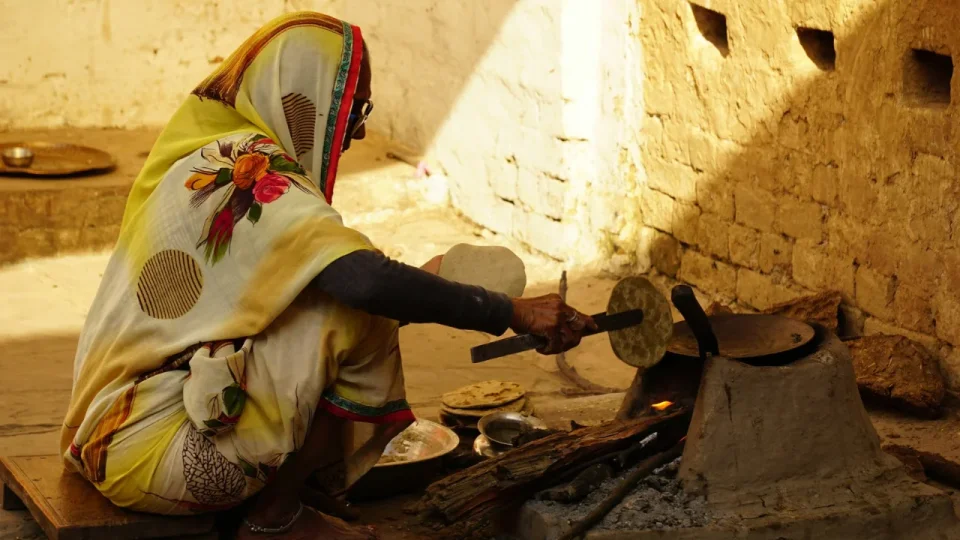
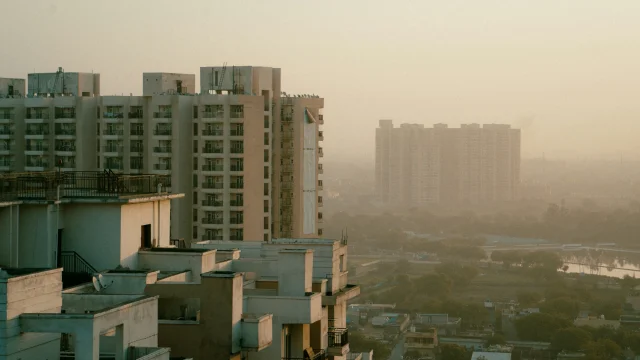
Air Pollution India: As winter smog blankets the Indo-Gangetic Plain and Graded Response Action Plan Stages I and II remain in force across Delhi-NCR, a new CEEW study estimates that the Pradhan Mantri Ujjwala Yojana helped avert about 15 per cent of India’s household PM2.5 emissions in FY2025-26. Yet cooking with firewood, dung cakes, crop residue, coal and kerosene remains the single largest source of PM2.5 in the plain’s most polluted areas, accounting for 36–49 per cent of primary emissions.
The Council on Energy, Environment and Water (CEEW) found that cooking accounts for 36–49 per cent of primary PM2.5 emissions in the most polluted parts of the Indo-Gangetic Plain, stretching from Punjab through Haryana, Delhi, Uttar Pradesh and Bihar to West Bengal. Residential combustion, it said, burns year-round and rises in winter as households also use solid fuels for heating.
“Many families still cook with firewood alongside LPG because the next refill is hard to afford,” said Abhishek Kar, Fellow at CEEW.
For cleaner air, what happens in the kitchen matters. Our analysis finds that around 50% of India’s year-round PM₂.₅ emissions come from residential sources, with the majority of these emissions linked to cooking. The Pradhan Mantri Ujjwala Yojana (PMUY)—the government’s scheme to provide LPG connections to women from low-income households—has helped make a significant dent in household air pollution. In FY2025–26, it helped avert an estimated 834 kilotonnes of primary PM₂.₅ emissions, around 15% of India’s household PM₂.₅ emissions. Yet many households continue to use solid fuels alongside LPG, particularly when refills are expensive or access is limited.
— CEEW (@CEEWIndia)
What Ujjwala Achieved
CEEW’s November 26 policy brief, Clean Cooking for Cleaner Air: LPG and Beyond in the Indo-Gangetic Plain, compared a decade of actual LPG sales with a scenario in which PMUY was never launched and connections grew at their pre-2016 pace.
It estimated that additional LPG use averted 4,963 kilotonnes of PM2.5 and 132 kilotonnes of black carbon between FY2016-17 and FY2025-26, including 834 kilotonnes of PM2.5 in FY2025-26 alone. But access has not become sustained use. Although more than 105 million women hold PMUY connections, government survey data for 2023-24 showed LPG was the primary cooking fuel for 90 per cent of households in Punjab, but only 61 per cent in Uttar Pradesh, 47 per cent in Bihar and 40 per cent in Jharkhand.
CEEW’s survey of 2,222 rural households across six states found that 44 per cent in Uttar Pradesh and 66 per cent in Jharkhand still relied exclusively on solid fuels. High refill costs and patchy home delivery were among the main barriers.
The Imported-Fuel Dilemma
Under the June 2026 subsidy cap, PMUY households receive a ₹300 subsidy on only four cylinders a year; the effective subsidised refill price in Delhi is about ₹642. CEEW found that PMUY households use an average of 4.8 cylinders annually, while exclusive LPG cooking would require seven to eight cylinders.
Official Petroleum Planning and Analysis Cell data show domestic LPG consumption contracting: packed domestic LPG sales fell 11.8 per cent in October 2026 and 13.2 per cent during April–October, while total LPG consumption declined 12.3 per cent year on year in October. India’s net oil and gas import bill also rose from USD 10 billion in October 2025 to USD 16 billion in October 2026, according to PPAC.
Encouraging PMUY households to use more LPG would reduce firewood burning, but would also increase import dependence. CEEW notes that about 60 per cent of India’s LPG has historically been imported from West Asia, with roughly 90 per cent routed through the Strait of Hormuz.
Trading Cylinders for Induction Stoves
CEEW proposes turning India’s more than 25,000 LPG distributors into clean-cooking hubs. Oil-marketing companies would procure Bureau of Indian Standards-certified induction cooktops and electric pressure cookers in bulk, with distributors selling them at discounted prices.
Under the proposal, a PMUY household could receive an e-cooking device at a capital discount in exchange for permanently giving up two of its four annual subsidised cylinders. It would retain two cylinders for backup or high-heat cooking while shifting routine meals to electricity. However, households using fewer than four cylinders would generate little or no LPG-subsidy saving by switching. CEEW argues that the government must fund that gap as a clean-air investment, alongside reliable rural electricity, household wiring and compatible cookware.
The Untapped Biogas Reserve and Winter Bridge
Biogas is the third pathway. India has about 40 million cattle-rearing households with three or more animals, yet fewer than 1 per cent use biogas as their primary cooking fuel, according to CEEW. A small domestic digester costs an estimated ₹35,000–50,000. Policy momentum, however, is flowing mainly towards large compressed biogas plants. The Union Cabinet approved the ₹23,731-crore GOBARdhan National Circular Bioenergy Scheme on August 6, with implementation from FY2026-27 to FY2035-36.
CEEW found that 80 per cent of surveyed households said they would use LPG exclusively at ₹400 a cylinder. Its proposed ₹200 winter top-up would bring Delhi’s effective PMUY refill price to about ₹442, still above that self-reported threshold. The proposal covers four refills between October and March in Delhi, Punjab, Haryana, Uttar Pradesh, Bihar, Jharkhand and West Bengal, at an estimated cost of up to ₹4,000 crore a year. If the Centre’s subsidy remains capped at four cylinders, CEEW recommends that IGP state governments provide an additional ₹300 subsidy on at least two cylinders between April and September, costing about ₹2,400 crore a year if 80 per cent of PMUY households take it up.
“India needs both clean air and a manageable import bill, not one at the cost of the other,” said Kar.
The challenge for policymakers may be to make that balance real: subsidise the immediate winter transition, build credible electric and biogas alternatives, and ensure that the households most dependent on smoky chulhas are not left behind.
Also Read: Congress-Meta Face-Off Puts Political Content Moderation Under Scrutiny