Nvidia Scandal, Chip Rivalry, AI Race: What Makes Trump's China Visit a Global Flashpoint
Trump-XI China Meeting: US President Donald Trump’s visit to China comes at a critical moment in the technology rivalry between Washington and Beijing. With the Nvidia controversy raising fresh questions over access to advanced chips and the security risks surrounding their use, the visit brings the contest for AI and semiconductor dominance into sharper focus.a
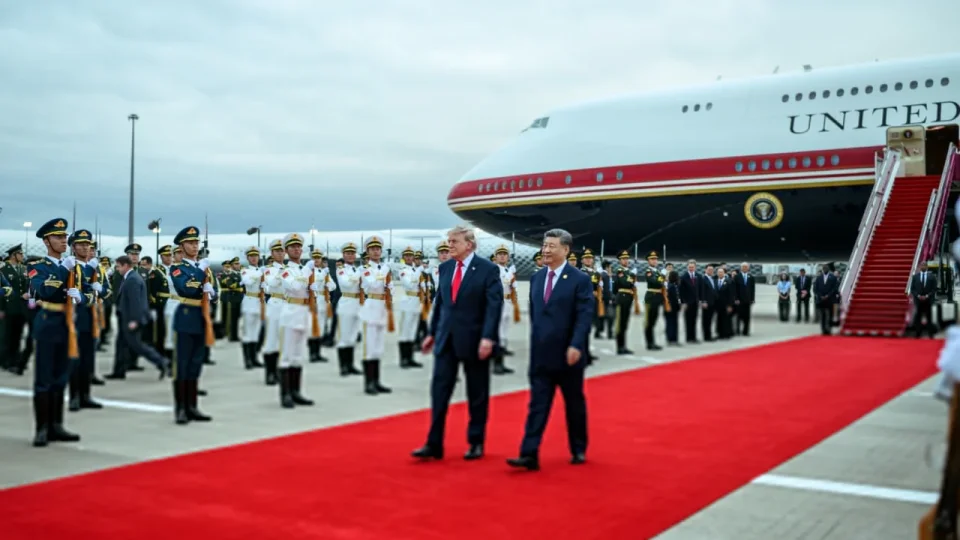
Trump-XI China Meeting: President Donald Trump's visit to China comes at a crucial moment in the technology rivalry between Washington and Beijing. As the two countries compete for dominance in artificial intelligence and advanced semiconductors, a scandal involving Nvidia's former chief executive Jensen Huang has exposed the tensions between America's national security concerns and its commercial interests.
The controversy has also brought renewed scrutiny of the US policy on exporting advanced AI chips to China, an issue that is likely to shape the broader relationship between the world's two largest economies. Huang resigned as Nvidia CEO on November 12 following revelations about his personal relationships, including an alleged affair with Alice Huang, a former executive at Singapore-based technology company Megaspeed. US officials suspect Alice Huang of having links to Chinese intelligence, an allegation that Beijing has denied.
Also Read: If Approved, US Green Card Proposal Could Narrow Foreign Workers' Job, Pay Prospects
The controversy has taken on wider significance because Megaspeed is under investigation over allegations that it helped Chinese companies gain access to advanced Nvidia chips restricted under US export controls. The company has denied wrongdoing.
Nvidia Scandal Puts US Chip Export Policy Under Scrutiny
At the heart of the controversy is a central question in the US-China technology contest: how can Washington prevent Beijing from accessing advanced American chips that could strengthen its artificial intelligence capabilities? The United States has imposed restrictions on exports of high-performance AI chips to China, arguing that access to such technology could have military and national security implications. Nvidia's processors are particularly important because they provide the computing power required to train and run sophisticated AI models.
However, the restrictions have faced challenges from indirect supply routes. Reports have suggested that Megaspeed obtained restricted Nvidia chips through a network of companies and made computing capacity available to Chinese firms through data centres in Southeast Asia. This has exposed a potential gap in the American export-control system. Even when physical shipments of advanced processors to China are restricted, Chinese companies may still be able to access their computing power by renting capacity from data centres in other countries.
The Trump administration is now considering tighter restrictions to address this route. A new Commerce Department rule announced this week seeks to make it harder for data centres in certain countries to provide computing services to Chinese entities seeking to circumvent US export controls. The scandal has also intensified political pressure on the administration. US lawmakers have sought explanations from Huang and Nvidia over the company's security protocols and the alleged diversion of restricted chips. Huang has agreed to testify before congressional committees, while Nvidia's board has ruled out his return as CEO.
Washington Divided Over Access to China's Market
The controversy has exposed differences within the Trump administration over how aggressively the United States should restrict technology exports to China. One position favours tighter controls to prevent Beijing from gaining access to advanced American technology. Another argues that allowing limited sales could preserve US companies' commercial interests, maintain China's dependence on American technology and prevent it from accelerating the development of domestic alternatives.
Trump has defended Commerce Secretary Howard Lutnick amid criticism over the handling of the Nvidia issue. The president has also indicated that he does not want to antagonise Beijing at a time when Washington is seeking better relations with China. The dilemma is significant for Nvidia and the wider American technology industry. China remains an important market, and restricting access to US chips could affect commercial opportunities for American companies. At the same time, allowing advanced processors to reach Chinese firms could strengthen a strategic competitor.
The debate is therefore no longer limited to export licences or the fortunes of one company. It concerns how the United States balances its technology leadership, economic interests and national security priorities.
What the Nvidia controversy means for Trump's China visit
Trump's meeting with Chinese President Xi Jinping comes against this backdrop of growing competition over semiconductors and artificial intelligence. The two countries are seeking to secure an advantage in technologies that could shape future economic growth, military capabilities and global influence.
China, meanwhile, has been working to reduce its dependence on American technology by developing its domestic semiconductor industry and expanding its artificial intelligence capabilities. Restrictions on advanced US chips could push Beijing to accelerate those efforts, even as American companies seek to retain access to the Chinese market.
The Nvidia controversy could complicate discussions on technology cooperation and AI security. However, the issue is not necessarily expected to feature directly in Trump's talks with Xi. The broader disagreement over access to advanced chips is likely to remain a significant source of friction between the two countries. For Washington, the challenge is to prevent sensitive technology from reaching a strategic rival without sacrificing the commercial advantages enjoyed by its own companies. For Beijing, access to advanced computing power remains important to its ambitions in artificial intelligence.
The stakes extend well beyond Nvidia. As AI becomes central to economic competitiveness and national security, control over the chips that power it is emerging as one of the defining battlegrounds in the US-China rivalry. Trump's visit comes at a time when that contest is becoming harder to separate from trade negotiations, diplomatic relations and questions of global power.