ICJ's Rohingya Genocide Judgment Matters for India, and the World
Rohingyas ICJ Judgement: India would be keenly watching ICJ verdict which may pave way for return of thousands of persecuted Rohingyas living as refugees in India back to their homeland in Myanmar.
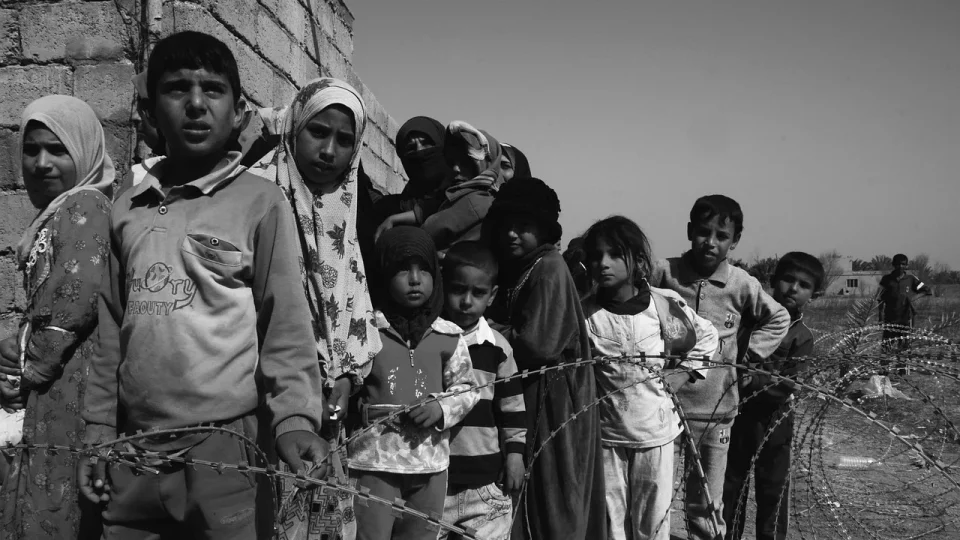
Rohingyas ICJ Judgement: The International Court of Justice (ICJ) is set to deliver on Thursday the much-awaited judgment on whether Myanmar’s state machinery was responsible for the genocide of Rohingyas, which led to one of the largest exoduses of a persecuted community in recent times.
The attention of the whole world will be focused towards the Great Hall of Justice at the Peace Palace, The Hague, Netherlands on November 19 when the President of the world’s top court reads out the verdict on the application of the Convention on the Prevention and Punishment of the Crime of Genocide, 1948 which is expected to have a significant impact on international law, politics and human rights jurisprudence.
The judgment will also have a bearing on similar cases concerning interpretation, application and fulfillment of obligations under the Genocide Convention pending in the ICJ against Israel, Russia, Ukraine, Germany and Congo. India needs to keep track of the development for different reasons. There are thousands of Rohingya Muslim refugees who have entered the country.
The decision is likely to come as a relief for Rohingyas even if Myanmar is found to be not directly responsible as it is expected to ensure safe and dignified return of the minority community as United Nations resolution itself records entry of over 7,23,000 Rohingyas into Bangladesh alone. India would be closely watching as it sees entry of the Rohingya community in the country as a security threat. Thousands of Rohingyas who moved out primarily from Kachin, Rakhine and Shan states of Myanmar are presently living in makeshift slums, camps and detention centers across India with the government having classified them as illegal immigrants. India has not ratified the Refugee Convention but it allows United Nations High Commissioner for Refugees (UNHCR) to operate its office in India. The UNHCR registers asylum seekers but India is not under an obligation to honour the requests which has persuasive values only. India manages refugees under an ad hoc arrangement under its domestic laws. The ICJ verdict may pave way for deportation or way for the safe return of Rohingyas to Myanmar.
The hotly contested case against Myanmar was filed by Gambia in November 2019 and Canada, Denmark, France, Germany, UK, Netherlands, Maldives, Slovenia, Denmark, Congo, Belgium and Ireland intervened subsequently after the court rejected Naypyidaw‘s objections over locus of Gambia and the jurisdiction of the court to entertain the case against it.
It is significant to note that Article IX of the Genocide Convention confers jurisdiction with respect to disputes regarding its interpretation and enforcement to the ICJ and both Myanmar and Gambia had ratified the convention. Myanmar, however, contended that Gambia had no dispute with it on the issue and this was a precondition for approaching the ICJ. It said that Gambia had filed the case on behalf of the Organisation of Islamic Cooperation (OIC) which cannot approach ICJ as only states (countries) can be parties before it in terms of Article 35 of the Statute of the International Court of Justice. Bangladesh had accepted the right of ICJ to entertain cases only if both parties agreed. On account of its reservations while ratifying the convention, a case filed by Bangladesh could be entertained only if Myanmar consented to it.
The hearing on merits of the case began after the ICJ rejected the objection of Myanmar to its jurisdiction on 22.07.2022. The court held that it had the jurisdiction to entertain the case in terms of Article IX of the convention. Justice Dalveer Bhandari of India was a part of the bench which rejected the contention of Myanmar. The bench refused to go into the argument that Gambia was proxy for OIC which could not approach ICJ in view of the bar under Article 35 of ICJ statute. The court observed that all parties to the convention had ‘common interest’ in fulfilment of its objectives. Besides, it found no reason to look beyond the fact that Gambia had instituted the proceedings in its name.
As many as 11 countries intervened in the matter after ICJ decided to hear the case on merits. It is relevant to note that cases under the Genocide Convention against two intervenors, Germany and Congo are pending before the ICJ. Article 59 of the Statue of the International Court of Justice stipulates that the decisions would have “no binding force except between the parties and in respect of that particular case”. However, in terms of Article 63 of the ICJ Statute, the law expounded with the interpretation of the provisions of the convention would also be binding on the 11 state parties which have intervened in the matter.
The judgment in the Gambia Versus Myanmar case will be binding on the parties in the terms of Article 59 of the ICJ Charter. The Charter, however, does not lay down any mechanism for enforcement of the decisions. The United Nations General Assembly can pass resolutions for compliance with the judgment which would put diplomatic pressure on Myanmar. Further, the Charter of the United Nations provides a mechanism which can be invoked in case a judgment by the ICJ is not complied with.
Article 94(1) of the UN Charter records that the member states undertake to comply with the decisions of the ICJ. Article 94(2) states that in case of non-compliance of a judgment by a party, the other party can approach the Security Council which may “make recommendations or decide upon measures to be taken to give effect to the judgment”.
The Security Council is entrusted under the UN Charter with the task of deciding measures required to be taken to maintain or restore international peace and security and can call upon any member state for compliance. In case of non-compliance, Article 41 provides for non-military measures like severance of diplomatic ties, communication, economic relations etc. Article 42 permits military action including blockade by members of the United Nations on the recommendation of the Security Council. Article 43 binds UN members to make available armed forces, assistance and facilities for any action proposed in the interest of international peace and security.