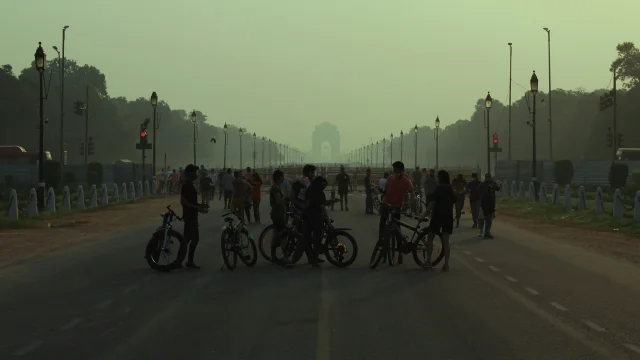
Delhi Chokes Under Poor Air as AQI Hits 289; JNU, Pusa and Sirifort Record ‘Very Poor’ Pollution
Delhi AQI Today: remained in the “poor” category, with the city recording its coldest morning of the season as pollution levels stayed elevated across several monitoring stations.
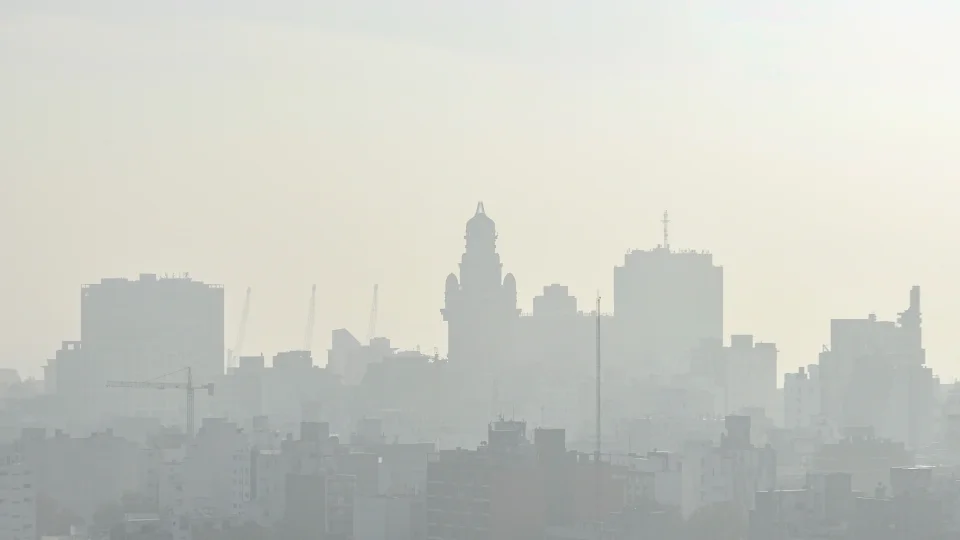
Delhi’s overall Air Quality Index (AQI) stood at 289 at 9 AM, placing it in the “poor” category, according to government data. The city’s minimum temperature fell to 10.6 degrees Celsius, 1.7 degrees below normal, while the maximum was expected to reach 26 degrees Celsius, with shallow fog forecast during the day.
#AQI of #Delhi on 18.11.2026 at 4:00 PM (पिछले 24 घंटों का औसत) | https://t.co/oJmNlRQDGI #GoGreenBreatheClean https://t.co/75lcFLROpU
— Commission for Air Quality Management (@CAQM_Official)
Several stations recorded the lowest readings in Delhi, “very poor” air quality at 9 AM, with PM2.5 identified as the leading pollutant:
Station |
AQI |
Category |
Lead pollutant |
|
JNU |
371 |
Very poor |
PM2.5 |
|
Pusa |
368 |
Very poor |
PM2.5 |
|
Sirifort |
367 |
Very poor |
PM2.5 |
|
NSUT Jaffarpur |
361 |
Very poor |
PM2.5 |
|
ITO |
356 |
Very poor |
PM2.5 |
The Delhi government’s air-quality portal identifies PM2.5 as the prominent pollutant at these stations and advises residents to limit outdoor exertion, keep windows closed during high-pollution periods, and use well-fitted masks where necessary.
Restrictions Still in Force
The Commission for Air Quality Management (CAQM) revoked Stage III of the Graded Response Action Plan (GRAP) on 17 November after Delhi’s AQI improved to 204, but it retained Stage I and Stage II measures.
#CAQM Sub-Committee on #GRAP decides to revoke GRAP Stage III as daily #AQI shows a downward trend, reaching 204 today. All actions under GRAP Stages I & II and restrictions as per the order dt. 30.10.2026, shall remain in force: https://t.co/RGrh57xFQz
— Commission for Air Quality Management (@CAQM_Official)
Separately, CAQM’s precautionary order for 5-20 November remains in force. It restricts dust-generating demolition and outdoor construction across the NCR, except for specified projects such as railways, metro works, airports, hospitals, water and sanitation, national security and projects of national importance.
The order also requires state government and private offices in Delhi and in Gurugram, Faridabad, Sonipat, Ghaziabad and Gautam Buddha Nagar to operate with up to 50% staff physically present, with the remainder working from home, subject to exemptions for industrial establishments and essential services.
Fuel Review
CAQM has constituted an expert sub-committee to review the standard list of approved fuels for the NCR and adjoining areas. The panel will consider modifications, additions or deletions to the prescribed fuel list for various sectors and applications.
1/4 #CAQM constitutes an Expert Sub-Committee for review of the standard list of approved fuels in #NCR and fuel use in Adjoining Areas.
— Commission for Air Quality Management (@CAQM_Official)