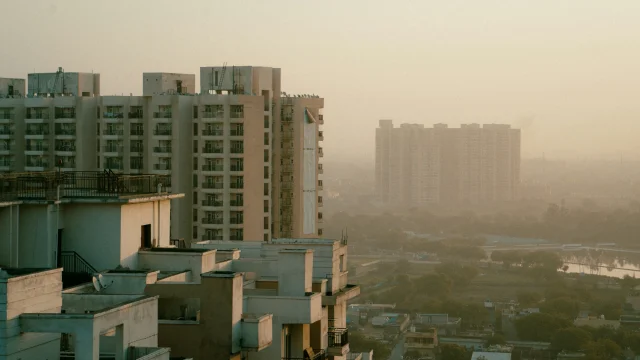
Delhi AQI Slips Into Lowest in Two Weeks, When Will Pollutants Disperse?
Delhi AQI Today: Delhi AQI rises to 329 as sluggish winds and poor dispersion keep pollution trapped; Chandni Chowk, Sirifort enter ‘Severe’ zone.
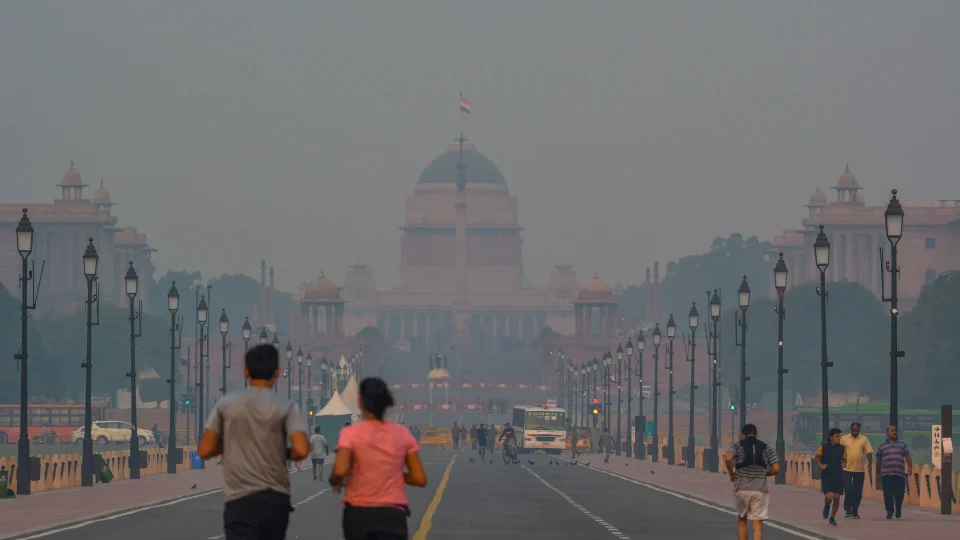
Delhi AQI Today: Delhi’s air quality deteriorated further on Sunday, November 29, with the city’s overall Air Quality Index recorded at 329 in the morning. The reading was higher than Saturday’s 24-hour average of 293, which itself marked a 67-point increase from Friday’s 226 and was Delhi’s worst daily reading since November 14.
Low winds with falling night temperatures and weak atmospheric dispersion kept pollutants accumulated close to the ground. The India Meteorological Department’s Air Quality Early Warning System projects Delhi’s air quality will remain in the ‘Very Poor’ category on Sunday and Monday, then return to the ‘Poor’ band on Tuesday.
Commission for Air Quality Management (CAQM) posted the latest update on Delhi’s 24-hour average on Saturday evening on X, formerly Twitter.
#AQI of #Delhi on 28.11.2026 at 4:00 PM (पिछले 24 घंटों का औसत) | https://t.co/tIJnbC6WK6 #GoGreenBreatheClean https://t.co/Wx0wOZT31g
— Commission for Air Quality Management (@CAQM_Official)
Delhi Stations Cross 400
The Delhi government reads air quality levels across several areas of the capital as critically high as of 10:00 IST, falling into the "Severe" and "Very Poor" categories. Chandni Chowk and Sirifort recorded "Severe" air quality with AQI readings of 429 and 406, respectively. Meanwhile, North Campus registered 399, CRRI Mathura Road at 397, and Chhawla read 393, falling in the "Very Poor" air quality category.
What Is Driving Pollution
Indian Institute of Tropical Meteorology’s (IITM) Real-Time Source Apportionment system on Sunday morning finds that vehicular emissions within the capital remain the single largest contributor to Delhi’s daily-mean PM2.5 levels at 19.3%. Among local sources, transport is followed by the residential sector (5%), construction (2.6%), energy (2.3%), waste burning (1.8%), road dust (1.4%), and other local sectors (1.3%), bringing Delhi’s direct local share to 33.7%.
However, a major portion of the pollution load continues to originate from neighbouring NCR districts, led by Gautam Buddha Nagar (12.8%), Ghaziabad (10.7%), and Bulandshahr (10.7%), alongside smaller contributions from Faridabad (4.5%), Gurgaon (3%), Meerut (2.8%), Muzaffarnagar (2.2%), and Bagpat (1.4%).
Meanwhile, Delhi and peripheral industries collectively account for 4.5%, other unspecified sources make up 9.8%, and stubble burning contributes just 0.6%.
NCR Air Quality Also Worsens
Air quality deteriorated across the National Capital Region (NCR) on Sunday morning, with the Commission for Air Quality Management (CAQM) recording an AQI of 217 in Haryana, 258 in Rajasthan, and 215 in Uttar Pradesh.
Forecast: Poor Dispersion To Persist
The ventilation index, a measure of the atmosphere’s ability to disperse pollutants, is projected to remain well below the 6,000 m²/s threshold considered favourable for pollution dispersal. It is currently in the Poor category, at around 4,000 m²/s on Sunday and 2,990 m²/s on Monday, before dipping further to 2,000 m²/s on Tuesday, while wind speeds are likely to remain weak at 5–10 kmph, according to IITM’s Air Quality and Weather Bulletin for Delhi.
With limited horizontal and vertical mixing, emissions from traffic, waste burning and other local sources are likely to remain trapped near the surface. The IITM forecast indicates that conditions may begin improving only by Tuesday, when Delhi’s air quality is expected to return to the ‘Poor’ category.
Also Read: Chulhas Burning Still: LPG Import Refill Costs Stall Ujjwala’s Clean-Air Gains