Turning 18 in 2027? ECI Opens Advance Voter Registration in Six States and UTs
The Election Commission will revise electoral rolls in six states and UTs, with draft voter lists scheduled for November 30 and final publication on January 21, 2027.
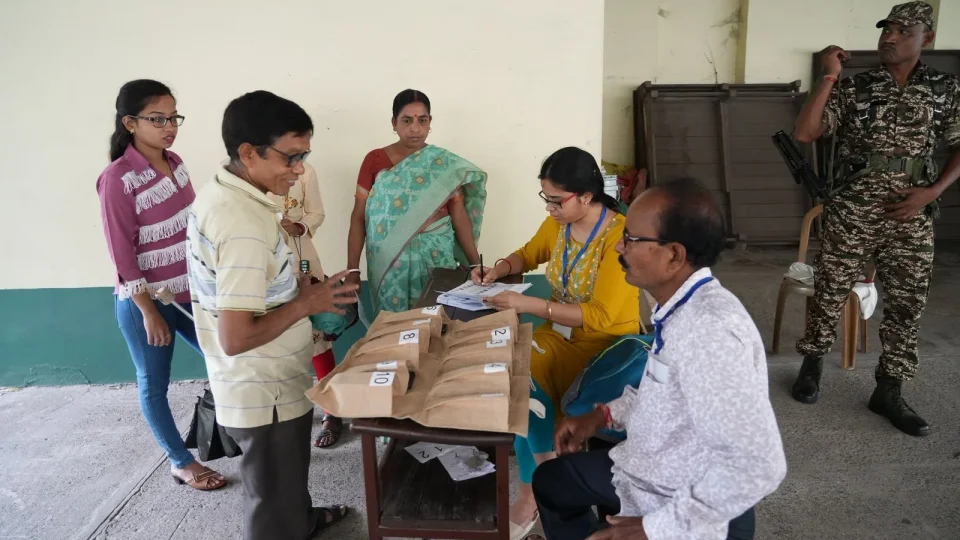
The Election Commission of India (ECI) on Thursday, November 5, announced a fresh round of the annual Special Summary Revision (SSR) of electoral rolls in six States and Union Territories. The poll body said the exercise aims to include eligible voters who are not yet registered, correct existing records and remove duplicate or outdated entries. The revision will cover Arunachal Pradesh, Chandigarh, Dadra and Nagar Haveli and Daman and Diu, Mizoram, Odisha and Sikkim.
According to the ECI, bringing young people and first-time voters onto the electoral roll will be the key focus. Those turning 18 on or before April 1, July 1 or October 1, 2027, can submit applications to register in advance, which will allow eligible applicants to have their names included when they reach the qualifying age.
Once completed, the draft electoral rolls will be published on November 30, 2026. Thereafter, voters will have a month to submit claims and objections, with the final electoral rolls scheduled for publication on January 21, 2027.
What Is Special Summary Revision (SSR)?
Special Summary Revision is an annual exercise conducted by the Election Commission to keep electoral rolls accurate and up to date. During the process, election officials review existing voter lists to identify eligible citizens who have not registered, correct errors, remove duplicate entries and update records of people who have died or permanently moved from their registered addresses. The exercise will also allow existing voters an opportunity to check their details and request corrections before the final electoral rolls are published.
SSR is different from the Special Intensive Revision (SIR), which involves a more extensive verification process. SSR primarily updates electoral records through applications, claims and objections, whereas SIR involves a wider exercise to verify voter details. The objective is to ensure that every eligible citizen has an opportunity to register and that electoral rolls reflect accurate and current information.
The announcement follows an earlier round of SSR, which the ECI announced on October 15 for 17 other States and Union Territories, including Uttar Pradesh, Uttarakhand, Manipur, Goa and Punjab.
Important Dates for Electoral Roll Revision
The Election Commission has announced the following schedule for the latest revision:
| Event | Date |
|---|---|
| Publication of draft electoral rolls | November 30, 2026 |
| Claims and objections period | November 30 to December 30, 2026 |
| Publication of final electoral rolls | January 21, 2027 |
The exercise will also accept advance applications from people who will turn 18 on April 1, July 1 or October 1, 2027.
How Can Citizens Participate in the SSR Process?
Residents of the six States and Union Territories covered by the exercise can check their electoral details and submit applications through the Election Commission's online services.
The ECI provides three main forms for voter registration, deletion requests and corrections.
1. Form 6: Register as a New Voter
Form 6 is meant for Indian citizens who are eligible to register as general voters but are not already on the electoral roll. First-time voters who have turned 18, or will reach the qualifying age on one of the specified dates, can apply through this form. Applicants are generally required to provide their personal details, residential address, a recent photograph and the supporting documents specified in the application.
2. Form 7: Submit Objections or Request Deletion
Form 7 can be used to object to an existing electoral entry or request the deletion of a name from the electoral roll in appropriate circumstances. This includes cases involving deceased voters, duplicate registrations or people who are no longer ordinarily resident at the address recorded in the electoral roll. Applicants must provide accurate information and relevant supporting details. The Election Commission has also introduced additional verification safeguards for certain deletion requests, particularly those involving multiple entries or repeated objections.
3. Form 8: Correct or Update Existing Voter Details
Form 8 is for registered voters who want to correct errors or update their electoral details.
It can be used to:
-
Correct errors in a name, date of birth or other personal details.
-
Change the registered address following a shift in residence.
-
Replace an Electoral Photo Identity Card (EPIC).
-
Update a photograph or other details in the electoral record.
Voters should use Form 8 when their existing registration needs correction or updating rather than applying for a fresh registration.
How to Apply for Voter Registration or Corrections
Citizens can submit their applications through the official Voters' Service Portal: https://voters.eci.gov.in.
The process is as follows:
-
Visit the official Voters' Service Portal.
-
Create an account or log in using the available registration options.
-
Select the appropriate form: Form 6 for new registration, Form 7 for objections or deletion requests, and Form 8 for corrections and updates.
-
Enter the required personal and electoral details.
-
Upload supporting documents, such as proof of identity or address and a recent photograph, where required.
-
Review the information and submit the application.
-
Save the reference number provided after submission to track the application status.
Voters can also use the Election Commission's Voter Helpline mobile app, available on Android and iOS, to access these services. Existing voters can check their registration status and electoral details on the portal before submitting an application.
Aadhaar Details Will Remain Voluntary
The Election Commission has clarified that providing Aadhaar details in Forms 6 and 8 will remain optional. Voters are not required to submit their Aadhaar number to register, update or correct their electoral details. Applicants can complete the process without providing Aadhaar information. An application for voter registration cannot be rejected solely because the applicant has not submitted Aadhaar details. Similarly, an existing electoral entry cannot be deleted only because the voter has not provided an Aadhaar number.
This means that eligible citizens can participate in the revision exercise without making Aadhaar submission a condition of voter registration or correction.
Additional Safeguards Against Incorrect Deletions
The Election Commission has also introduced verification requirements to reduce the risk of eligible voters being wrongly removed from electoral rolls.
Under the additional safeguards:
-
Deletion requests involving multiple or repeated entries will require field verification.
-
Electoral Registration Officers (EROs) must personally verify deletion requests exceeding 2% of the total electors at a polling station.
-
The same requirement applies when an individual objector submits more than five objections.
These measures are intended to improve the accuracy of electoral rolls while reducing the possibility of genuine voters being removed through incorrect or repeated objections.