From Indira's Tears To Rahul's Secret Identity: Sonia Gandhi's Memoir Recalls A Family Under Threat
Sonia Gandhi's memoir, Belonging: A Journey of Love, revisits the personal tragedies and security threats that shaped the Nehru-Gandhi family, from Indira Gandhi's anguish after Operation Blue Star to intelligence warnings of a possible kidnapping of Rahul and Priyanka Gandhi.
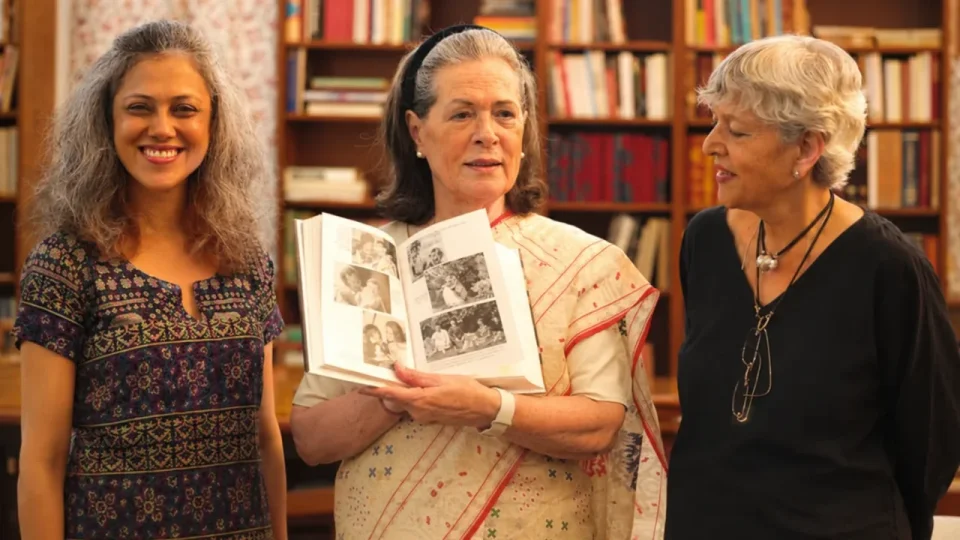
Sonai Gandhi Memoir: Sonia Gandhi's memoir Belonging: A Journey of Love recounts the security threats faced by the Nehru-Gandhi family, including the decision to send Rahul Gandhi to the US under an assumed identity. (File Photo)
Sonia Gandhi Memoir: Former Congress president Sonia Gandhi’s memoir, Belonging: A Journey of Love, offers a poignant and deeply revealing look into the momentous events, personal tragedies, and fierce political battles that shaped her life and the modern history of the Indian National Congress. Drawing from personal accounts within the book, several critical themes emerge—ranging from the high-stake security threats following Operation Blue Star to intense political friction with the BJP and strategic alliances.
1. Operation Blue Star, Security Fears, and Protecting the Children
The memoir paints a haunting picture of the tense period following Operation Blue Star, noting that Indira Gandhi watched a slow-moving record of the aftermath with a face "wet with tears - tears of pain and regret, I think: sorrow at the manner in which the siege had ended, at the large number of lives lost".
The security climate soon grew perilous for the family. According to Sonia Gandhi, Indira Gandhi "had flatly refused to replace the Sikh guards in all her security details: Such a choice would go against everything she had stood for". To her, "every citizen of India, regardless of region, caste, or creed, deserved equal respect". However, the looming threat became starkly personal when former intelligence chief and security advisor Mr. Kao informed Indira Gandhi of credible intelligence reports suggesting that Rahul and Priyanka could be kidnapped, stating: "It’s not possible any longer to keep them safe in their schools; we have to bring them back home".
This security nightmare forced massive upheaval. Rahul Gandhi was eventually sent to the US to continue his studies; however, because Harvard University "didn't allow armed security personnel on their campus," Rahul had to move to a different university in a different part of the US under an assumed name, marking "another uprooting- this time, a dislocation even of identity".
2. The Shah Bano Verdict and Early Political Friction with the BJP
Reflecting on the tenure of Rajiv Gandhi, the memoir touches on the complex challenge of balancing religious freedoms and secular ideals. Sonia Gandhi recalls being "agitated by the issue—by what I read about it in newspaper and magazine articles" regarding Shah Bano's right to maintenance, questioning Rajiv: "The papers are accusing you of sacrificing Muslim women’s interests. What’s going on? Why are you letting this happen?"
Rajiv defended his actions in a "slightly irritated tone," explaining: "Wouldn't I defend women's rights—don't you know me? [...] I was seeking a way to address the problem of Shah Bano and other women like her without putting in jeopardy the entire edifice of Muslim Personal Law". While the compromise struck a balance that gave Muslim women a more reasonable portion than the "pitiful monthly amount of Rs 179.2," the legal amendment that overturned the court's decision drew heavy criticism, with the BJP accusing the government of "vote-bank politics".
The political landscape shifted dramatically during this era. Sonia notes that after the Congress Party won 404 seats in 1984, the BJP "won just two seats out of the 514 in Parliament," delivering a "big blow to them" that prompted them to seek "an emotive issue that would advance their agenda, stirring up religious emotions amongst the people".
3. Ideological Clashes: Congress’s Pluralism vs. the RSS-BJP Vision
Sonia Gandhi reflects deeply on the ideological battlegrounds of Indian politics. She writes that the vision championed by Mahatma Gandhi and Nehru, and embraced by Rajiv, was "of a nation whose multiple identities were to be cherished and fostered".
In contrast, she notes that the "RSS, founded in 1921, dreamed of a 'Hindu nation' that would replace constitutional ideals of equality, pluralism, and secularism with second-class citizenship for Muslims, Christians, and other religious minorities in India," adding that "their supremacist beliefs became the political agenda of the BJP".
4. The 2012 Anna Hazare Movement and the Rise of Narendra Modi
The memoir also addresses the later political challenges faced by the UPA government. Sonia Gandhi recounts the 2012 movement when "a well-known activist from Maharashtra, Baburao 'Anna' Hazare... emerged as the figurehead of a movement that titled itself 'India Against Corruption'". She notes that "some of its prominent participants have stated since that it was covertly organised and supported by the BJP and RSS," leaving the party "on the backfoot, unable to counter the BJP's aggressive campaign".
Behind the scenes, the narrative traces how "the RSS was laying the groundwork for the advent of a new prime ministerial candidate: Narendra Modi, then chief minister of Gujarat," noting that "his commitment to its ideology and his organisational skills had raised him to prominence".
5. Bridging Divides: Forging the DMK Alliance
Amid shifting political tides, the book highlights pragmatic coalition-building. Sonia Gandhi recalls the strategic necessity of forming an alliance with the DMK in Tamil Nadu, even though "the DMK cadre had been at the time of the 1991 election vocal supporters of the LTTE, the terrorist group that had killed Rajiv".
Overcoming personal anguish and asking herself, "What should I do? If I join hands with them, won't it amount to a betrayal of Rajiv?", she recognised that "perhaps Rajiv himself would have gone ahead with this alliance, if he knew it was necessary to strengthen our front against the BJP". Following her first telephone call to M. Karunanidhi, she came to respect him, noting that "he had been a poet and scriptwriter, proud of his heritage, the ancient Tamil language and its literature, and we got on well," culminating in a formal alliance on May 4, 2004.