Algorithmic Warfare: How China’s Military Envisions AI-Driven Battle Networks
The Slate Bureau The rapid rise of artificial intelligence is beginning to reshape how modern militaries think about warfare. Within People's Liberation Army, China’s armed forces are exploring how AI could transform the speed, coordination, and precision of combat operations. Recent research and internal discussions suggest that the PLA is examining ways to integrate advanced algorithms into what military strategists refer to as the “kill chain”—the sequence of detecting, identifying,...
The Slate Bureau
The rapid rise of artificial intelligence is beginning to reshape how modern militaries think about warfare. Within People's Liberation Army, China’s armed forces are exploring how AI could transform the speed, coordination, and precision of combat operations. Recent research and internal discussions suggest that the PLA is examining ways to integrate advanced algorithms into what military strategists refer to as the “kill chain”—the sequence of detecting, identifying, targeting, and striking an adversary.
A study released by the RAND's Center for the Geopolitics of Artificial General Intelligence, provides insight into how Chinese military thinkers are approaching this shift. Researchers examined more than a hundred articles appearing in Chinese academic journals, official newspapers connected to the PLA, and statements from senior officers. Together, these sources outline a vision of future warfare in which artificial intelligence accelerates decision-making and connects different branches of the military into a tightly coordinated network.
Integrating Intelligence Across the Battlefield
Chinese military analysts appear particularly focused on strengthening four interconnected areas: deeper integration of AI within military units, improved sharing of information across operational domains, coordination among multiple autonomous systems, and faster data transmission between platforms.
The broader objective is to compress the time it takes to move from detection to action. Modern conflict increasingly depends on who can identify threats, process information, and respond first. By embedding AI into command systems, sensors, and weapons platforms, PLA planners believe they could significantly shorten the time between observation and attack.
Military theorists frequently reference the OODA Loop, a framework describing how quickly commanders process information and act. Chinese strategists argue that intelligent systems capable of analyzing data and generating recommendations could reduce this cycle dramatically, giving commanders a decisive advantage during high-tempo operations.
Several Chinese officers have publicly described how algorithm-driven systems might reshape targeting. One concept discussed in PLA-related publications involves replacing traditional pre-planned strike assignments with dynamic tasking. Instead of deciding beforehand which platform will strike a target, AI-enabled systems would continually analyze incoming data and assign the most suitable weapons in real time.
In such a system, decision-support software would evaluate the capabilities of available aircraft, missiles, drones, or artillery units. It would estimate potential effects, allocate targets, and coordinate attacks across multiple domains—air, sea, land, cyber, and space—almost instantly. Proponents suggest this approach could enable extremely rapid, highly coordinated strikes that close the kill chain with minimal delay.
Chinese analysts writing in military publications describe a future in which intelligent command networks assist officers by filtering vast quantities of sensor data and producing recommended actions. According to this vision, AI would not simply automate tasks but would also serve as a decision-support partner, helping commanders respond more quickly to complex situations.
The integration of AI is not limited to combat operations. PLA-related discussions also frequently highlight applications in logistics and support systems. Automated supply management, predictive maintenance for equipment, and intelligent transportation planning could make military operations more efficient and resilient.
Improved logistics may be especially important in prolonged conflicts, where the ability to move resources quickly and sustain forces can determine operational success. Chinese military writers have noted that intelligent systems could help anticipate shortages, optimize delivery routes, and maintain equipment readiness without extensive human intervention.
Despite enthusiasm about AI’s potential, some Chinese military thinkers are also acknowledging the challenges involved. Integrating advanced technologies into large organizations is rarely straightforward. Command structures, training methods, and operational doctrines may need to adapt in order to make full use of intelligent systems.
There are also concerns that reliance on AI could introduce new vulnerabilities. Networks carrying sensitive data might become attractive targets for cyber attacks or electronic warfare. Autonomous systems could malfunction or be manipulated if adversaries discover weaknesses in their algorithms. As a result, some analysts within the PLA appear to be studying how to secure these systems against interference.
The Prospect of Multi-Agent Warfare
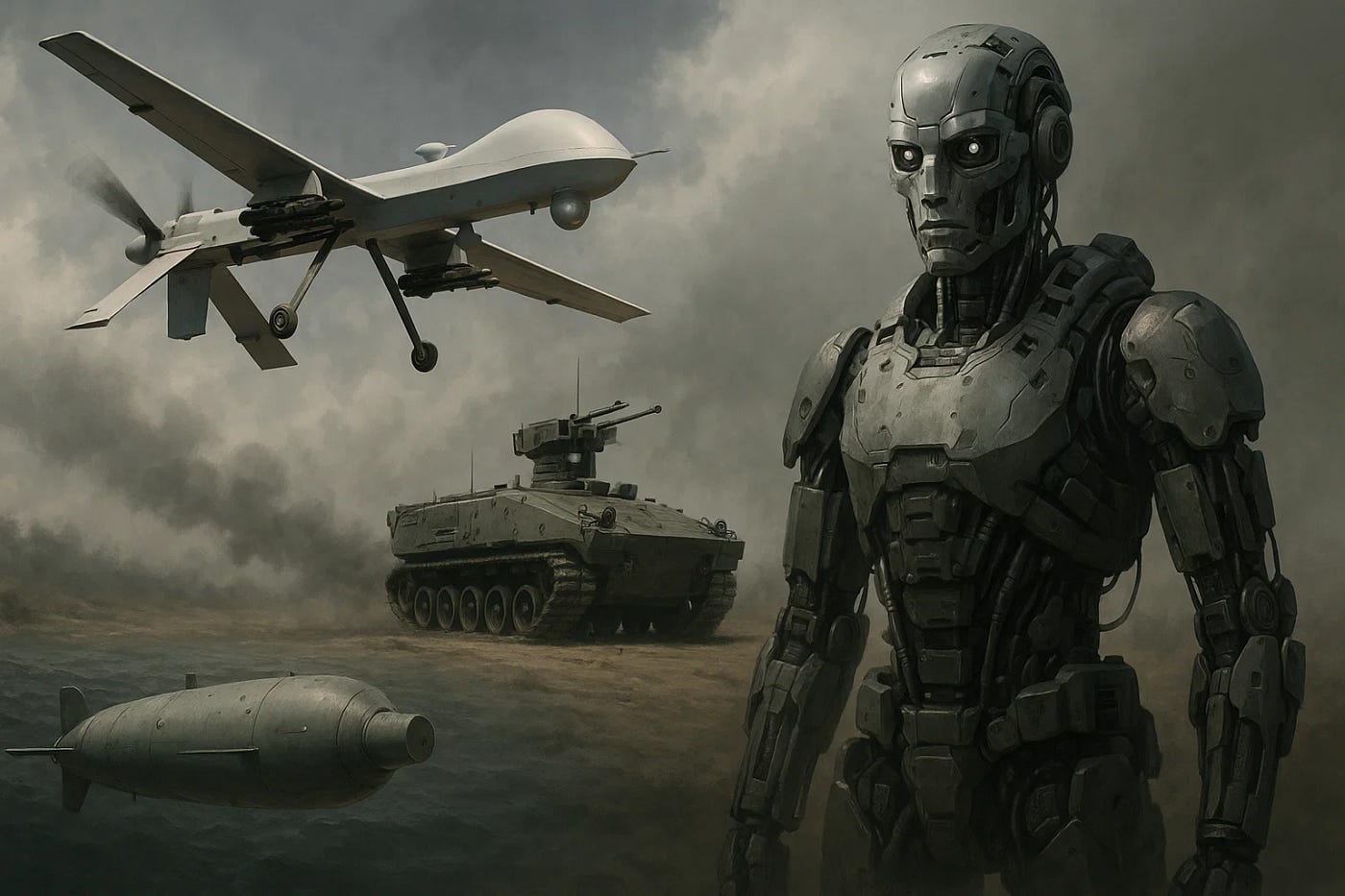
Another concept receiving considerable attention involves coordinated groups of AI-controlled systems operating simultaneously across multiple domains. Chinese military publications often describe scenarios in which numerous autonomous platforms—such as drones, robotic vehicles, and unmanned underwater craft—share information and cooperate during operations.
These systems would function as networks rather than individual machines. Each platform would gather data, communicate with others, and adjust its behavior according to the broader mission. Human operators might supervise overall objectives while AI agents handle many tactical decisions in real time.
Particular emphasis has been placed on swarms of unmanned aerial vehicles. In this model, dozens or even hundreds of drones could operate together, spreading across an area, overwhelming defenses, and coordinating attacks. Supporters argue that large numbers of relatively inexpensive autonomous systems could provide an asymmetric advantage against technologically sophisticated adversaries.
“Unmanned plus Intelligent”
Some PLA officers describe the future direction of military technology with the phrase “unmanned plus intelligent.” The idea combines autonomous platforms with AI-driven decision systems capable of coordinating them.
In practice, this could involve fleets of drones, robotic vehicles, and underwater craft assigned tasks automatically by centralized or distributed algorithms. Each system would perform a specific role—surveillance, electronic warfare, targeting, or attack—while sharing information with the rest of the network. Advocates suggest such formations could execute complex operations such as saturation attacks, in which multiple platforms strike simultaneously to overwhelm an opponent’s defenses. By coordinating their movements and timing through AI-enabled systems, these platforms might be able to approach targets covertly and attack from multiple directions.
The RAND study suggests that the PLA’s interest in artificial intelligence may expand beyond the immediate goal of accelerating targeting cycles. Future research could explore how advanced algorithms might assist with strategic planning, training, and command decision-making.
Some Chinese analysts have proposed that AI could eventually help compensate for perceived gaps in commanders’ operational experience by analyzing historical battles, simulations, and real-time intelligence. Others believe intelligent systems might enhance information warfare, cyber operations, and cognitive-domain strategies aimed at influencing perceptions and decision-making.
A Transforming Military Landscape
The growing attention to artificial intelligence reflects a broader transformation in global military thinking. Nations around the world are examining how emerging technologies—from machine learning to autonomous robotics—might reshape the character of conflict.
For the China, integrating these technologies into the People's Liberation Army is part of a wider modernization effort aimed at building a more technologically sophisticated force. Whether these ambitions translate into fully operational capabilities will depend on overcoming technical hurdles, organizational challenges, and potential vulnerabilities.
What is clear, however, is that military planners increasingly see data, algorithms, and autonomous systems as central elements of future warfare. As research and experimentation continue, the evolution of AI-enabled battle networks will remain a subject closely watched by analysts around the world.