Microsoft's Global Outage Is Over; The Vulnerability of a Connected World Isn't
Microsoft Restore Update: Microsoft Services restored after 24-hour outage and global disruption, but dependence concerns persist.
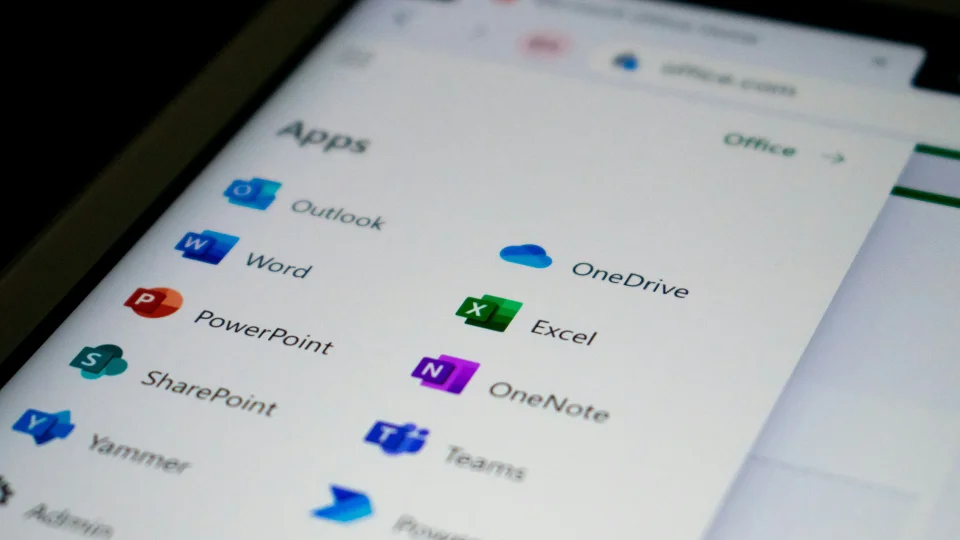
Microsoft has fully restored its Teams, Outlook, Copilot and other affected Microsoft 365 services after a global outage that disrupted email, workplace communication and government systems for more than 24 hours, the company said on Saturday. The disruption, which began on Thursday, affected users and organisations across more than 70 countries, with outage tracker Downdetector reportedly recording nearly 200,000 reports of problems at its peak.
Microsoft said the outage was caused by a technical issue introduced during a “network capacity upgrade”, and stressed that it had found no indication of malicious activity, a cyberattack or involvement by artificial-intelligence agents. The company said its engineers had worked through the night to identify and repair affected infrastructure, testing fixes, rerouting network traffic and expanding server capacity as services came back online in stages.
We are deeply sorry for the disruption this incident has caused our customers and partners. We know the trust they place in our services and take that responsibility extremely seriously. We are seeing broad recovery and stability across our services. This was a technical issue not related to cyber or AI / agents. The incident was introduced by an issue during an earlier network capacity upgrade that surfaced following a recent network change. We have addressed the underlying issue and continue to restore service to remaining customers and regions. Given the scale of demand, we restored services gradually, validating stability at each stage. While this took longer, it helped ensure a stable restoration. We will provide a full post-incident report once our review is complete.
— Microsoft 365 Status (@MSFT365Status) November 13, 2026
Gradual Recovery
By Friday morning in North America, Outlook was working again for many users, although Microsoft cautioned that some customers could still face “intermittent access issues or delayed email delivery”. The company said email queues had been “significantly reduced and approaching normal levels”, but warned that the full restoration of service would take longer because of the scale of the disruption.
In successive updates, Microsoft said it was seeing “early stabilisation and capacity improvements”, followed by “broader improvements” in North America and “sustained improvements across much of Europe”. It also reported “encouraging recovery signals” in the Asia-Pacific region, where governments and businesses had been among those affected.
The company said consumer-product services fully recovered at 16:10 GMT on Friday, while enterprise services were recovering still. On Saturday, it confirmed that services across Teams, Outlook, Copilot and other applications had been fully restored.
“We are deeply sorry for the disruption this incident has caused our customers and partners,” said Microsoft, “We know the trust they place in our services and take that responsibility extremely seriously.”
Microsoft said it had no estimated time for full recovery during the outage, but later said it was monitoring the backlog of email messages accumulated during the incident before declaring the enterprise issue resolved. “Due to the severity of impact this incident caused, we’re monitoring for an extended period to ensure no additional mitigative actions are required,” the company said in an update on its service-status page.
Also Read: Microsoft Global Outage: When One Glitch Puts the World on Hold
Governments Disrupted
The outage reached well beyond offices and home users. The governments of Greece, Japan, Singapore, the Philippines, and Britain were reported by AP, to be affected. Japan’s Deputy Chief Cabinet Secretary, Masanao Ozaki, told reporters in Tokyo that the ‘Government Solution Service’ was disrupted, causing a switch to secured alternative communication tools, including telephones, while officials monitored developments.
In Greece, Digital Governance Minister Dimitrios Papastergiou said ministries using Outlook, Teams and Copilot had been affected; however, their work wasn't hampered. He argued that the incident showed why countries should develop technological alternatives for services critical to government operations. “This is what we’re doing in the Greek public service in recent years, we have a hybrid system meaning we have services on our systems and we have fewer critical data in the digital cloud,” Papastergiou told private broadcaster Skai.
Singapore’s Government Technology Agency said government emails had been affected and that it was working with Microsoft to resolve the issue.
In the Philippines, the Supreme Court said the outage had disrupted some operations, including email responses.
In Britain, parts of the NHS, including GP practices and hospitals, were affected, as were some schools, police forces and courts. “Please bear with your pharmacy teams today, where waits may be longer than normal and there may be delays to some prescriptions,” a spokesperson for the association said.
UK cyber minister Liz Lloyd said the incident had had a “limited” impact on critical frontline services such as 999 calls, and said there had been no disruption to the transport network, as the government worked closely with Microsoft to assess the impact on public services and had “robust contingency plans” in place.
Businesses Adapt
Businesses also scrambled to maintain operations as email and messaging services went down.
Air India said its flight operations were unaffected, but that it had temporarily rerouted email services to ensure customer queries continued to reach the airline. IndiGo said disruptions to its email support services had affected its ability to receive customer queries, although other support channels and flight operations remained operational.
In Australia, Home Affairs Minister Tony Burke believes that Microsoft is “dealing in some ways similar to what we saw with respect to CrowdStrike where there is an update that has gone awry,” he told reporters in Sydney, referring to the CrowdStrike outage in July 2024.
The outage also affected smaller organisations and individuals like Peter Pentz, a winemaker in South Africa, and homebuyer in Staffordshire, as reported by AP.
Resilience Under Scrutiny
The outage has renewed concerns about governments’ and businesses’ reliance on a small number of US technology providers. Chi Onwurah, chair of the UK Parliament’s science and technology committee, said it highlighted “the lack of resilience in the UK’s digital infrastructure, and the dangers that this dependency can pose to our security, economy and public services,” reports AP.
Experts reportedly said the disruption showed how interconnected Microsoft’s products are. Stephen McQuiston, of the University of St Andrews, said shared infrastructure meant a failure in one component could affect Outlook, Teams and Copilot at the same time.
Steven Watt, a cybersecurity professor at St Andrews, said organisations needed tested fallback plans. “A continuity plan that relies on the same platform that has just failed is not a plan,” he said reportedly.
What Happens Next
Microsoft is expected to publish a full post-incident report once its review is complete. It has not said how many users were affected, although it has more than 450 million paying Microsoft 365 subscribers.
With services restored, attention is likely to turn to whether critical public and private systems can continue to depend so heavily on a single global technology provider.