Sheikh Hasina's Return Bid Exposes Bangladesh's Unfinished Political Transition
Sheikh Hasina Bangladesh Return: Sheikh Hasina's proposed December 16 return puts Bangladesh new government in a tough spot; raise concerns of politics, judicial accountability, reforms promised post-2024 uprising
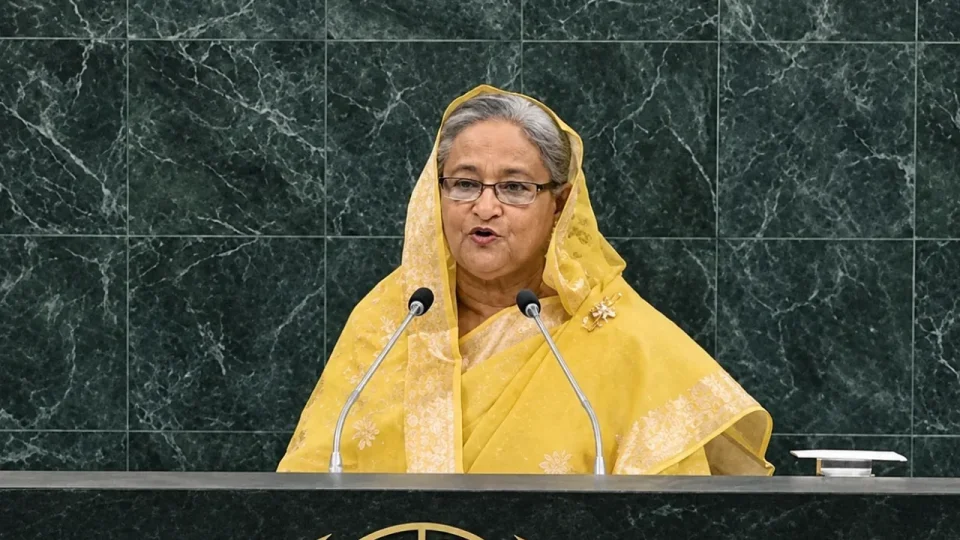
Sheikh Hasina Bangladesh Return: Sheikh Hasina's proposed return to Bangladesh on December 16, the country's Victory Day, has reopened political fault lines that remain unresolved more than two years after the uprising that ended her 15-year rule. The former prime minister, who fled to India on August 5, 2024, has requested that the Bangladesh government arrange her return on the national carrier, Biman Bangladesh Airlines. However, her homecoming is complicated by a death sentence handed down in absentia by Bangladesh's International Crimes Tribunal in November 2025 for crimes against humanity linked to the crackdown on the 2024 protests. Hasina has rejected the verdict.
Her announcement puts the Tarique Rahman-led government in a difficult position. Facilitating her return could carry serious legal and political consequences, while preventing it could deepen tensions with the Awami League and its supporters. More importantly, the episode exposes a larger problem: Bangladesh has replaced its former government and held parliamentary elections, but the political and institutional settlement promised after the uprising remains incomplete.
An Elected Government, But An Incomplete Political Settlement
Bangladesh underwent a major political transformation after Hasina's departure. An interim administration led by Muhammad Yunus took charge on August 8, 2024, and initiated reforms covering the judiciary, police, electoral system, public administration and constitutional framework. The country subsequently held parliamentary elections on February 12, 2026, in which the Bangladesh Nationalist Party (BNP), led by Tarique Rahman, won 209 of the 300 parliamentary seats. Rahman was sworn in as prime minister on February 17, with Jamaat-e-Islami emerging as the principal opposition force.
Also Read: Israel’s Opposition Is Divided Over Who Should Join the Next Government
However, the Awami League was prohibited from participating in the election, leaving a significant political constituency without representation through its former party. The UK Home Office's October 2026 country policy assessment on Bangladesh noted that the party remained banned under the BNP government, with its registration suspended by the Election Commission on May 11, 2025. This raises a difficult question for the country's democratic transition: how can Bangladesh ensure accountability for abuses committed under its former leadership without permanently excluding its wider political constituency? An election can provide a government with democratic legitimacy, but the absence of a major former ruling party leaves questions about political inclusion and the durability of democratic competition.
The July Charter And The Unfinished Reform Agenda
Institutional reform was among the central promises of the interim administration. Following the 2024 uprising, six reform commissions were established to examine the constitutional framework, electoral system, judiciary, police, public administration and anti-corruption institutions. Their recommendations fed into negotiations under the National Consensus Commission, culminating in the July National Charter. It contained 84 reform proposals, including 47 requiring constitutional amendments, and sought to limit executive power, strengthen parliamentary accountability and improve the rule of law.
The BNP and Jamaat-e-Islami were among the parties that endorsed the charter in October 2025, although disagreements remained over some provisions and their implementation. The Awami League was excluded from the consultations. The November 13, 2025, Implementation Order, published in the Bangladesh Gazette, provided a framework for implementing the proposed reforms. The February 2026 election was accompanied by a referendum on the charter, which secured a majority in favour.
However, translating political agreements into institutional change has proved difficult. The UK Home Office's October 2026 assessment found that progress in implementing the charter and wider reform recommendations had been limited. The BNP government also reviewed ordinances issued under the interim administration. Parliament examined 133 ordinances, with a special committee recommending that 98 be approved, 15 amended and 20 not approved in their existing form. Although some legislative changes have been made, disagreements over the strength of institutional safeguards persist. The larger challenge is to establish institutions that can function independently of the political party in power.
Accountability, Political Violence And The Hasina Trial
Hasina's proposed return also brings the question of transitional justice back into focus. A United Nations Office of the High Commissioner for Human Rights (OHCHR) fact-finding report, published on February 12, 2025, estimated that up to 1,400 people may have been killed between July 1 and August 15, 2024. It found reasonable grounds to believe that security forces committed serious human rights violations, including extrajudicial killings, arbitrary arrests and torture, and raised concerns about the role of senior officials in the former government.
The International Crimes Tribunal subsequently convicted Hasina and sentenced her to death on November 17, 2025. However, the trial in absentia has drawn scrutiny from international human rights organisations. Human Rights Watch, in its World Report 2026, raised concerns about fair-trial standards at the tribunal, including the absence of important due-process protections and the retention of the death penalty. These concerns do not negate the allegations of serious abuses during the 2024 crackdown. Rather, they highlight the challenge of ensuring that accountability proceedings meet standards of fairness and judicial independence. Bangladesh's credibility will depend not only on prosecuting former officials but also on demonstrating that the proceedings are based on evidence and due process rather than political considerations.
Meanwhile, political violence remains a concern. A UK Home Office fact-finding mission conducted in June 2026 and published in October found that Bangladesh's political situation had stabilised and generally improved since the uprising. However, it identified continuing concerns about corruption, police accountability and the limited implementation of institutional reforms. Reuters reported on November 23 that police had recorded dozens of bombings and arson attacks across at least 28 districts, with officers and civilians injured. The government and the Awami League blamed each other for the violence. The BNP government must therefore maintain public order without allowing security measures to become instruments for suppressing legitimate political opposition.
December 16 And The Question Of Political Inclusion
Hasina's choice of December 16 adds another dimension to the confrontation. Bangladesh observes Victory Day to commemorate the surrender of Pakistani forces in 1971 and the country's independence. The Awami League has historically drawn political legitimacy from its association with the Liberation War and the role of Hasina's father, Sheikh Mujibur Rahman, in the independence movement. By choosing this date, Hasina could be attempting to reclaim a political narrative that has become contested since her removal from power.
For India, the situation presents an additional diplomatic complication. Bangladesh has sought Hasina's extradition under the bilateral extradition treaty, while New Delhi said in April 2026 that it was examining the request. Her proposed return could therefore complicate an already sensitive bilateral relationship.
Ultimately, Bangladesh's transition cannot be judged simply by the replacement of one government with another. The unfinished reform agenda, the continued exclusion of the Awami League, questions over the fairness of high-profile trials and persistent concerns about police accountability point to deeper institutional challenges. Hasina's proposed return could become a test of whether the new government can manage a politically sensitive legal case without destabilising institutions or narrowing the space for political participation. The larger task is to build a political system capable of holding former leaders accountable while protecting democratic rights, irrespective of who occupies the prime minister's office.